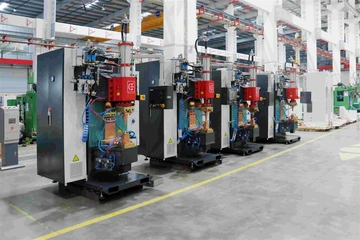
Resistance welding is one of the most widely used joining techniques in modern manufacturing. It works by applying heat generated through the electrical resistance of materials while applying mechanical pressure to fuse them. This method is commonly used in automotive components, sheet metal fabrication, and industrial equipment manufacturing. Understanding the advantages of resistance welding helps manufacturers make informed decisions about efficiency, quality, and sustainability in their production processes.
Advantages of Resistance Welding – Expert’s Guide 2026
Choosing the right welding technique is a crucial decision in any manufacturing process. Each method offers unique benefits depending on material type, production volume, and desired quality. Below are the main advantages of resistance welding and why it continues to be a preferred method in modern industry.

Source: Pinterest
1. Increased Productivity
Resistance welding is highly regarded for its ability to boost productivity in manufacturing environments. The process is exceptionally fast because it uses electrical current to generate heat at the exact point where two metal surfaces meet. This focused heat source allows the metals to reach their melting point in a very short time, enabling rapid fusion and solidification.
The result is a welding process that takes only fractions of a second per joint, significantly reducing production cycles compared to manual or traditional welding methods. This efficiency makes resistance welding an ideal choice for high-volume manufacturing operations such as automotive body assembly, electronic component production, and metal fabrication.
Additionally, the process lends itself well to automation and robotic integration, allowing manufacturers to produce large quantities of uniform, high-quality welds with minimal human intervention. This combination of speed, precision, and repeatability not only improves throughput but also reduces labor costs and downtime, leading to a more efficient overall production system.
2. Durable Joints
One of the standout advantages of resistance welding is its ability to produce durable and long-lasting joints. The process works by passing an electrical current through the metal pieces while applying pressure. The heat generated from the electrical resistance penetrates deep into the materials, allowing them to fuse at a molecular level. This results in a weld that is exceptionally strong and resistant to mechanical stress.
Because the joint is formed through direct bonding rather than by using filler materials, it contains fewer impurities and defects. The solid, uniform structure of the weld gives it superior strength compared to many other joining methods.
This durability is particularly valuable for components exposed to vibration, high loads, or harsh environments—such as automotive frames, metal enclosures, and structural assemblies. By ensuring long service life and reliability, resistance welding reduces maintenance costs and improves product performance over time.
3. Precise Welds
Precision is another key advantage of resistance welding. Operators or automated systems can control variables such as pressure, time, and current with high accuracy. This allows for consistent weld quality across multiple production runs.
The precision of this process helps prevent overheating or metal distortion, which ensures cleaner joints and smoother finishes, vital for industries where accuracy and aesthetic appearance are critical.
4. Eliminated Sparks and Safer Operation
One of the most significant benefits of resistance welding is that it promotes a safer and cleaner working environment. Unlike traditional arc or gas welding methods, resistance welding does not produce open flames, sparks, or harmful fumes during operation. The process is fully contained between electrodes, minimizing the risk of burns, fire hazards, and airborne contaminants.
This controlled and spark-free environment not only enhances workplace safety but also improves overall operator comfort. Since there is no need for filler materials, shielding gases, or flux, the process remains clean and efficient from start to finish. Additionally, resistance welding eliminates the need for extensive post-weld finishing, such as grinding or sanding, which saves both time and labor costs.
By combining safety, cleanliness, and efficiency, resistance welding ensures a more sustainable and productive manufacturing process while maintaining high-quality output standards.
Over the past three decades, Heron has developed numerous resistance welding solutions that have been adopted by manufacturers all over the
world. Our “advanced welders” and “welding automation” have become essential tools for companies in various industries, including automotive,
compressors, low voltage electronics, home appliances and many other consumer products. Let us know your specifications for welding or other
joining technologies.
What Are the Disadvantages of Resistance Welding?
While resistance welding offers many advantages, such as speed, strength, and cleanliness, it also has certain limitations that must be considered before implementing it in a production environment. Understanding both the strengths and weaknesses of this process helps manufacturers make balanced decisions for their specific applications. Below are some of the main disadvantages of resistance welding.

Source: Pinterest
Limited Materials
Resistance welding works best on conductive materials with suitable electrical resistance. Metals like steel, stainless steel, and certain nickel or titanium alloys are ideal candidates for this process. However, materials with poor electrical conductivity, such as aluminum or copper, are more difficult to weld effectively. These metals may require higher current or specialized techniques, which can increase equipment demands and energy consumption. Therefore, resistance welding is not always the most efficient or economical choice for all types of metals.
Requires Specialized Resistance Welding Equipment
Another major limitation is the need for specialized equipment. Resistance welding machines are designed to deliver precise current control and pressure application, making them more complex and expensive than basic welding setups. The electrodes, transformers, and control systems used in resistance welders must be carefully maintained to ensure performance. In addition, welders need technical training to operate this equipment safely and efficiently. This initial investment in equipment and training can be a challenge for smaller manufacturing facilities or operations just starting.
Limited Size Capacity
Resistance welding is best suited for joining thin sheets or small to medium-sized workpieces. The process relies on localized heat generation, which is highly effective for smaller joints but less practical for large components or thick materials. As the size or thickness of the workpiece increases, it becomes more difficult to generate uniform heat throughout the entire joint. This limitation makes resistance welding unsuitable for applications involving large structural parts or heavy-duty fabrication.
What Is the Resistance Welding Process?
Resistance welding is a widely used process in metal fabrication that relies on heat generated by electrical resistance and mechanical pressure to fuse materials. This technique does not require filler metals or external heat sources, making it clean, efficient, and suitable for mass production. Various resistance welding methods are designed to handle different material shapes, thicknesses, and applications. Below are the four main classifications of resistance welding processes and how they differ in application and industry use.
Spot Welding
Spot welding is the most common form of resistance welding. It joins metal materials by applying pressure and heat through opposing electrodes with pointed tips. A strong electrical current passes through the contact points between the metal sheets, generating heat that causes them to melt and fuse. Once the current is turned off, pressure is maintained briefly to allow the weld to solidify and form a durable joint.
Spot welding is fast, reliable, and highly adaptable, which makes it a preferred method across multiple industries, including:
-
Automotive manufacturing for body panels and frames
-
Aerospace assembly for lightweight structures
-
Construction applications involving sheet metal
-
Rail and transport fabrication
-
Electronics production for battery tabs and connectors
Projection Welding
Projection welding is another popular resistance welding technique that uses localized contact points, known as projections, to concentrate heat and pressure. These projections can come in different shapes, such as circular spots, round dimples, extended corners, or ridges often found on weld nuts or bolts.
During the process, the projections focus the electrical current and pressure on precise areas, allowing multiple welds to be made simultaneously. This improves both weld strength and production speed. Projection welding is commonly used in:
-
Automotive component manufacturing
-
Consumer goods and appliance production
-
Construction and building hardware
-
Mechanical and industrial assemblies
Seam Welding
Seam welding produces a continuous joint between overlapping metal pieces. The parts are clamped between two rotating copper wheel electrodes, through which an electrical current passes. As the wheels roll along the joint, a series of overlapping welds or a continuous seam is formed. Operators can control the weld’s depth and pattern by adjusting current, electrode pressure, and rotation speed.
This method is ideal for creating leak-proof or airtight joints, making it useful in the following industries:
-
Automotive manufacturing for fuel tanks and exhaust systems
-
Aerospace structural assemblies
-
Appliance manufacturing, such as water heaters and refrigerators
Butt Welding
Butt welding involves joining two metal pieces end-to-end using heat and pressure. An electric current is passed through the touching surfaces, causing them to heat up and partially melt. The metals are then pressed together, forming a strong and uniform joint upon cooling.
This technique is particularly efficient for welding rods, wires, and pipes. It delivers smooth joints with minimal distortion, making it widely used in:
-
Automotive and rail systems for frames and linkages
-
Aerospace applications for precise fittings and ducts
-
Mechanical and fabrication shops for pipe and bar joining
| Welding Type | Key Advantages | Common Applications |
|---|---|---|
| Spot Welding | Fast, simple, suitable for mass production | Automotive body panels, aerospace structures, electronics |
| Projection Welding | Multiple welds at once, precise joints | Automotive components, appliance parts, building hardware |
| Seam Welding | Leak-proof, continuous joints, high quality | Fuel tanks, exhausts, water heaters, aerospace assemblies |
| Butt Welding | Smooth, uniform joints, minimal distortion |
|
Resistance welding remains a fundamental process in modern manufacturing thanks to its blend of speed, efficiency, and reliability. The four main classifications, spot welding, projection welding, seam welding, and butt welding, offer manufacturers diverse solutions for joining metals, each tailored to specific material shapes and industrial applications.
While resistance welding delivers significant advantages such as durable joints, clean operation, and high productivity, it is important to consider its limitations regarding material compatibility, equipment requirements, and size capacity.
By understanding the strengths and drawbacks of each resistance welding method, industries can select the optimal technique to ensure quality, safety, and cost-effectiveness in their production processes.