Aluminum Heat Shield Spot Welder for Automotive Precision Welding Solutions
In this guide, we will explain how aluminum heat shield spot welding works, its automotive applications, key welding challenges, and the best precision welding solutions for modern manufacturing.
1. Aluminum Heat Shield Spot Welding for Automotive Manufacturing
Aluminum heat shield components are widely used in modern automotive engineering due to their lightweight structure and high thermal resistance. However, welding aluminum is technically challenging because of its high thermal conductivity and oxide layer formation.
This is where an Aluminum Heat Shield Spot Welder for Automotive Precision Welding Solutions becomes essential.
In automotive production lines, especially for OEM manufacturers, precision resistance welding ensures:
- Consistent weld strength
- Minimal deformation of thin aluminum sheets
- High-speed mass production capability
- Stable electrical and thermal control during welding
Modern automotive manufacturing, including EV vehicles and lightweight combustion engines, relies heavily on aluminum heat shield welding systems for engine compartments, exhaust insulation, and battery protection modules.
2. What Is an Aluminum Heat Shield Spot Welder?
An aluminum heat shield spot welder is a specialized resistance welding machine designed to join thin aluminum sheets used in heat shield assemblies.
Unlike conventional welding methods, it uses:
- Controlled electrical resistance
- High-pressure electrodes
- Short-duration high-current pulses
Core Function:
The machine generates heat at the contact point between aluminum sheets, forming a weld nugget without excessive melting or distortion.
Key Applications:
- Automotive heat shield fabrication
- EV battery thermal shielding
- Exhaust system insulation panels
- Engine compartment aluminum covers
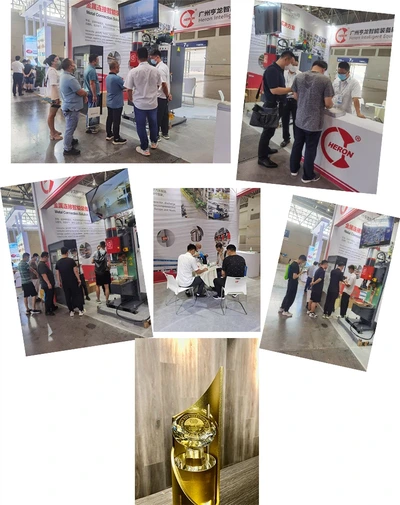
Industrial manufacturers such as Heron Welder focus on delivering high-precision resistance welding systems designed for automotive-grade aluminum components.
3. How Aluminum Heat Shield Spot Welding Technology Works
Aluminum welding requires precise control due to material sensitivity.
Step-by-step working principle:
- Electrode Contact
Aluminum sheets are placed between copper alloy electrodes. - Pressure Application
Controlled force ensures proper contact resistance. - High Current Flow
A short burst of DC current passes through the aluminum layers. - Heat Generation
Electrical resistance generates localized heat at the interface. - Weld Nugget Formation
The aluminum fuses at a controlled point without excessive melting.
Advanced Technologies Used:
- MFDC (Medium Frequency Direct Current) welding systems
- Capacitor discharge welding systems
- Real-time current feedback control
- Adaptive electrode force control
These technologies help solve aluminum welding challenges such as instability and heat dispersion.

4. Key Challenges in Welding Aluminum Heat Shields
Aluminum is widely used but difficult to weld due to its physical properties.
1. High Thermal Conductivity
Aluminum spreads heat quickly, making consistent welding difficult.
2. Oxide Layer Formation
Aluminum naturally forms an oxide layer that resists electrical flow.
3. Thin Sheet Deformation
Heat shields are typically thin (0.5mm–2.0mm), making them prone to distortion.
4. Weld Consistency Issues
Without advanced control systems, weld quality varies across production.
Industrial Solution:
Modern resistance spot welding systems for aluminum sheets solve these issues using:
- High-frequency current control
- Precision electrode alignment
- Adaptive pressure systems
- Automated welding monitoring
5. Automotive Applications of Aluminum Heat Shield Spot Welding
Aluminum heat shield welding plays a critical role in multiple automotive systems.
Engine Compartment Heat Shields
Protect surrounding components from high engine temperatures.
Exhaust System Heat Shields
Reduce heat transfer from exhaust pipes to chassis components.
EV Battery Thermal Shields
Maintain temperature stability in electric vehicle battery packs.
Lightweight Vehicle Structures
Used in modern automotive design for fuel efficiency and weight reduction.
Industry Insight:
Automotive OEMs increasingly prefer aluminum heat shield spot welding systems due to strict emission and efficiency standards.
6. Advantages of Using an Aluminum Heat Shield Spot Welder
Using a dedicated aluminum spot welding system provides significant manufacturing benefits:
✔ High Precision Welding
Ensures accurate weld positioning and consistent strength.
✔ Low Thermal Deformation
Protects thin aluminum sheets from warping.
✔ High Production Efficiency
Ideal for mass production automotive lines.
✔ Strong Weld Integrity
Creates durable joints suitable for high-temperature environments.
✔ Automation Compatibility
Can be integrated into robotic welding systems and production lines.
7. Advanced Features of Industrial Aluminum Spot Welding Machines
Modern industrial machines are designed for intelligent manufacturing.
CNC Controlled Welding Parameters
Ensures precise repeatability across production batches.
Real-Time Monitoring Systems
Tracks current, voltage, and electrode pressure during welding.
Smart Electrode Force Control
Adjusts pressure dynamically for aluminum sheet variation.
High Efficiency MFDC Technology
Improves energy usage and welding stability.
Industrial Integration
Compatible with automated robotic arms and assembly lines.

8. Aluminum Heat Shield Welding vs Other Welding Methods
| Welding Method | Suitability for Aluminum | Key Limitation |
|---|---|---|
| Spot Welding | High | Requires precise control |
| Laser Welding | High | High cost equipment |
| MIG Welding | Medium | Heat distortion risk |
| TIG Welding | Medium | Slow production speed |
Conclusion:
For thin aluminum heat shields in automotive manufacturing, resistance spot welding is the most balanced solution between cost, speed, and precision.
9. Industrial Manufacturing Solutions for Automotive OEMs
Automotive OEMs require scalable and consistent welding systems.
Automated Production Lines
Integration of welding machines into robotic assembly systems.
Mass Production Capability
High-speed cycle times for large-volume manufacturing.
Custom Engineering Solutions
Tailored welding parameters for different aluminum grades.
Quality Control Systems
Ensures consistent weld strength across all production units.
10. Why Choose Heron Aluminum Heat Shield Spot Welding Solutions
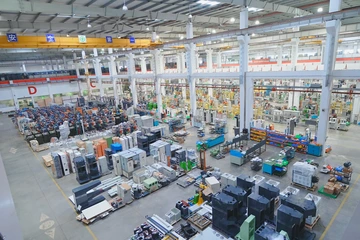
With decades of engineering experience, Heron Welder provides advanced resistance welding systems designed for global industrial use.
Key Strengths:
- Over 30 years of welding technology development
- Expertise in automotive OEM welding solutions
- High-performance MFDC resistance welding systems
- Global supply and engineering support
Heron systems are widely used in:
- Automotive manufacturing plants
- HVAC and compressor industries
- Electrical and appliance production lines
11. Technical Specifications of Aluminum Heat Shield Spot Welder
Welding Capacity
Designed for thin aluminum sheets (0.5mm–3.0mm range)
Power System
MFDC / capacitor discharge welding technology
Control System
Digital welding controller with adaptive feedback
Electrode System
Copper alloy electrodes optimized for aluminum welding
Automation Support
Compatible with robotic arms and CNC production systems
FAQs: Aluminum Heat Shield Spot Welding Technology
1. What is the best welding method for aluminum heat shields?
Resistance spot welding is the most efficient method for aluminum heat shields in automotive mass production due to its speed, precision, and suitability for thin sheet materials.
2. Can spot welding be used on thin aluminum sheets?
Yes, aluminum spot welding can be used on thin sheets (typically 0.5mm–2.5mm) when advanced current control and precise electrode force adjustment systems are applied.
3. Why is aluminum difficult to weld?
Aluminum is difficult to weld because it has high thermal conductivity, which quickly disperses heat, and it naturally forms an oxide layer that resists electrical conductivity during welding.
4. Where is aluminum heat shield welding used?
It is widely used in automotive engines, EV battery thermal protection systems, exhaust heat shields, chassis insulation, and industrial machinery components.
5. What is an aluminum heat shield spot welder?
An aluminum heat shield spot welder is a resistance welding machine designed to join thin aluminum sheets used in automotive heat shielding applications with high precision and minimal distortion.
6. How does resistance spot welding work for aluminum?
It works by applying pressure and passing a controlled electric current through aluminum sheets, generating localized heat that forms a weld nugget without excessive melting.
7. What industries use aluminum spot welding machines?
Industries include automotive manufacturing, electric vehicle production, HVAC systems, aerospace components, and industrial metal fabrication sectors.
8. What challenges occur when welding aluminum heat shields?
Common challenges include heat dissipation, electrode wear, oxide layer resistance, and deformation of thin aluminum sheets during high-temperature welding.
9. What is the role of MFDC technology in aluminum spot welding?
MFDC (Medium Frequency Direct Current) technology improves welding stability, reduces energy consumption, and ensures consistent weld quality for aluminum materials.
10. Why is aluminum spot welding preferred in automotive manufacturing?
It is preferred because it offers fast cycle times, high repeatability, low thermal distortion, and is easily integrated into automated production lines for OEM manufacturing.
Final Take: Precision Welding Solutions for Automotive Aluminum Manufacturing
The demand for aluminum heat shield spot welding systems continues to grow with advancements in automotive engineering and electric vehicle production.
Modern manufacturing requires:
- High precision
- Stable welding performance
- Automation compatibility
- Cost-efficient production
Advanced resistance welding technologies, such as those developed by Heron Welder, play a key role in supporting global automotive OEMs in achieving reliable and scalable production systems.