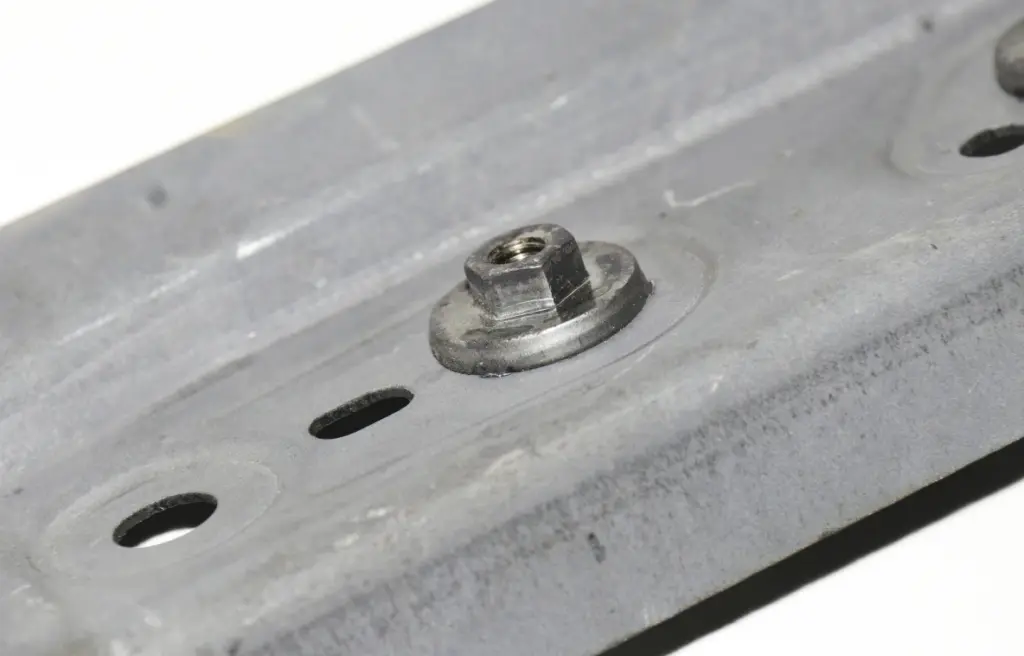
A bench spot welder is a compact, tabletop resistance welding machine built for precise, repeatable welds on small and delicate parts. Instead of using a large floor-standing machine, manufacturers place a bench spot welder directly at the assembly station. There it joins thin sheets, wires, tabs and terminals in a fraction of a second. The result is a strong, clean joint with no filler metal, no flux and very little heat spreading into the surrounding material.
In this guide, we explain how a bench spotwelder works, the main types available, where it is used, and how to choose the right model for your production line. Whether you build batteries, sensors, relays or precision hardware, this article will help you buy with confidence.
What Is a Bench Spot Welder?

A bench spot welder is a small resistance spot welding machine designed to sit on a workbench or table. Two electrodes, one upper and one lower, clamp the parts together while a short, controlled pulse of current passes through the joint. The electrical resistance at the contact point generates localized heat, melts a small nugget of metal, and fuses the parts as they cool under pressure.
This is the same principle behind industrial spot welding, only scaled down for low-force, low-energy work. A bench spot welder typically handles thin materials such as nickel strip, copper foil, fine wire and light-gauge sheet, where a large machine would be overkill and could damage the part.
Because the machine is compact, it fits easily into assembly cells, test stations and small workshops. Operators can load, weld and unload parts quickly without leaving their station.
How Does a Bench Spot Welder Work?
Every bench spot welder relies on Joule heating, where heat equals current squared, times resistance, times time (Q = I² × R × t). Because heat rises with the square of the current, even a small change in amperage has a big effect on the weld. That is why precise current control matters so much on small parts.
A bench spot welder follows a short, controlled sequence:
- Squeeze: The electrodes close and apply force so the parts make firm contact.
- Weld: A pulse of current flows through the joint, and a small molten nugget forms.
- Hold: The current stops, but the electrodes keep pressing while the nugget solidifies.
- Release: The electrodes open, and the finished part is removed.
The whole cycle can take only a few milliseconds to a few hundred milliseconds. That speed keeps heat concentrated at the joint and protects nearby components.
Three Settings That Control Weld Quality
Consistent results from a bench spot welder come down to three variables:
- Welding current or energy: Too little produces a weak joint, and too much causes spatter or burn-through.
- Weld time: Longer pulses add heat, and shorter pulses limit the heat-affected zone.
- Electrode force: Proper force keeps contact resistance stable and prevents expulsion of molten metal.
Electrode condition matters just as much. Clean, correctly shaped tips give repeatable welds, and worn or contaminated tips cause defects.
Key Components of a Bench Spot Welder
Understanding the main parts helps you compare machines and ask the right questions when you buy a bench spot welder:
- Power source: A transformer with an inverter, or a capacitor bank, that supplies the weld energy.
- Controller: Sets current, time and sequence. Better models include a protection circuit and an alarm display that flag faults before they damage parts.
- Welding head: Holds the electrodes and applies force, usually through a spring or pneumatic mechanism. It comes in single-head or double-head configurations.
- Electrodes: Usually copper alloys, and sometimes tungsten or molybdenum for difficult materials such as copper.
- Rigid body: A sturdy frame keeps the electrode heads from moving under pressure, which protects weld consistency.
- Start control: A foot pedal or pneumatic trigger that lets the operator keep both hands on the part.
When these parts are well engineered, a bench spot welder delivers the same weld thousands of times in a row.
Types of Bench Spot Welders
Not every bench spot welder uses the same power source. The two main technologies serve different applications, and choosing the right one is the most important buying decision.
MFDC Bench Spot Welders
An MFDC bench spot welder uses medium-frequency direct current delivered through an inverter. The output is smooth and stable, and the controller can shape the current precisely. This makes MFDC a strong choice for aluminum, copper, coated materials and applications that need tight control over heat input.
Heron’s bench range of MFDC machines spans 25 to 220 kVA, so it covers everything from fine electronics work to heavier-duty small-part production.
Capacitor Discharge Bench Spot Welders
A capacitor discharge bench spot welder stores electrical energy in capacitors and releases it in a few milliseconds. The pulse is extremely short, so the heat-affected zone is very small. That makes it ideal for tiny parts, dissimilar metals and heat-sensitive components. Capacitor discharge machines are rated in joules rather than kVA, and Heron’s bench models cover 500 to 1500 J.
MFDC vs Capacitor Discharge at a Glance
| Feature | MFDC bench spot welder | Capacitor discharge bench spot welder |
|---|---|---|
| Energy source | Inverter-based medium-frequency DC | Energy stored in capacitors |
| Pulse | Adjustable, controlled duration | Extremely short, milliseconds |
| Heat-affected zone | Low and controllable | Very low |
| Best for | Aluminum, copper, coated or thicker parts | Tiny parts, dissimilar metals, heat-sensitive items |
| Heron bench range | 25 to 220 kVA | 500 to 1500 J |
Conventional AC machines also exist. They are simpler, but they offer less control over the weld than MFDC or capacitor discharge systems, so most precision applications now use one of the two technologies above.
Single-Head vs Double-Head Configurations
Beyond the power source, a bench spot welder is available with a single head or a double head. A single-head machine makes one weld at a time and is ideal for flexible, varied work. A double-head machine typically places two welds in one cycle, which raises throughput on repetitive parts. Match the head type to your production rhythm.

Benefits of Using a Bench Spot Welder
Manufacturers choose a bench spot welder for good reasons:
- Precision: Controlled energy gives accurate welds on fine and delicate parts.
- Compact footprint: The machine fits on a workbench and integrates easily into assembly lines.
- Fast cycle times: Welds take milliseconds, which supports high output at a single station.
- Low heat input: Little heat reaches the surrounding area, so sensitive components stay safe.
- No consumables: There is no filler wire, flux or shielding gas to buy or manage.
- Easy training: Operators can learn the process quickly, and controls are simple to repeat.
- Stable quality: Programmed parameters produce the same result on every cycle, which supports traceability.
For small-part production, a bench spot welder often delivers lower cost per joint and more stable quality than manual alternatives.
Where Is a Bench Spot Welder Used?
A bench spot welder serves any industry that joins thin or small metal parts:
- Batteries: Joining nickel strips, tabs and terminals in battery cells and packs.
- Electronics: Welding leads, connectors and shielding components.
- Instrumentation: Assembling sensors, thermocouples and precision measuring parts.
- Low-voltage electrical: Joining contacts, relays and switch components.
- Wire products: Welding enameled wire and fine wire assemblies.
- Hardware: Fastening small brackets, clips and light-gauge parts.
In all of these sectors, the common need is a strong, clean, repeatable joint that does not damage the part.
Bench Spot Welder vs Floor-Standing Spot Welder

Choosing between machine sizes starts with the part. A bench spot welder suits thin materials, small parts and low-force joints. A floor-standing or press-type machine handles thicker sheet, larger assemblies and higher power. These larger machines belong to the wider family of resistance welding equipment, along with seam, projection and butt welders.
If your parts are small and your joints are delicate, a bench spot welder is usually the more economical and more precise choice. If you weld thicker body panels or large stampings, a larger machine is the better fit.
How to Choose the Right Bench Spot Welder
Use this checklist to select a bench spot welder that matches your production:
- Material and coating: Aluminum, copper, nickel and coated steels respond differently. MFDC often handles difficult materials best.
- Thickness and part size: Match the machine’s power to the total stack thickness and joint size.
- Power source: Choose capacitor discharge for tiny, heat-sensitive parts, or MFDC for more control and heavier work.
- Head configuration: Choose a single head for flexibility or a double head for higher throughput.
- Controls and protection: Look for a protection circuit, an alarm display and stable energy output.
- Production volume: High-volume lines need fast cycle times, solid fixtures and reliable duty capacity.
- Supplier support: Work with a manufacturer that offers sample testing, customization and after-sales service.
Always test your real parts before you commit. A qualified supplier can run sample welds and recommend the right power source, electrodes and parameters for your application.
Maintenance Tips for Your Bench Spot Welder
A few simple habits keep a bench spot welder performing consistently:
- Dress electrodes regularly so the tip face stays clean and correctly shaped.
- Check alignment so the upper and lower electrodes meet squarely.
- Verify force settings at the start of each shift or batch.
- Clean the parts so oil and oxide do not raise contact resistance.
- Keep spare electrodes on hand to avoid downtime.
- Review weld data if your controller records it, and look for drift over time.
Good maintenance extends machine life and keeps weld quality inside your specification.
Frequently Asked Questions
Q1. What is a bench spot welder used for?
A bench spot welder joins small and thin metal parts through resistance heating. It is widely used for battery tabs, electronic components, sensors, relays, wire assemblies and light hardware.
Q2. Can a bench spot welder weld aluminum and copper?
Yes, with the right setup. Aluminum and copper conduct heat and electricity very well, so they need short, high-energy pulses and precise control. MFDC and capacitor discharge machines handle these materials best, and electrode choice matters.
Q3. How is a bench spot welder different from laser welding?
A bench spot welder uses electrical resistance and pressure, so it needs electrode contact on the part. Laser welding uses a focused beam and needs no contact. For many small-part applications, a bench spot welder is more economical to buy and operate.
Q4. How do I choose between MFDC and capacitor discharge?
Choose capacitor discharge for very small, heat-sensitive or dissimilar-metal parts. Choose MFDC when you need adjustable pulse control, higher power or work on aluminum, copper and coated materials.
Final Thoughts on Choosing a Bench Spot Welder
A bench spot welder gives small-part manufacturers precise, fast and repeatable joints in a compact package. Whether you need an MFDC model for controlled, heavier-duty work or a capacitor discharge model for delicate parts, the right machine improves quality and lowers your cost per weld.
At Heron, we design and manufacture resistance welding equipment, including MFDC and capacitor discharge bench welders in single-head and double-head configurations. Send us your part samples and application details, and our engineers will recommend the right machine. Contact the Heron team today to request a tailored quotation.