Some welding jobs don’t leave room for error. Attaching a stud or nut to a thin-gauge automotive panel, a dissimilar metal assembly, or a heat-sensitive component means every degree of unnecessary heat is a risk to the part underneath. That’s precisely the problem a stud welding machine is built to solve — and it’s why the technology behind it matters just as much as the equipment itself.
Heron’s capacitor discharge (CD) stud welder machines are engineered around that principle. Rather than relying on sustained heat like traditional welding methods, our CD welding machine technology delivers a concentrated, split-second energy discharge — joining studs, nuts, and threaded fasteners with minimal heat-affected zone and no risk of thread deformation.
For manufacturers in automotive, appliance, and sheet-metal production, that precision isn’t a nice-to-have. It’s what keeps assembly lines moving without rework, scrapped parts, or compromised structural welds.
What Is a CD Stud Welding Machine?
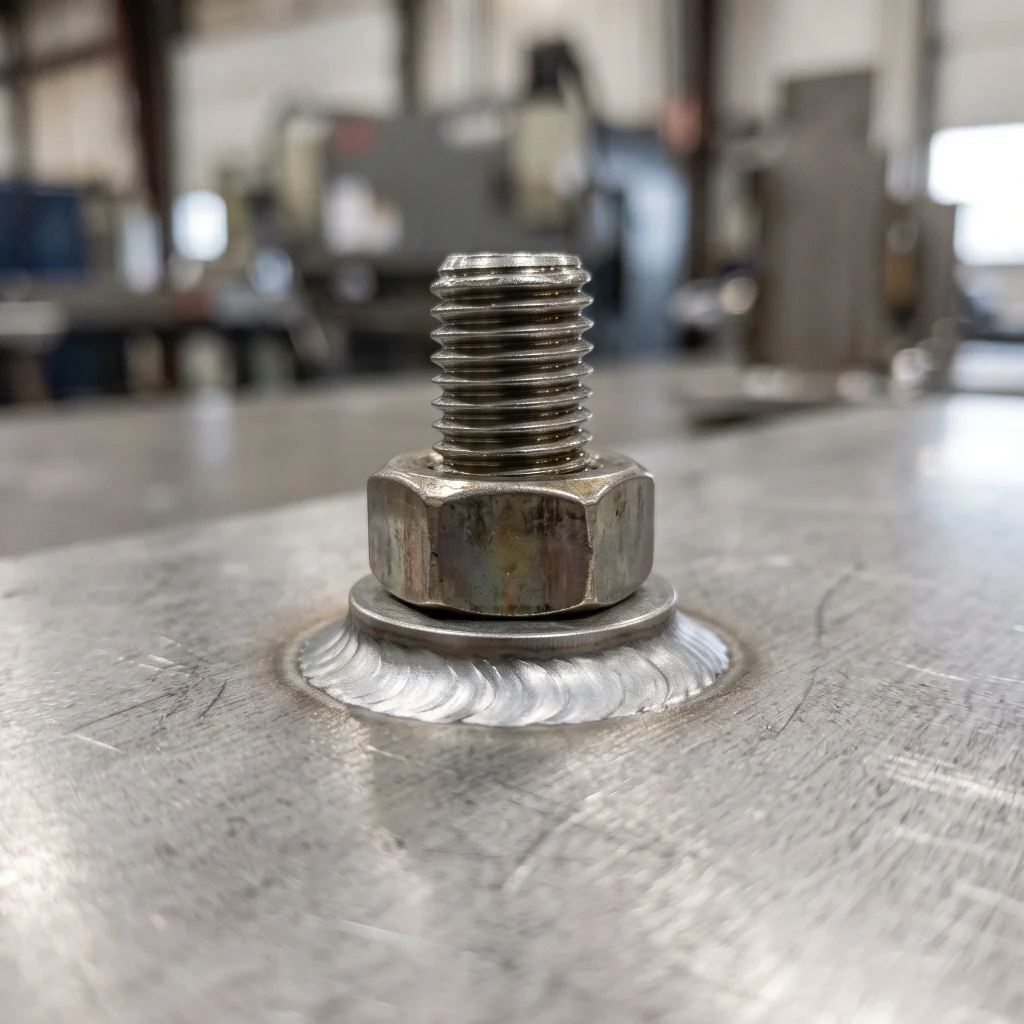
A CD stud welding machine uses stored electrical energy, released in a fraction of a second, to fuse a stud or nut to a metal surface. Unlike arc-based stud welding, which relies on a sustained electrical arc and more heat input, capacitor discharge welding concentrates energy into an extremely short pulse.
That difference matters most when you’re working with thin materials or joining dissimilar metals — situations where too much heat can warp, discolor, or structurally weaken the base material. A properly engineered cd stud welder avoids that risk entirely, which is why it’s become the standard choice for automotive fastener applications where appearance and structural integrity both matter.
Why Manufacturers Choose Heron’s Capacitor Discharge Stud Welder
30+ Years of Resistance Welding Expertise
Heron has spent over three decades developing resistance and capacitor discharge welding technology, working directly with manufacturers to solve real production challenges rather than offering one-size-fits-all equipment. That experience shows up in the details — from energy control precision to the durability of the machines themselves.
When you’re evaluating a capacitor discharge stud welder, you’re not just buying a machine. You’re partnering with a team that understands how your specific application needs to perform on the line, day after day.
Minimal Heat, Maximum Weld Integrity
Heron’s CD stud welding machines operate with a small heat-affected zone and minimal water cooling requirements — a meaningful advantage both for weld quality and for operating costs. Because the thread isn’t deformed by excess heat, fasteners maintain their integrity, and downstream assembly issues are avoided before they start.
This is especially critical in automotive manufacturing, where a single failed weld on a structural fastener can compromise an entire assembly.
Inside Heron’s CD Welding Machine Lineup
L Series: Precision for Small Screws and Nuts
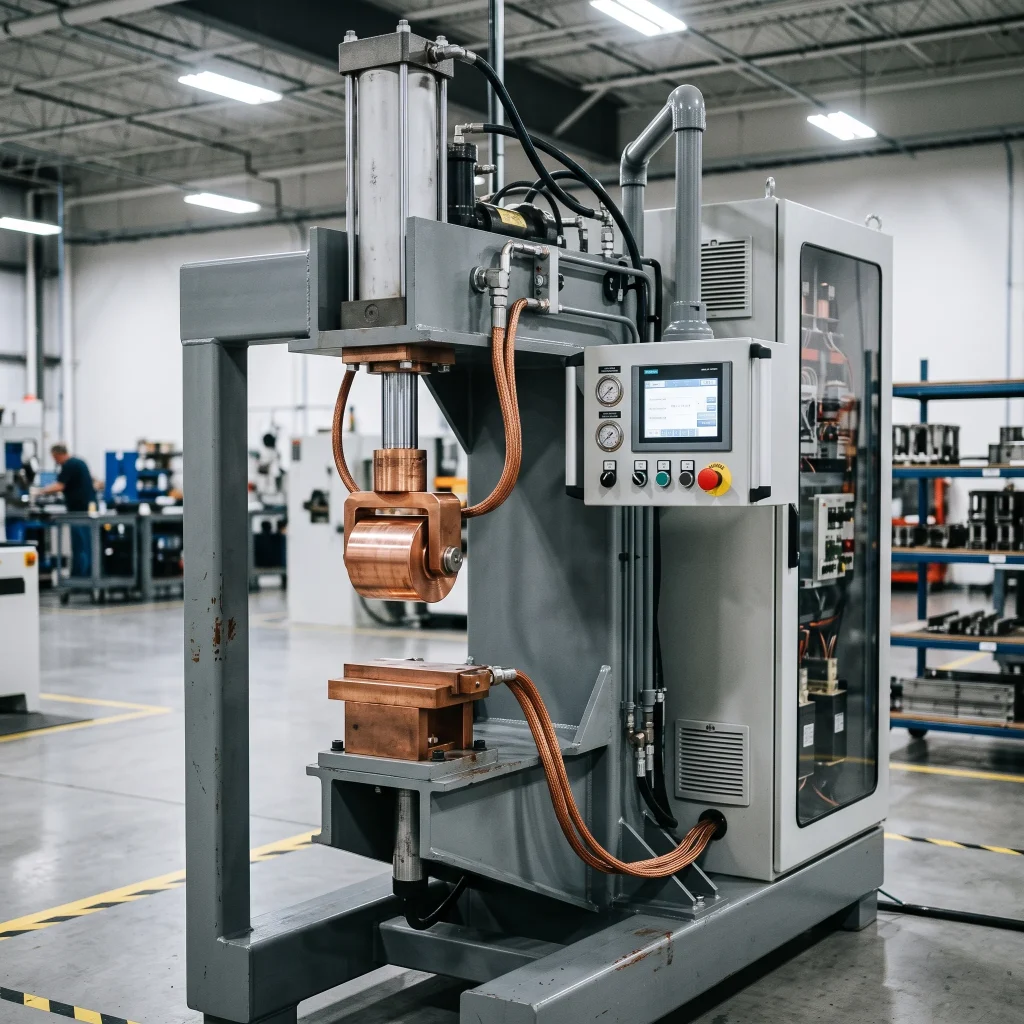
Heron’s L series capacitor discharge projection welder is purpose-built for small screw and nut projection welding. It functions as a high-precision nut welder, ideal for lighter-duty applications where accuracy matters as much as speed.
H Series: Built for Automotive Body Structures
For heavier-duty applications, Heron’s H series capacitor discharge projection welder is equipped with a roller ram cylinder and a sturdy frame designed for demanding automotive body work — including door beams, front and rear bumpers, A/B-pillars, and roof covers. It also doubles as a capable nut welder, and can be paired with a real-time quality control system that transmits welding parameters to an external computer for full production visibility.
Where a Stud Welding Machine Makes the Difference
A stud welder machine earns its place on the production line in applications like:
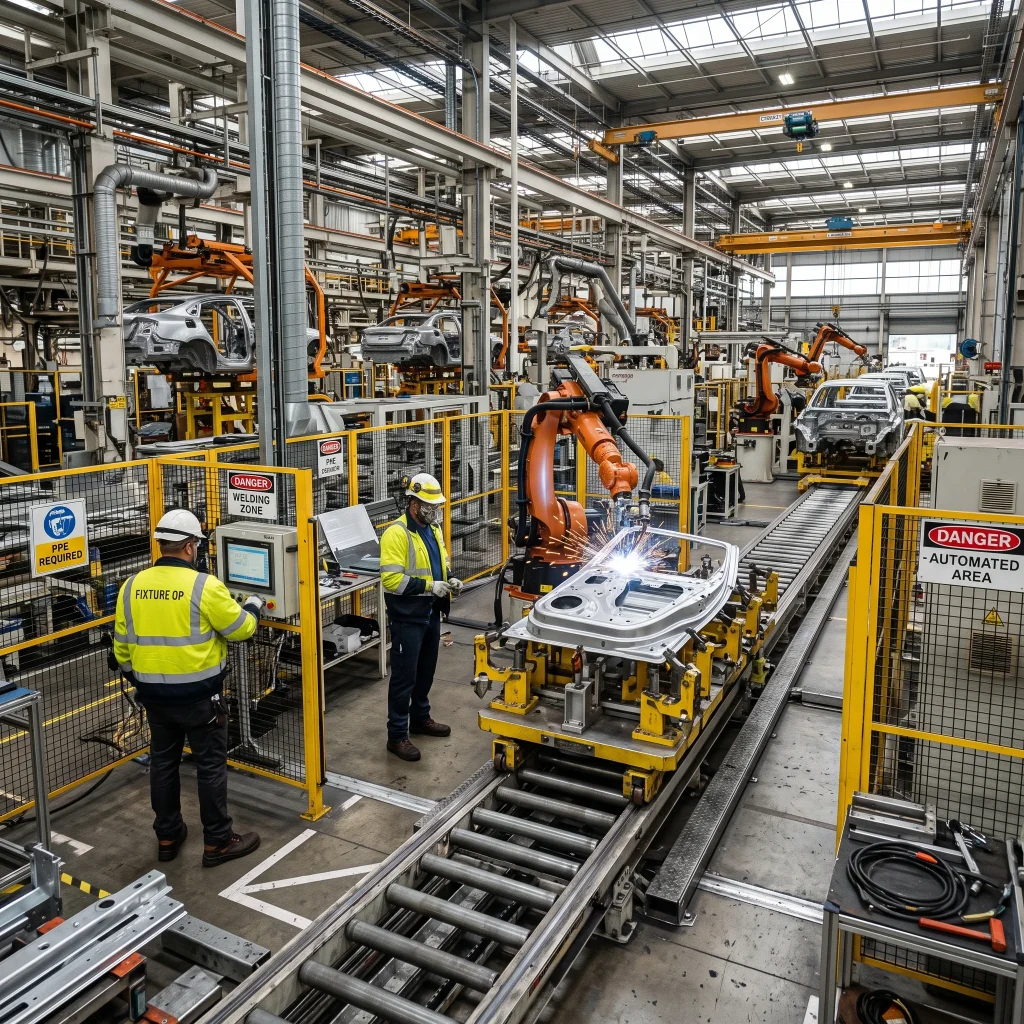
- Automotive body structures — door beams, bumpers, pillars, and roof assemblies
- Threaded fastener attachment — nuts and studs on structural components
- Dissimilar metal joining — applications where traditional welding risks material damage
- Thin-gauge sheet metal — parts where heat control is critical to avoid warping
Across each of these, the common requirement is the same: a clean, structurally sound weld without compromising the part around it.
What to Ask Before Choosing a Capacitor Discharge Stud Welder
Not every stud welder on the market is engineered with the same precision. Before selecting a supplier, it’s worth asking:
- What’s the machine’s actual heat-affected zone, and how is that controlled?
- Can the equipment handle both small-scale nut welding and heavier automotive body applications?
- Does the manufacturer support real-time quality monitoring and parameter tracking?
- What does long-term support and parts availability actually look like?
These questions matter because a stud welding machine isn’t a one-time purchase — it’s a production tool your line depends on for consistent, repeatable results.
Partnering With Heron: From Application Review to Production
Every Heron engagement starts with understanding the application — the materials, the fastener type, and the production volume — before recommending a configuration. From there, our team supports integration and ongoing operation, so your CD stud welder keeps performing as your production needs evolve.
Frequently Asked Questions
Q1. What makes a CD stud welding machine different from arc stud welding?
Capacitor discharge welding uses a concentrated, split-second energy release instead of a sustained arc, resulting in a much smaller heat-affected zone. This makes it better suited for thin materials, dissimilar metals, and applications where thread integrity matters.
Q2. Can a capacitor discharge stud welder handle both nuts and studs?
Yes. Heron’s CD welding machines are designed to double as high-performance stud welders and nut welders, using precise energy control for threaded fastener applications.
Q3. What industries typically use a stud welding machine like this?
Automotive manufacturing is the primary application — particularly body structure components like door beams, bumpers, and pillars — along with appliance and general sheet-metal fabrication.
Q4. What’s the difference between Heron’s L series and H series CD welders?
The L series is designed for small screw and nut projection welding, while the H series is built for heavier-duty automotive body applications, with a roller ram cylinder and sturdy frame for demanding production environments.
Q5. Does Heron’s CD welding machine support quality monitoring?
Yes. The H series can be paired with a real-time quality control system that transmits welding parameters to an external computer, supporting full production traceability.
Q6. How do I get started with Heron?
Share your application details — material type, fastener specifications, and production volume — and Heron’s team will help identify the right stud welder configuration for your line.
Ready to Upgrade Your Stud Welding Process?
Precision matters when you’re joining fasteners to structural components — there’s no room for excess heat or inconsistent welds. Heron’s CD stud welding machines are engineered to deliver clean, reliable results across automotive, appliance, and sheet-metal production.