
A DC welding machine is one of the most important tools in modern sheet metal and component production. In resistance welding, it delivers smooth, stable direct current through the workpieces to form strong, repeatable welds. Factories use it in automotive parts, compressors, motors, circuit breakers and home appliances, where consistent quality matters as much as speed.
This guide explains how a DC welding machine works, the main types, the benefits over traditional AC systems, and how to choose the right machine for your production line.
What Is a DC Welding Machine?
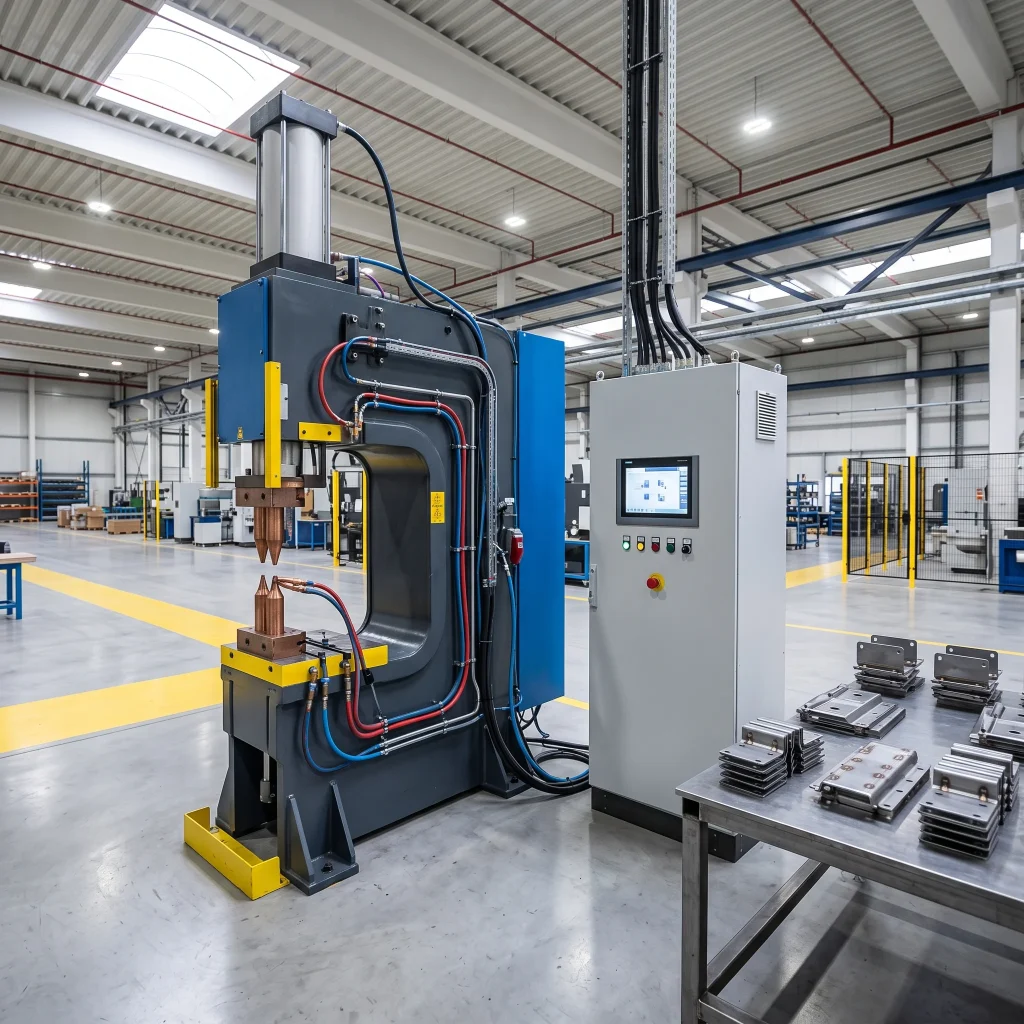
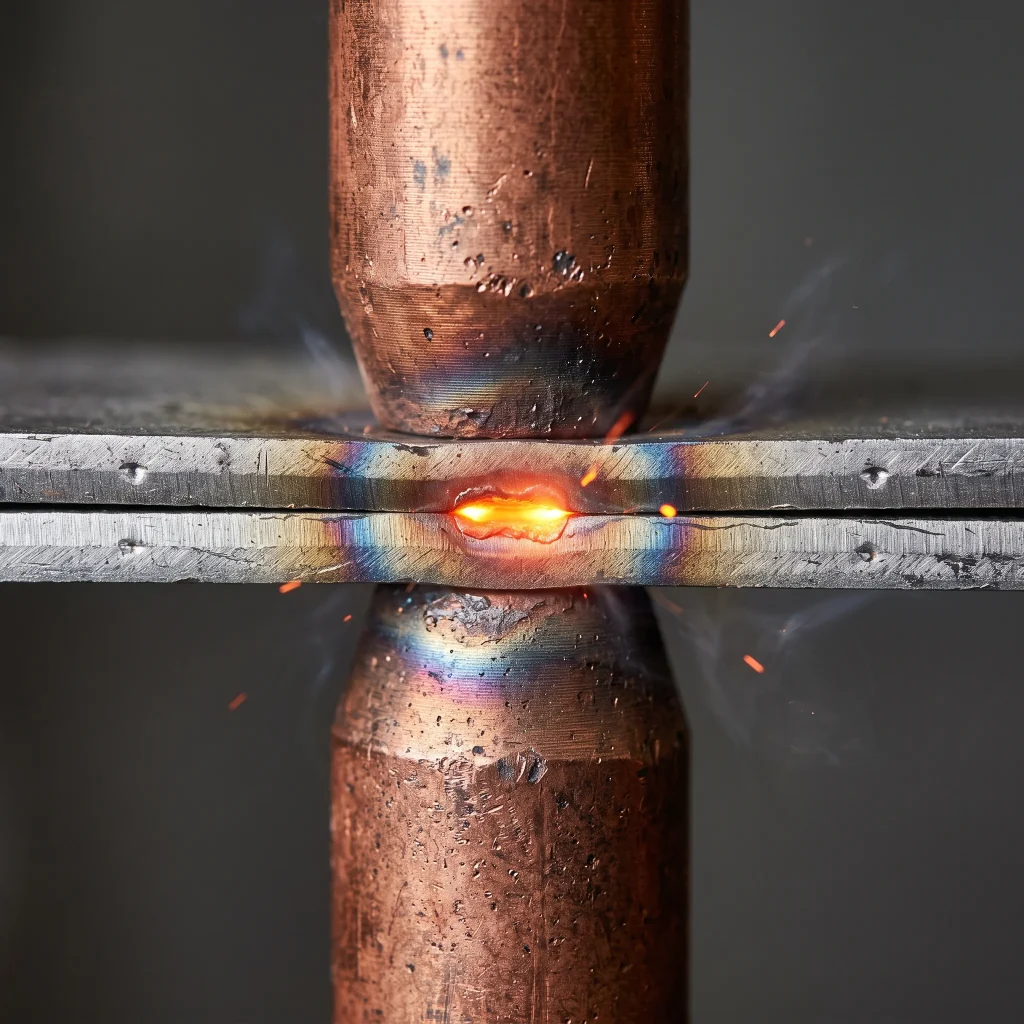
In arc welding, “DC” simply describes the polarity of the power source. In resistance welding, the term means something different. A DC welding machine for resistance welding passes direct current through two or more metal parts held together under electrode force. The electrical resistance at the joint generates heat, the metal melts at the interface and a weld nugget forms as it cools.
This is the principle behind resistance welding, the family of processes that includes spot, projection, seam and butt welding. A DC welding machine is the preferred choice when you need tight control, minimal heat variation and reliable results on demanding materials.
At Heron, DC resistance welding is a core technology. The company has focused on welding for more than 30 years and builds machines for spot, projection and seam welding, as well as full automation lines.
How a DC Welding Machine Works
Most industrial DC resistance welders follow the same basic sequence:
- Power input: The machine draws power from the three-phase supply.
- Inversion: An inverter converts the incoming power into medium frequency AC.
- Transformation: A welding transformer steps the voltage down and the current up.
- Rectification: A rectifier converts the output to direct current.
- Welding: The current flows through the electrodes and workpieces under controlled force and time.
Because the output is rectified DC, the current does not cross zero the way standard AC does. The heating is steadier and the weld energy is easier to control. This gives more consistent weld nuggets, especially on thicker or coated materials. It is also the basis of spot welding on modern production lines.
Main Types of DC Welding Machine
Different production needs call for different machine designs. These are the types most manufacturers consider.
MFDC Welders
MFDC welders (medium frequency direct current) are the most widely used DC welding machine in industry. The medium frequency inverter allows a smaller, lighter transformer, fast current response and very precise control of the weld cycle. Heron’s MFDC range covers spot and press welders in a wide power range. The technology is applied to work such as compressor shells, motor parts, circuit breaker components and automotive parts. You can read more about the underlying MFDC technology on the Heron site.
Three-Phase DC Resistance Welding Machines
A three-phase DC welders draws power evenly across all three phases of the supply. That balanced load is gentler on your factory’s electrical network and avoids the power imbalance single-phase machines can cause. These machines are mainly used for spot and projection welding of ferrous metals. Heron offers three-phase DC models in several ratings, including 3×80 KVA, 3×100 KVA and 3×400 KVA.
Capacitor Discharge Welders
Capacitor discharge welders store energy and release it in a very short pulse. They suit projection welding, stud welding and small or heat-sensitive parts. They use a different technology from MFDC, but they sit in the same resistance welding family and often work alongside MFDC machines in mixed production.
Key Benefits of a DC Welding Machine
Compared with traditional AC resistance welders, a DC welding machine brings clear advantages.
Stable, consistent welds. Smooth DC output produces a steady heat input. This improves nugget consistency from the first weld to the millionth.
Better results on hard-to-weld materials. DC welding is well suited to high-strength steel and hot-stamped steel, which are common in modern automotive and appliance manufacturing. With the right machine and weld schedule, it can also be used on other demanding metals.
Balanced power draw. Three-phase supply spreads the load evenly. This helps reduce stress on your power network and supports better power factor.
Energy efficiency. Medium frequency inverters transfer energy efficiently, so less power is wasted as heat in the transformer and cables.
Compact, lightweight transformers. Higher frequency means a smaller transformer for the same output. This is a big advantage for robot-mounted welding guns and tight production cells.
Fast, precise control. Modern controllers adjust current in milliseconds. You can program multi-stage weld schedules, such as pre-heat, weld and post-heat, for tricky joints.
Lower operating cost over time. Better energy use, fewer defects and less rework add up quickly in high-volume production.
Where a DC Welding Machine Is Used
A DC welding machine fits a wide range of manufacturing sectors. Heron serves customers in these industries:
- Automotive: Body parts and other automotive components made from high-strength steel.
- Compressors and HVAC: Compressor shells, suction tubes, reservoir caps and terminals for air conditioning and refrigeration.
- Motors: Brush holders, rectifiers and other parts for starter motors, generators and drive motors.
- Low-voltage electrical: Circuit breakers, switch components and multi-strand wire joints.
- Home appliances: Washing machine parts, oven liners, range hood cases, dishwasher tanks and water heater parts.
- Hardware: Toolboxes, wire mesh products, pump parts and fire extinguisher bottles.
In each case, the goal is the same: strong, clean welds at production speed, with results you can trust.
How to Choose the Right DC Welding Machine
Choosing well saves money and avoids production problems later. Work through these questions.
1. What materials and thicknesses will you weld?
Coated steel and other demanding materials need more precise control than mild steel. Share your exact materials and combinations with your supplier so the machine can be matched to them.
2. Which welding process do you need?
Spot welding, projection welding and seam welding each need a different machine setup. Decide which one drives most of your volume.
3. How much power do you need?
Machine ratings, such as 80 KVA or 400 KVA, should match the thickness, number of welds and cycle time of your parts. Undersized machines overheat, and oversized ones waste capital.
4. Do you need automation?
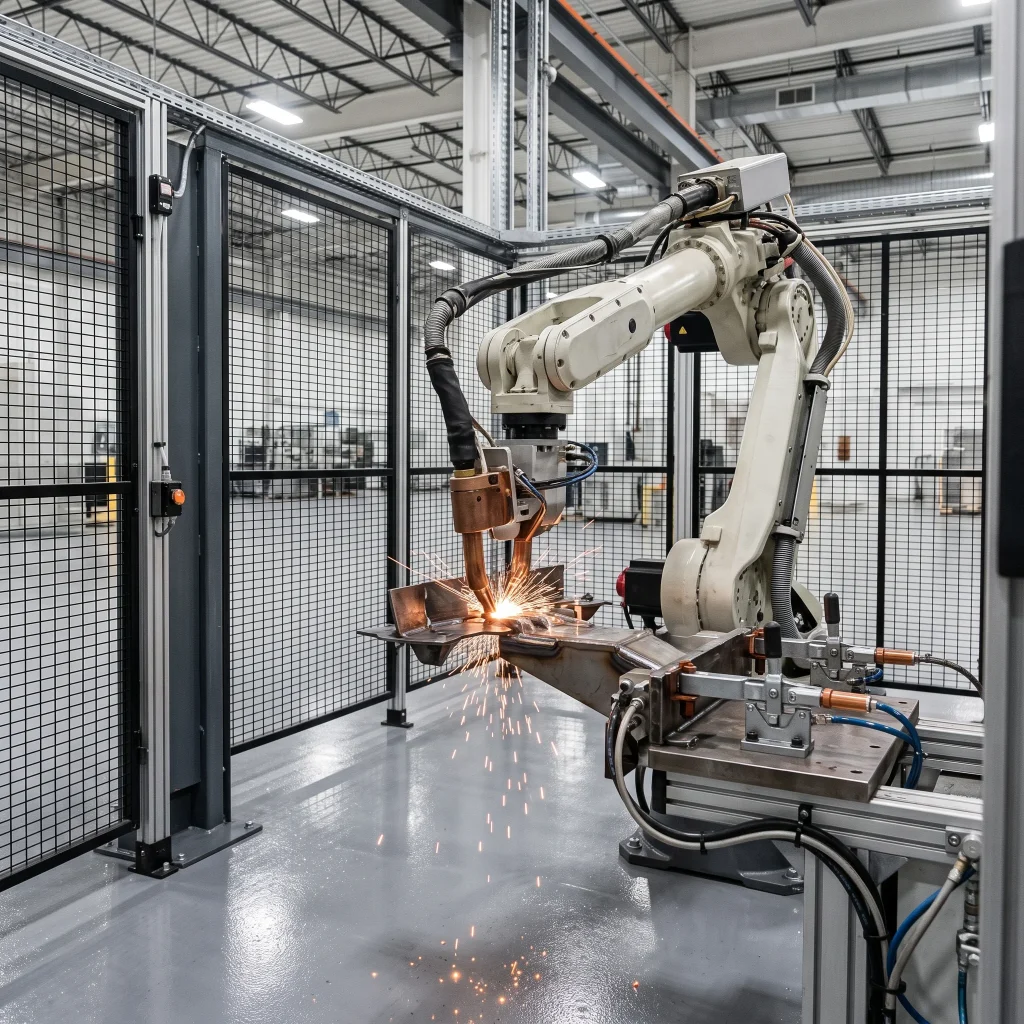
For high volumes, consider integrating the welder into a robotic cell or a custom production line. Heron designs both standalone machines and complete automatic production lines.
5. What quality monitoring do you need?
If you must prove weld quality to customers, ask about monitoring options. Heron also offers real-time monitoring technology to help track weld quality.
6. What support is available?
Installation, training, spare parts and fast technical help matter. A good supplier helps you reach stable production sooner and keeps downtime short.
Setup and Best Practices for Stable Welds
Even the best DC welding machine needs good setup. Follow these practices to protect weld quality:
- Keep electrodes in good condition. Worn or mushroomed electrode tips change the current density and weaken the weld. Dress or replace them on a schedule.
- Set the right electrode force. Too little force causes expulsion and spatter. Too much can cause deep indentation or thin nuggets.
- Clean the parts. Heavy oil, scale or contamination at the joint raises resistance unpredictably.
- Check cooling. Water cooling protects the transformer, rectifier and electrodes. Low flow or warm water shortens equipment life.
- Run destructive tests. Before production, test sample welds with peel or chisel tests to confirm your settings.
- Log your parameters. Save proven weld schedules for each part number so setup is repeatable across shifts.
Maintenance Tips for Long Machine Life
Regular maintenance keeps a DC welding machine accurate and dependable. Inspect water lines and fittings for leaks, check cables and shunts for wear, and clean dust from the control cabinet. Verify that the electrode force and current readings are within range, and replace worn consumables such as electrodes, shunts and pins before they cause defects. A simple maintenance schedule prevents most unplanned stops.
Why Work With Heron
Heron is a manufacturer of metal joining equipment, with expertise in MFDC, capacitor discharge welding and self-pierce riveting. It supplies standard welding machines and customized automation solutions, and it serves customers across automotive, electrical, appliance, compressor and hardware industries worldwide. Whether you need a single machine or a full production line, the team can help you choose the right configuration. To discuss your project, contact Heron for a quotation.
Frequently Asked Questions
Q1. What is a DC welding machine used for?
In resistance welding, it is used for spot, projection and seam welding of metal parts. It is common in automotive, appliance, compressor, motor and electrical manufacturing.
Q2. What is the difference between MFDC and AC resistance welding?
MFDC converts the supply into medium frequency and rectifies it into DC. This gives more stable current and better control than traditional AC, especially on high-strength steel.
Q3. Why choose a three-phase DC welding machine?
It draws power evenly across all three phases, which reduces grid imbalance and supports efficient operation in factories with demanding welding schedules.
Q4. Can a DC welding machine weld aluminum?
Yes, MFDC technology can be used for aluminum alloys, depending on the machine and weld schedule. Contact Heron’s team to confirm the right setup for your parts.
Conclusion
A DC welding machine gives manufacturers stable, repeatable and efficient resistance welding, even on challenging materials. MFDC and three-phase DC designs deliver precise control and balanced power use. Match the machine to your materials, process and volume, keep electrodes and cooling in good condition, and you will see fewer defects and lower costs.
If you are planning a new welding line or upgrading existing equipment, get in touch with our team to find the right DC welding machine for your application.