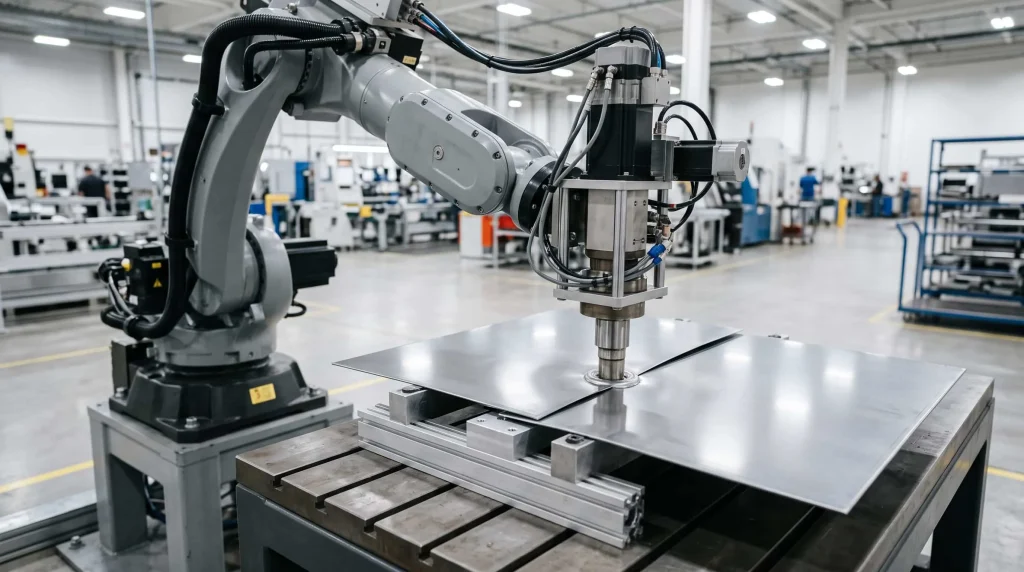
Industrial Resistance Welder Solutions for High-Volume Factory Production
Industrial resistance welding has long been a cornerstone of high-volume factory production, powering critical manufacturing lines across automotive, electrical equipment, appliance, and metal hardware sectors. Unlike conventional joining methods, resistance welding uses controlled electrical current and mechanical force to create solid bonds between metal parts without the need for filler materials or secondary machining. This makes it ideal for environments where repeatability, speed, and strength are non-negotiable.
In high-volume production scenarios, every cycle counts from weld quality to equipment uptime. Resistance welding machines are engineered to deliver consistent weld strength, precise parameter control, and seamless integration into automated lines. Manufacturers seek solutions that reduce cycle times, maintain product integrity, and support advanced applications such as battery pack assembly and automotive body fabrication. The right resistance welding solutions not only improve throughput but also drive down operational costs by minimizing rework and defects.
In this guide, we will explain how industrial resistance welder solutions support high-volume manufacturing, what technologies are involved, and how factories optimize performance for sustainable production success.
What Is an Industrial Resistance Welder?
An industrial resistance welder is a type of resistance welding machine designed for heavy-duty production environments. It joins metal parts through the application of electrical current and compressive force applied via electrodes, generating heat internally where the metal surfaces meet. The process relies on material resistance to current flow, producing a weld at the exact point of contact.
Core Components
-
Power Supply: Delivers controlled welding current.
-
Electrodes: Transmit current and apply pressure.
-
Control Unit: Regulates welding parameters like current, time, and force.
-
Frame & Arm Assembly: Houses and positions the welder.
Unlike low-capacity welders, industrial resistance welding machines are built for continuous duty cycles and high reliability. They are typically found in assembly lines producing thousands of components per shift. Because of their robust design, they support materials like high-strength steel, aluminum, and alloys commonly used in automotive and appliance manufacturing.
How Industrial Resistance Welding Works in Factory Production Lines
Understanding the resistance welding process is key to selecting the right solution for your production environment. The process centers around three primary factors: current, time, and force.
Resistance Welding Process Explained
When the welding cycle begins:
-
Electrodes clamp the parts together.
-
A controlled current passes through the contact area.
-
Heat is generated due to electrical resistance.
-
The material reaches plastic deformation temperature.
-
Upon cooling, a solid bond forms.
Key Parameters
-
Welding Current: Determines heat input.
-
Weld Time (Duration): Affects penetration and nugget size.
-
Force: Ensures electrical contact and proper deformation.
Heat and Weld Nugget Formation
Heat in resistance welding is concentrated at the interface where parts meet. This enables rapid heating, localized fusion, and the formation of a weld nugget — a small, strong fusion zone within the joint. Controlling these parameters is essential for consistent weld quality in high-speed production.
This repeatability and control make resistance welding ideal for high-volume applications where defect tolerance is extremely low.

Types of Industrial Resistance Welding Machines
There are several categories of industrial resistance welding equipment, each optimized for specific tasks and production requirements.
Industrial Spot Welding Machines
Spot welders join overlapping sheet metals at discrete points. These machines are commonly used in:
-
Automotive body panels
-
Electrical enclosures
-
Appliance frames
Spot welding is fast and suitable for high-throughput assembly lines.
Projection Resistance Welders
Projection welding uses raised projections on the workpiece as predetermined weld locations. It is widely used for:
-
Fasteners
-
Studs
-
Complex part assemblies
The projections concentrate welding current and force, improving consistency.
Seam Resistance Welding Systems
Seam welders use rotating wheel electrodes to create continuous welds. Typical applications include:
-
Fuel tanks
-
HVAC ducts
-
Drum shells
These systems allow leak-proof joints and are integral to high-volume tubular manufacturing.
MFDC Resistance Welders
MFDC (Medium Frequency Direct Current) welders provide:
-
Stable current output
-
Faster welding cycles
-
Lower energy consumption
They are increasingly preferred in automated production environments where precision and speed are priorities.
Automation and Advanced Technology in Industrial Resistance Welders
Modern factories demand resistance welding systems that go beyond standalone machines. Automation, integration, and smart control are now essential.
Automated Resistance Welding Systems
Automated resistance welding systems integrate:
-
Conveyor lines
-
Robotic manipulators
-
Programmable controllers
This level of integration enables:
-
High cycle rates
-
Reduced manual intervention
-
Better repeatability
Robotic Resistance Welding Integration
Robots offer precise motion control and consistency across welds. In automotive and EV battery production lines, robots equipped with resistance welding guns deliver:
-
Single-axis motion
-
Multi-axis positioning
-
Vision-assisted alignment
Servo-Controlled Welding
Servo systems enable controlled electrode movement with feedback loops, enhancing:
-
Position accuracy
-
Force precision
-
Adaptive welding control
Industry 4.0 and Smart Welding Solutions
Advanced systems incorporate sensors and monitoring for:
-
Weld parameter feedback
-
Real-time quality data
-
Predictive maintenance alerts
These contribute to digital manufacturing environments where process data drives continuous improvement.
Welding Quality Control and Process Monitoring
High-volume production tolerates little variation. Advanced resistance welding solutions integrate quality control systems that monitor and verify each weld in real time.
Real-Time Quality Monitoring
Systems track:
-
Weld current consistency
-
Electrode force and displacement
-
Weld time accuracy
By comparing actual data to preset values, systems can flag welds that fall outside tolerances, directing them for inspection or rejection.
Repeatable Weld Quality
Quality control systems help ensure:
-
Uniform weld strength
-
Consistent production results
-
Traceable data for compliance
In regulated industries like automotive or electrical manufacturing, this traceability can be critical for product certification and customer confidence.
Applications of Industrial Resistance Welders Across Industries
Industrial resistance welding solutions are embedded in multiple sectors where reliability, speed, and precision matter.
Automotive and EV Manufacturing
Resistance welding is used in:
-
Body-in-white assemblies
-
Battery pack modules
-
Structural brackets
High production volumes demand machines that run continuously with minimal downtime.
Electrical and Electronics Production
Components like:
-
Transformer cores
-
Switchgear frames
-
Contact assemblies
require precise resistance welding to ensure electrical performance and safety.
Home Appliance and HVAC Equipment
Appliances such as:
-
Washing machines
-
Refrigerators
-
HVAC air handlers
are assembled using custom resistance welding equipment optimized for sheet metal and component frames.
Motors, Compressors, and Hardware
Small but critical components like:
-
Motor laminations
-
Compressor brackets
-
Fastener welds
benefit from spot and projection welding solutions designed for volume and precision.
Benefits of Industrial Resistance Welder Solutions for High-Volume Factories
Understanding how these systems impact production helps justify investment decisions.
High Productivity and Fast Cycles
Industrial resistance welders operate at speeds suitable for:
-
Multi-shift operations
-
Synchronization with conveyor systems
-
Minimal idle time
This supports higher throughput and output targets.
Energy Efficiency
Modern welders, especially MFDC models, offer improved:
-
Power factor
-
Current stability
-
Reduced heat loss
This translates into lower operational costs and improved sustainability metrics.
Consistent Weld Strength
Repeatable control of parameters ensures:
-
Stable weld quality
-
Reduced rework
-
Higher first-pass yield
This consistency is crucial for manufacturing excellence.
Reduced Labor and Operational Costs
Automation reduces manual intervention, lowering:
-
Labor costs
-
Human error
-
Training requirements
It also enables skilled workers to focus on oversight and optimization.
Key Factors to Consider When Selecting an Industrial Resistance Welder
Choosing the right equipment requires practical criteria that align with production goals.
Production Volume and Material Type
Consider:
-
Sheet metal thickness
-
Material conductivity
-
Weld frequency
These influence machine rating and electrode specifications.
Automation Integration
Evaluate:
-
Compatibility with robotic cells
-
PLC interfaces
-
Safety systems
Automation readiness is essential for future-proofing equipment.
MFDC vs Conventional Systems
MFDC systems typically deliver:
-
Better control
-
Reduced cycle times
-
Lower energy consumption
For high-speed lines, MFDC welders often outperform older designs.
Maintenance and Reliability
Look for:
-
Easy electrode changeovers
-
Accessible service points
-
Long service life
Minimizing downtime improves total cost of ownership.
Custom Industrial Resistance Welding Solutions for Factory Production
Off-the-shelf machines are a start, but many manufacturers need custom solutions that match their unique production lines.
Tailored System Design
Custom systems consider:
-
Part geometry
-
Weld location strategy
-
Material variations
This ensures efficient process flow and performance.
Integration with Existing Lines
Custom welders fit seamlessly into current:
-
Conveyor systems
-
Robotic cells
-
Quality reporting workflows
This minimizes disruptions and training time.
Scalable for Growth
Factories planning capacity expansion need solutions that:
-
Support modular upgrades
-
Add robotic stations
-
Integrate new sensors
This scalability protects capital investment.
Why Industrial Manufacturers Choose Advanced Resistance Welding Solutions
Factories prioritize solutions that deliver measurable operational performance.
Proven Performance
Industrial resistance welders are validated through:
-
Cycle time testing
-
Weld consistency data
-
Service records
Manufacturers rely on this data for purchasing decisions.
Stable Results and Process Optimization
Automated systems reduce variation, enabling:
-
Higher product quality
-
Less scrap
-
Better production forecasts
After-Sales Support and Engineering Expertise
Working with experienced vendors ensures:
-
Rapid issue resolution
-
Spare parts availability
-
Application optimization consulting
FAQs on Industrial Resistance Welders
1. What is an industrial resistance welder?
An industrial resistance welder is a machine that joins metal parts by applying electrical current and mechanical pressure at the contact point, creating a solid, repeatable weld. These machines are designed for high-volume production and are used in automotive, appliance, and electrical component manufacturing.
2. How does resistance welding work in factory production?
Resistance welding works by passing a controlled electric current through overlapping metal parts while applying force with electrodes. The heat generated due to electrical resistance melts the metal at the interface, forming a weld nugget. This process is fast, energy-efficient, and highly suitable for automated production lines.
3. What are the types of industrial resistance welding machines?
The main types include:
-
Spot welders – for discrete weld points on sheet metal
-
Projection welders – for studs, fasteners, or raised projections
-
Seam welders – for continuous, leak-proof welds
-
MFDC (Medium Frequency DC) welders – for precise, high-speed, automated applications
4. What materials can be welded using an industrial resistance welder?
These welders can handle a wide range of materials including:
-
High-strength steel
-
Aluminum and aluminum alloys
-
Coated metals (galvanized, zinc-plated)
-
Copper and brass (with appropriate electrodes and settings)
5. What industries use industrial resistance welders?
Key industries include:
-
Automotive & EV manufacturing – body panels, battery packs
-
Electrical & electronics – switchgear, transformers
-
Home appliances & HVAC – washing machines, air handlers
-
Motors & compressors – laminations and brackets
6. What are the advantages of using resistance welding in high-volume production?
-
Fast welding cycles for increased throughput
-
Consistent, repeatable weld quality
-
Energy-efficient operation with MFDC or automated systems
-
Reduced labor costs through automation
-
Minimal post-weld finishing and rework
7. How is welding quality monitored in industrial resistance welders?
Modern systems use real-time monitoring to track:
-
Weld current and voltage
-
Electrode force and displacement
-
Weld time and nugget size
This ensures repeatable welds, traceability, and reduced defects in high-volume production.
8. Can industrial resistance welders be automated?
Yes. Industrial resistance welders can be integrated with:
-
Robotic manipulators for precise positioning
-
Servo-controlled welding guns for accurate force and motion
-
PLC and sensor systems for real-time quality control
Automation improves efficiency, repeatability, and reduces manual labor.
9. How do MFDC resistance welders differ from conventional systems?
MFDC (Medium Frequency Direct Current) welders provide:
-
Stable current for consistent welds
-
Faster cycle times for high-volume production
-
Reduced energy consumption
-
Better control for delicate or thin materials
They are ideal for modern automated factory applications.
10. What factors should manufacturers consider when selecting a resistance welder?
Key considerations include:
-
Production volume – high-cycle lines need robust machines
-
Material type and thickness – impacts power and electrode selection
-
Automation requirements – compatibility with robotic or automated cells
-
Maintenance and service support – ease of electrode replacement and uptime
-
Weld quality and monitoring features – traceable, repeatable results
Conclusion: Optimizing High-Volume Factory Production with Industrial Resistance Welders
In high-volume manufacturing environments, production success hinges on repeatability, integration, and efficiency. Industrial resistance welding solutions provide robust technologies that support these priorities through reliable performance, automation readiness, and advanced quality monitoring. From automotive to appliances, these systems help factories meet demanding throughput targets without compromising on product integrity.
By understanding how resistance welding machines operate and what features drive value, manufacturing leaders can make informed equipment investments. With scalable, automated resistance welding systems, manufacturers position themselves for long-term competitiveness and operational excellence.