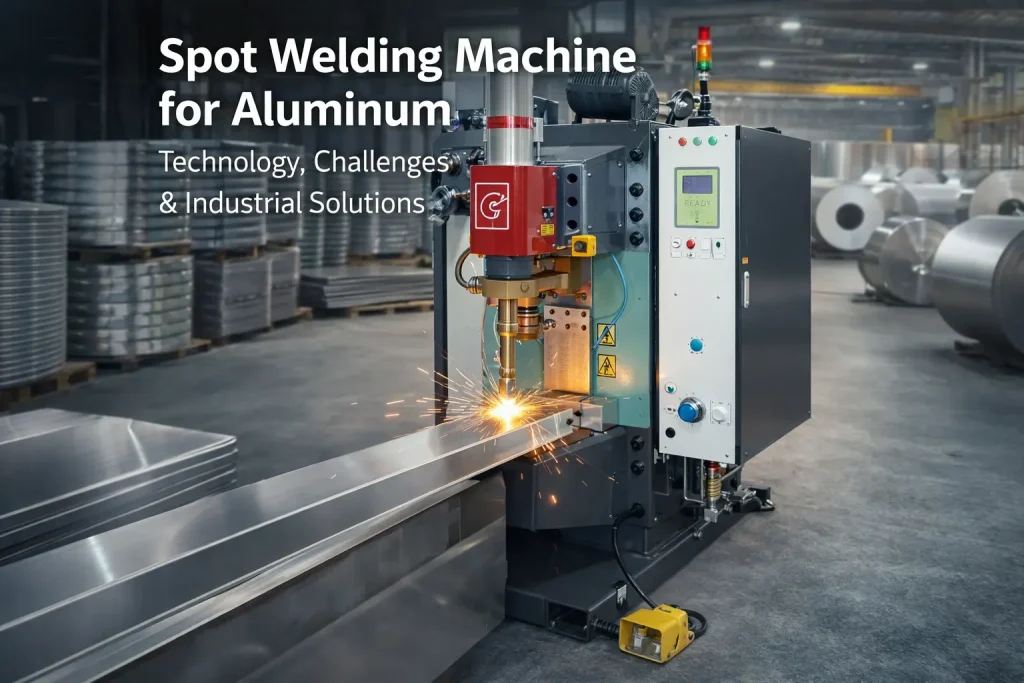
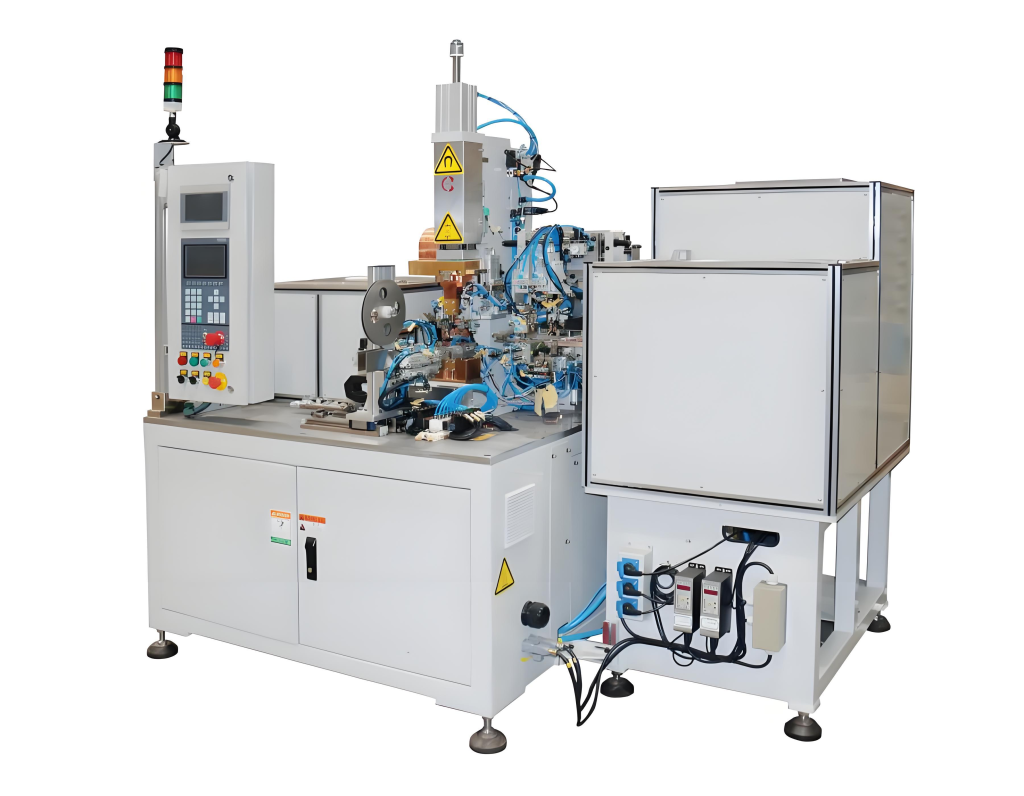
MFDC resistance welder for sheet metal is a specialized industrial machine designed to provide precise, high-quality welding for a variety of metal fabrication applications.
Using medium frequency direct current (MFDC) technology, these welders allow manufacturers to achieve consistent weld strength while minimizing heat distortion and energy consumption.
Ideal for automotive, appliance, and heavy machinery production lines, MFDC welders are central to modern industrial welding automation, enabling factories to maintain high throughput without compromising precision.
Unlike traditional AC welders, MFDC machines offer superior control over welding current and timing, making them suitable for both thin and multi-layer sheet metals. Additionally, these machines can be integrated with robotic arms, conveyor systems, and monitoring controllers, ensuring repeatable results and enhanced operational efficiency.
Their customizable design allows manufacturers to tailor the welding process to specific production needs, whether for high-volume assembly or complex sheet metal components.
MFDC Resistance Welder for Sheet Metal: Precision Industrial Welding Solutions
In this guide, we will explain the key features, applications, advantages, and best practices for implementing MFDC resistance welders for sheet metal in industrial production.
1. Introduction to MFDC Resistance Welder for Sheet Metal
Medium Frequency Direct Current (MFDC) resistance welders are specialized industrial machines designed to join sheet metal with precision, speed, and reliability. These machines are widely used in automotive manufacturing, electrical appliances, and metal fabrication industries where high-performance welding solutions are essential.
MFDC welders utilize medium frequency AC converted to DC, enabling precise control over welding current and timing. This technology ensures consistent weld quality, reduced energy consumption, and improved production efficiency compared to conventional AC spot welders.
Manufacturers adopting MFDC technology benefit from industrial welding automation, allowing seamless integration into production lines and improved throughput. This makes MFDC resistance welding a preferred solution for OEMs and heavy industry factories focusing on high-volume sheet metal production.
2. Key Features of MFDC Resistance Welding Machines
MFDC resistance welders combine advanced engineering with practical features designed for industrial use:
High-Performance Welding Solutions for Sheet Metal
-
Consistent weld quality across thin and thick sheet metal materials
-
Adjustable current and weld time for different metals
-
Capability to handle multi-layer assemblies without compromising precision
Energy-Efficient Resistance Welding Machines
-
MFDC technology converts energy efficiently, reducing operational costs
-
Lower heat generation minimizes material distortion
-
Supports high-volume production without overheating
Customizable Resistance Welding Systems
-
Machines can be configured with FSPR (Self-Pierce Riveting) integration, robotic arms, or conveyor automation
-
Control systems allow factory-specific settings for production speed, pressure, and electrode type
-
Optional monitoring and logging for quality assurance
These features make MFDC welders suitable for factories aiming for precision industrial welding applications with minimized downtime and maximum reliability.

3. Applications of MFDC Resistance Welders in Industry
MFDC resistance welders are widely deployed across multiple industrial sectors, supporting both standard production and complex manufacturing lines.
Automated Production Line Welding in Automotive
-
Spot welding of chassis, car doors, and body panels
-
Integration with robotic arms for repeatable, high-precision welds
-
Essential for factories targeting industrial welding automation and high throughput
Sheet Metal Assembly in Electrical Appliances
-
Welding of metal cabinets, panels, and housings
-
Precision control prevents deformation of thin sheet metals
-
Supports automated conveyor integration for efficient production flow
Industrial Metal Joining Technology for OEMs
-
MFDC systems are preferred for OEM manufacturers due to consistent high-performance welding solutions
-
Facilitates welding of multi-layer sheet metals and complex assemblies
-
Reduces production errors and improves overall operational efficiency
4. Advantages of Using MFDC Resistance Welders
MFDC resistance welding machines provide several tangible benefits over traditional welding technologies:
Precision Industrial Welding Applications
-
Accurate control of welding current ensures consistent joint quality
-
Reduced risk of weld defects, spatter, or electrode wear
-
Suitable for critical sheet metal parts in automotive and electronics industries
High-Volume Production Efficiency
-
Faster welding cycles compared to conventional AC resistance welders
-
Reduces downtime between welds
-
Allows industrial automation integration for fully robotic production lines
Automated Spot Welding Solutions
-
Can be combined with conveyors, robotic arms, or custom fixtures
-
Supports real-time monitoring and feedback through integrated controllers
-
Improves safety and reduces human error in repetitive tasks
These advantages ensure that industrial facilities achieve maximum productivity with minimal material waste, making MFDC resistance welders a reliable investment for sheet metal operations.
5. Integration with Automation and Advanced Technology
Modern MFDC resistance welding machines are designed to integrate seamlessly with industrial automation systems, enhancing precision and throughput.
Industrial Welding Automation
-
MFDC welders can be integrated with PLC-controlled robotic arms for automated sheet metal assembly
-
Production lines benefit from repeatable and consistent weld quality
-
Supports high-volume sheet metal production with minimal operator intervention
FSPR and MFDC Integration
-
Certain industrial setups combine FSPR (Self-Pierce Riveting) with MFDC welding
-
Enables joining of different metals without pre-drilling or mechanical fasteners
-
Ideal for complex automotive and appliance assemblies
Industrial Welding Controllers and Monitoring Systems
-
Digital controllers allow precise adjustments for current, time, and electrode pressure
-
Integrated monitoring provides real-time data for quality assurance
-
Facilitates predictive maintenance, reducing downtime and operational costs
By adopting these automation solutions, factories can achieve scalable, high-efficiency production while maintaining precision industrial welding standards.
6. Choosing the Right MFDC Resistance Welder
Selecting the appropriate MFDC resistance welder involves evaluating multiple factors:
Power and Welding Capacity
-
Ensure machine power matches sheet metal thickness and production speed
-
Consider high-frequency control for thin and multi-layer metal sheets
Customization Needs
-
Evaluate if FSPR, robotic integration, or conveyor automation is required
-
Machines should support factory-specific adjustments to suit production lines
Production Volume Requirements
-
High-volume facilities need MFDC welders capable of continuous operation without overheating
-
Check for energy-efficient resistance welding machine features to reduce cost
Choosing the right MFDC welder ensures high productivity, consistent weld quality, and long-term reliability.
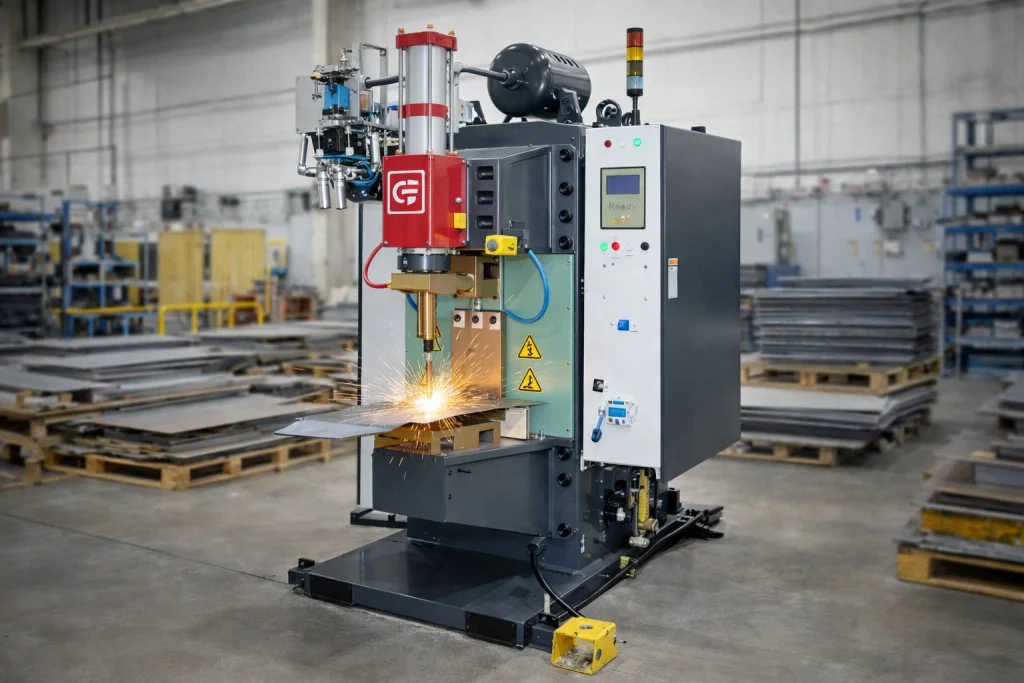
7. Maintenance and Safety Tips for MFDC Welders
Proper maintenance and adherence to safety standards are crucial for long-term operation:
Energy-Efficient Operation
-
Monitor current and duty cycle to prevent overheating
-
Use digital controllers to optimize energy consumption
Safety Protocols
-
Operators should wear PPE (gloves, goggles)
-
Ensure machines are grounded and connected to industrial safety circuits
-
Follow standard operating procedures to reduce risk of electrical hazards
Maintenance Schedules
-
Regular inspection of electrodes and cables
-
Clean electrode tips to maintain high-precision industrial welding applications
-
Periodic calibration of controllers to ensure weld consistency
8. Why Choose Heron for Industrial MFDC Resistance Welding
Heron Welder provides reliable MFDC resistance welding solutions for industrial manufacturing, backed by decades of experience:
-
Proven expertise in industrial welding automation and sheet metal production
-
Ability to deliver customizable resistance welding systems tailored to factory requirements
-
Integration with robotic lines, FSPR, and monitoring systems for efficient industrial production
-
Global presence and track record in automotive, appliance, and metal fabrication industries
Heron’s focus is on precision, reliability, and industrial efficiency, helping manufacturers maximize productivity and reduce material waste.
FAQs About MFDC Resistance Welder for Sheet Metal
Q1: What is an MFDC resistance welder?
A1: An MFDC resistance welder uses medium frequency AC converted to DC to precisely control welding current and timing. This ensures consistent weld quality, making it ideal for joining sheet metal in industrial production lines.
Q2: How does an MFDC resistance welder differ from conventional spot welders?
A2: Unlike traditional AC spot welders, MFDC welders offer faster cycles, reduced heat distortion, and consistent weld strength, particularly suitable for high-volume manufacturing.
Q3: Which industries benefit most from MFDC resistance welding technology?
A3: MFDC resistance welders are widely used in automotive manufacturing, home appliance assembly, metal fabrication, electrical cabinets, and OEM production lines where precision and efficiency are critical.
Q4: Can MFDC resistance welders be automated?
A4: Yes. These machines can integrate with robotic arms, conveyor systems, and FSPR (Self-Pierce Riveting) setups, allowing fully automated sheet metal production and reducing manual labor.
Q5: What are the energy and cost benefits of using an MFDC welder?
A5: MFDC machines consume less energy, reduce material waste, and enable faster production cycles, lowering operational costs compared to conventional resistance welders.
Q6: What types of sheet metal can be welded with MFDC resistance machines?
A6: MFDC welders are suitable for thin and thick sheet metals, multi-layer assemblies, stainless steel, mild steel, and coated metals used in automotive and industrial applications.
Q7: How does MFDC technology improve weld quality?
A7: By controlling the current waveform and welding time precisely, MFDC welders produce uniform welds, minimize spatter, reduce electrode wear, and prevent sheet deformation.
Q8: Are MFDC resistance welders suitable for high-volume production?
A8: Yes. Their rapid welding cycles and automated capabilities make MFDC welders ideal for high-throughput assembly lines in automotive, appliance, and OEM factories.
Q9: What maintenance is required for MFDC resistance welding machines?
A9: Regular tasks include checking electrodes, cleaning tips, inspecting cables, and calibrating controllers to maintain precision welds and prolong machine lifespan.
Q10: How do MFDC welders integrate with industrial automation systems?
A10: MFDC machines can be connected to PLC-controlled robotic arms, conveyor lines, and monitoring systems, enabling precise, repeatable welds, real-time quality tracking, and enhanced production efficiency.
Summary:
The MFDC resistance welder for sheet metal represents a critical advancement in industrial welding technology, delivering precision, reliability, and efficiency for high-volume manufacturing. By converting medium frequency AC to DC, MFDC welders provide accurate control over welding current and timing, ensuring consistent weld quality across thin and multi-layer sheet metals. These machines are widely used in automotive manufacturing, appliance assembly, and OEM production lines, where precision and productivity are essential.
Key features such as customizable welding systems, energy-efficient operation, and integration with automation solutions allow manufacturers to optimize production lines and reduce operational costs. MFDC welders can be combined with robotic arms, FSPR systems, and conveyor lines, enabling fully automated, repeatable, and high-speed welding processes. Their use minimizes material waste, reduces electrode wear, and enhances overall industrial efficiency.
With proper maintenance, safety protocols, and strategic implementation, MFDC resistance welding machines deliver long-term reliability and measurable ROI for factories handling sheet metal production. This technology empowers manufacturers to maintain high-quality standards, scalable output, and process automation, meeting the growing demands of modern industrial applications.