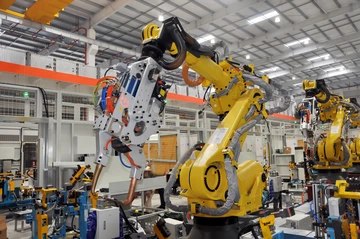
Most manufacturing floors don’t run one weld type. A line making auto parts might need spot welding for body panels, projection welding for nuts and studs, and seam welding for fuel tanks or fluid containers, sometimes within the same facility. Buying a separate machine for each of these is expensive and takes up floor space that most plants don’t have to spare.
That’s the practical problem a resistance welding unit is supposed to solve, and it’s also where a lot of equipment falls short. Heron, a metal joining equipment manufacturer operating since 1991 out of Guangzhou, builds its resistance welding unit line from standard modules that get custom-assembled to the application, rather than offering a single fixed configuration and asking the buyer to work around it. This article covers what actually separates a flexible, dependable unit from one that locks you into a single job.
Why One Fixed Machine Rarely Covers Every Job on the Floor
A resistance welding unit that’s hard-wired for one specific application creates a hidden cost. When production needs shift, whether that’s a new part geometry, a different metal thickness, or a move from steel to aluminum, a fixed machine often can’t adapt. The plant ends up either forcing the part to fit the machine, which hurts weld quality, or buying an entirely new unit.
Heron’s approach has been to standardize the underlying modules, the transformer, control system, and mechanical frame, while allowing the electrode arrangement, throat depth, and control programming to be configured per application. The result is a resistance welding unit that can be reconfigured as production needs change, instead of becoming obsolete the moment a new part comes down the line.
The Module Approach: How a Resistance Welding Unit Adapts Without a Custom Build Every Time
Spot and Projection Configurations
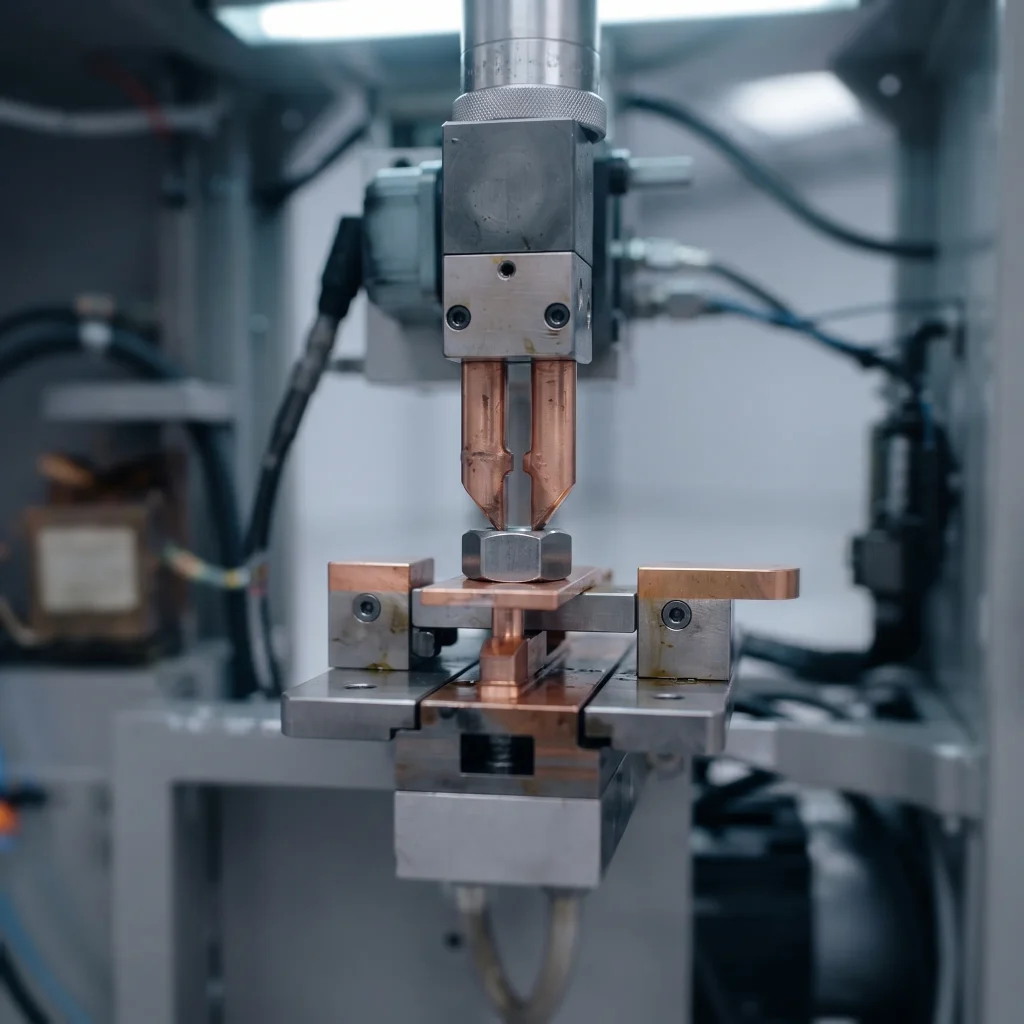
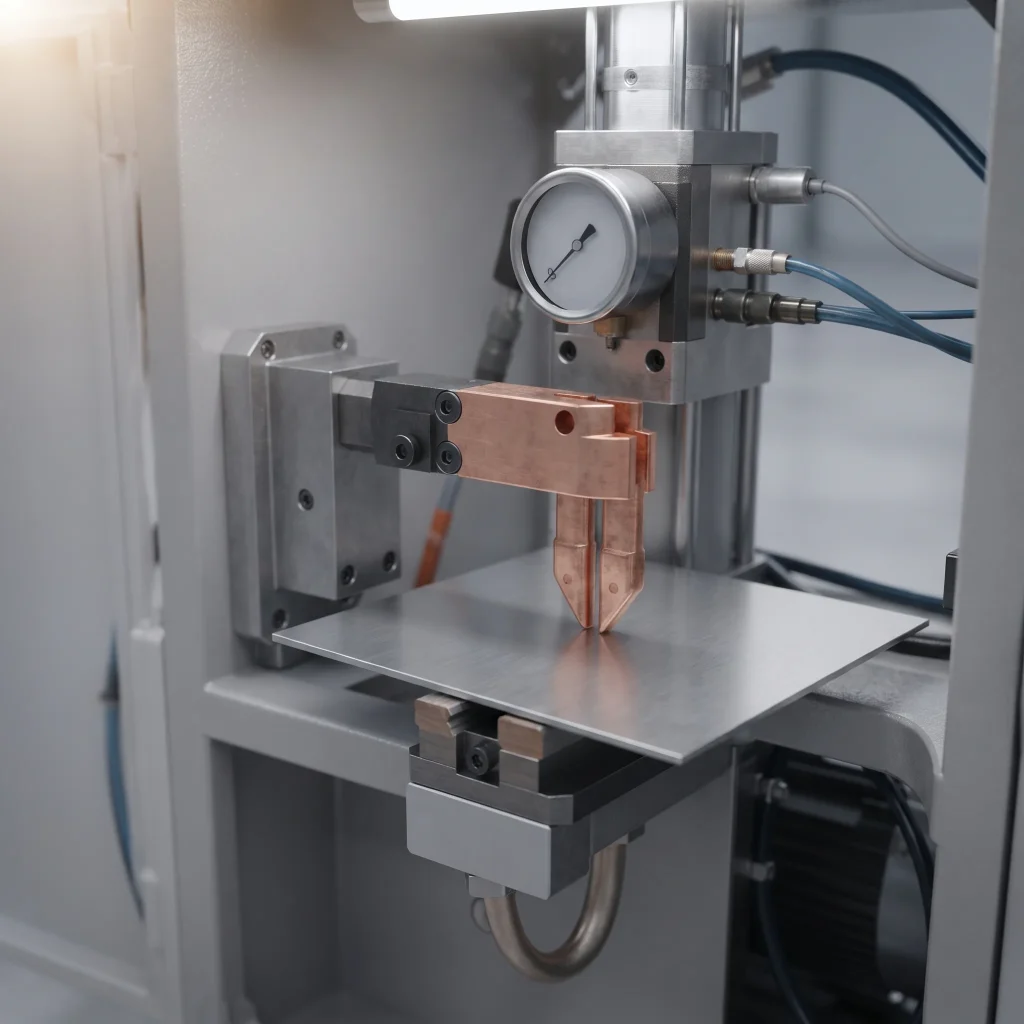
For spot welding, Heron’s resistance welding unit platforms cover both MFDC and capacitor discharge technology, with the CD option in particular suited to thin-gauge material and dissimilar metal joints where excess heat is a risk. Projection welding configurations concentrate current and force on a defined point through the part geometry itself, which reduces energy consumption while maintaining weld strength, and this is the same underlying technology used across Heron’s stud and nut welding equipment.
Seam and Butt Configurations
Seam welding configurations use continuous or intermittent overlapping welds, typically for parts that need a fluid-tight or gas-tight seal, such as tanks and containers. Butt welding configurations join two ends of material directly using a combination of resistance heating and forging force, without filler material, and are commonly used where strength close to the base material matters more than appearance.
Because all four configurations run on the same modular foundation, a resistance welding unit purchased for one job can often be reconfigured rather than replaced when the next job looks different.
What to Check Before You Commit to a Resistance Welding Unit
A few specific questions separate a good fit from an expensive mistake.
Ask what throat depth and effective reach the unit supports, since this determines what part sizes and geometries are actually workable. Ask whether the control system supports multiple stored programs, since a plant running mixed part numbers needs to switch configurations without a full recalibration each time. Ask what materials the unit has been proven on, particularly if your production involves hot-stamped steel, high-strength steel, or aluminum alloys, since these behave differently under resistance heating than mild steel.
Heron’s resistance welding unit line has been built specifically around hard-to-weld materials like these, which is a narrower and more useful claim than a general “wide range of applications” line.
Certifications and Compliance That Actually Hold Up
Equipment certifications matter more than they get credit for during procurement. Heron’s resistance welding unit platforms carry CCC, CE, ISO9001, and CQC approvals, which cover Chinese national compliance, European conformity, quality management systems, and Chinese quality certification respectively. For plants shipping product internationally or supplying automotive OEMs with their own compliance requirements, having these in place from the start avoids delays during equipment qualification.
Installation itself is also subject to occupational safety requirements, particularly around electrical disconnects and operator training, which is worth confirming as part of the equipment planning process rather than after the unit arrives.
From Application Review to an Installed Unit
Heron’s process starts with the application rather than the catalog. The team reviews material type, part geometry, weld type needed, and production volume before recommending a configuration, then supports installation and commissioning once the unit is on site. A 1-year warranty covers the equipment from that point forward.
If you’re comparing resistance welding unit suppliers for an upcoming line, that application review is the conversation worth having early, since it’s what determines whether the configuration actually fits your parts rather than just your budget.
Common Questions About Resistance Welding Units
Q1. What’s the difference between a resistance welding unit and a standalone spot welder?
A resistance welding unit typically refers to the broader category of equipment, which can be configured for spot, projection, seam, or butt welding depending on the module setup, while a standalone spot welder is built for one weld type only.
Q2. Can one resistance welding unit be reconfigured for different weld types?
With a modular design like Heron’s, yes, to a degree. The transformer, control system, and frame stay standard while the electrode setup and programming change per application, though a full switch between weld types, such as spot to seam, generally still requires a different configuration.
Q3. What materials can a resistance welding unit handle?
Heron’s platforms are built to handle hot-stamped steel, high-strength steel, and aluminum alloys, in addition to standard mild steel, which matters for automotive applications using mixed-material body structures.
Q4. What certifications should I look for in a resistance welding unit?
CE for European markets, CCC and CQC for Chinese market compliance, and ISO9001 for quality management are the certifications Heron’s platforms carry, and they’re a reasonable baseline to check with any supplier.
Q5. How long does it take to get a resistance welding unit into production?
Timelines depend on configuration complexity, but the process generally moves from application review to configuration, then installation and operator training before full production ramp-up.
Q6. Does Heron offer support after the resistance welding unit is installed?
Yes, Heron’s equipment includes a 1-year warranty, with the team available for ongoing configuration support as production needs change.
Deciding What Goes on Your Line Next
The real cost of a resistance welding unit shows up months after installation, not on the purchase order. A unit that can’t adapt to your next part change, or that lacks the certifications your customers require, ends up costing more than the sticker price suggested.
Heron has built its resistance welding unit line around that longer view, using standard modules that scale with your production rather than locking you into one configuration. If you’re planning your next line or replacing aging equipment, request a resistance welding unit quote and bring your actual part specs and volume targets to the conversation.