Seam welders are widely used in automotive manufacturing, home appliances production, low-voltage electrical manufacturing, compressors, and other industrial sectors. In thin sheet metal fabrication, weld quality is critical for structural integrity, sealing performance, and long-term reliability.
As a resistance welding process for continuous joints, seam welding produces dense, airtight weld seams through rotating wheel electrodes that apply pressure and current. Compared to conventional welding methods, this technology delivers superior consistency, high automation compatibility, and stable process control—making them ideal for sealed joints in high-volume production.
With over 30 years of experience in welding machine manufacturing, Heron provides a full range of seam welders, including AC, MFDC, automatic, and customized models. This guide outlines seam welding applications, key features, and selection criteria.

I. Seam Welding Process Value and Key Seam Welder Selection Criteria
Seam welding is a resistance welding process for sealed thin-sheet metal joints. By continuously feeding current through rotating wheel electrodes, the system creates a uniform, overlapping weld nugget pattern, producing a continuous, leak-tight seam without filler materials. It is widely used for welding straight and circular seams on 0.5-8mm thin metal sheets.
When selecting a seam welder, manufacturers should evaluate three core factors:
1.1 Material characteristics
Electrical resistance and thermal conductivity vary between low-carbon steel, stainless steel, aluminum alloys, and high-strength steels, affecting current requirements and heat input control.
1.2 Product structure and welding requirements
Weld seam type (longitudinal or circular), sealing standards, and material thickness determine mechanical structure and power capacity.
1.3 Production planning and automation level
Consider production cycle time, integration with automated lines, and future digital or smart manufacturing upgrades early in the selection process.
Heron seam welders are designed to meet these requirements, ensuring reliable process matching across diverse industrial applications.

II. Heron Seam Welder Categories and Application Guide
Heron seam welders are categorized into four main types: AC, MFDC, automatic, and customized models. Each series features unique technical advantages tailored to different process needs, covering applications from basic thin plate welding to high-end automated and customized solution. Core parameters are industry-verified for reliability.

2.1 AC Seam Welders: Proven Technology for Cost-Sensitive Applications
Key features:
Traditional industrial frequency AC power supply, lower equipment and maintenance costs, consistent weld formation; Designed for continuous seam welding of thin plates such as low carbon steel, stainless steel.
Typical applications:
Longitudinal seams in appliance enclosures, hardware components, kitchenware, and general metal containers; Suitable for high-volume production requiring cost-effective equipment and simple welding processes.
2.2 MFDC Seam Welders: Precision Control and Energy Efficiency for Demanding Materials
Key features:
Medium-frequency inverter technology ensures high energy concentration, minimal heat-affected zone, precise current control, and fast dynamic response, MFDC models reduce energy consumption by 15–30%.
Typical applications:
Circular welds or complex structures like automotive mufflers, fuel tanks, and new energy vehicle battery trays; ideal for mid-to-high-end manufacturing with strict welding quality and material compatibility requirements, especially for coated materials or complex joint geometries needing precise heat input control.
2.3 Automatic MFDC Seam Welders: Optimized for High-Volume Automated Production Lines
Representative model: DB-440 Automatic Seam Welder for Automotive Fuel Tanks
Key features:
- Dense, leak-tight weld seams
- High-precision guiding mechanism with low friction and high radial load capacity
- Servo-driven mechanism supporting stable, high-throughput production
Key technical parameters:
- Rated capacity: 440 KVA
- Max. electrode force: 10.5 kN
- Compatible materials: galvanized steel (EN 10143) and aluminum-silicon coated low-carbon steel (EN 10346-DX56D+AS120)
Typical applications:
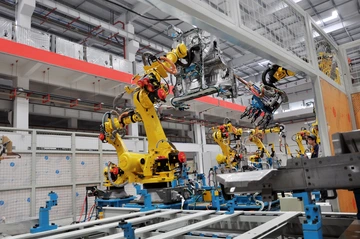
High-precision automated production lines for automotive structural components, construction machinery, high-end pressure vessels, and military industries—ideal for lean production while reducing reliance on manual labor.

2.4 Customized Seam Welders: Flexible Engineering for Specialized Welding Requirements
Customization focus: Welding special materials such as titanium alloys and coated metals.
Core Advantages: Heron provides end-to-end customization—from process evaluation and system design to prototype validation and on-site commissioning—ensuring each seam welder is precisely matched to the customer’s product and production line.
Typical applications: Aerospace components, high-end compressors, and specialized industrial assemblies.
III. Technical Advantages of Heron Seam Welders
Heron’s competitive advantage in seam welding is driven by mature process control and validated performance. Each product platform undergoes structured sample testing, controlled in-house trials, and proven industrial applications, delivering measurable gains in energy efficiency, weld consistency, system reliability, and total cost of ownership.
3.1 Higher efficiency, lower energy consumption
MFDC models reduce energy usage by 15%-30% compared to traditional AC welders. The upgraded self-developed welding controller achieves ≥95% power utilization efficiency.
3.2 Process Stability and Weld Consistency
Advanced welding control technology ensures high consistency, eliminating defects like incomplete fusion, burn-through, and insufficient nugget overlap.
3.3 Intelligent Monitoring and Long-Term Reliability
Standard HRC650 welding monitoring system collects real-time data (current, voltage, pressure) with ≥98% false weld detection accuracy. Core components including transformer, IGBT module are vertically integrated, ensuring a ≥10 years lifespan and lower failure rates than industry standards.
3.4 Reduced Total Cost of Ownership
Modular design simplifies maintenance, reduces downtime by up to 60%. Standardized wear parts further lower procurement costs, lowering total annual ownership cost (TCO) by 20%-30%.
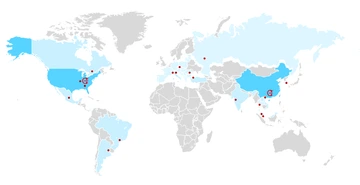
For manufacturers, choosing the right seam welder is not just about equipment performance, but also long-term process stability and production scalability. With 30 years of welding expertise, a complete product portfolio, and a professional service network, Heron helps global manufacturers achieve reliable sealed joints, improve production efficiency, and enhance product competitiveness—empowering high-quality industrial manufacturing.