Seam welding is a resistance welding process widely used in industrial manufacturing to produce continuous, sealed joints in thin metal sheets. In industries such as automotive, home appliance, low-voltage electrical, and compressor manufacturing, seam welding is essential for ensuring airtight and watertight performance.
By applying controlled force and electrical current through rotating wheel electrodes, seam welding produces overlapping weld nuggets that form a uniform, leak-tight seam. This page provides a technical overview of the seam welding process, common types of seam welding, and its practical industrial applications.

Seam Welding Process Principles
In seam welding, workpieces are assembled into lap or butt joints and placed between two rotating wheel electrodes. The electrodes apply controlled force while rotating continuously or intermittently, depending on the process type. Current passing through the contact interface generates resistance heat, raising the localized temperature to the melting point. Overlapping weld nuggets form a continuous seam, and the molten metal solidifies under pressure into a uniform weld.
The process typically includes three stages:
1. Pre-squeeze stage: Wheel electrodes apply force to remove surface oxides and ensure stable contact.
2. Welding stage: Current flows under pressure, heating the surfaces to form molten nuggets.
3. Cooling and solidification stage: Current stops while pressure holds, allowing the nuggets to cool and solidify into a dense seam.

Compared with spot welding, this method enables the formation of continuous sealed joints, making it especially suitable for containers, tanks, and thin-sheet structures with high sealing requirements.
Types of Seam Welding Processes
Seam welding has three primary types based on roller rotation and power supply:
1. Continuous seam welding:
Wheel electrodes rotate continuously with current flowing through the workpiece. This method can cause excessive surface heating and faster electrode wear, limiting industrial use.
2. Intermittent seam welding:
Electrodes rotate continuously while current is applied intermittently, forming overlapping weld nuggets. Off-time allows heat dissipation, improving electrode life, reducing the heat-affected zone, and minimizing distortion, making it the most widely used industrial solution.
3. Step-by-step seam welding:
Both electrode rotation and current flow are intermittent. Current is applied only when the workpiece is stationary. This method prevents surface overheating, shrinkage cavities, and solidification cracking, making it suitable for high-temperature alloys.
Advantages and Limitations of Seam Welding
1. Process characteristics
- Forms continuous weld seams using rolling wheel electrodes.
- Excellent sealing performance; with nugget overlap above 30%, seams can achieve high air-tightness and water-tightness.
- Highly suitable for mechanized and automated production.
- No filler metal required, simplifying metallurgical control.

2. Key advantages
- Stable weld quality with a protective plastic ring around the weld nugget.
- No shielding gas needed, simplifying process setup.
- Clean welding process with no fumes or hazardous emissions.
3. Main limitations
- Higher equipment cost and more complex maintenance; high-power single-phase AC seam welder strain the electrical grid.
- Lap joints increase component weight and generally have lower tensile and fatigue strength than some alternative joining methods.
- Narrow process window; improper parameters can cause weld defects.
IV. Industrial Applications of Seam Welding
Automotive Manufacturing
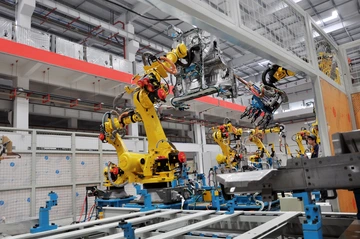
This joining technology is widely used for body structures, fuel tanks, and exhaust components, where continuous sealed joints and dimensional stability are required.
Home Appliance Manufacturing
Common applications include stainless steel water tanks, oil-filled radiators, and heat exchanger components, with emphasis on cost efficiency and ease of maintenance.
Low-Voltage Electrical Manufacturing
Highly conductive materials such as copper busbars and connectors are joined using this process, requiring precise current control and stable post-joint conductivity.
Compressor Manufacturing
Multi-layer thin-sheet housings require excellent air-tightness and liquid-tightness. Step-by-step operation combined with cooling systems is commonly used to ensure leak-free performance.

V. Conclusion
Seam welding remains one of the most effective resistance welding processes for producing continuous, sealed joints in thin-sheet metal assemblies. By selecting appropriate operating modes based on material properties, joint design, sealing requirements, and production volume, manufacturers can achieve stable quality and high production efficiency. With proper parameter control and preventive maintenance, this joining technology provides a reliable and industrially proven solution for modern industrial manufacturing.