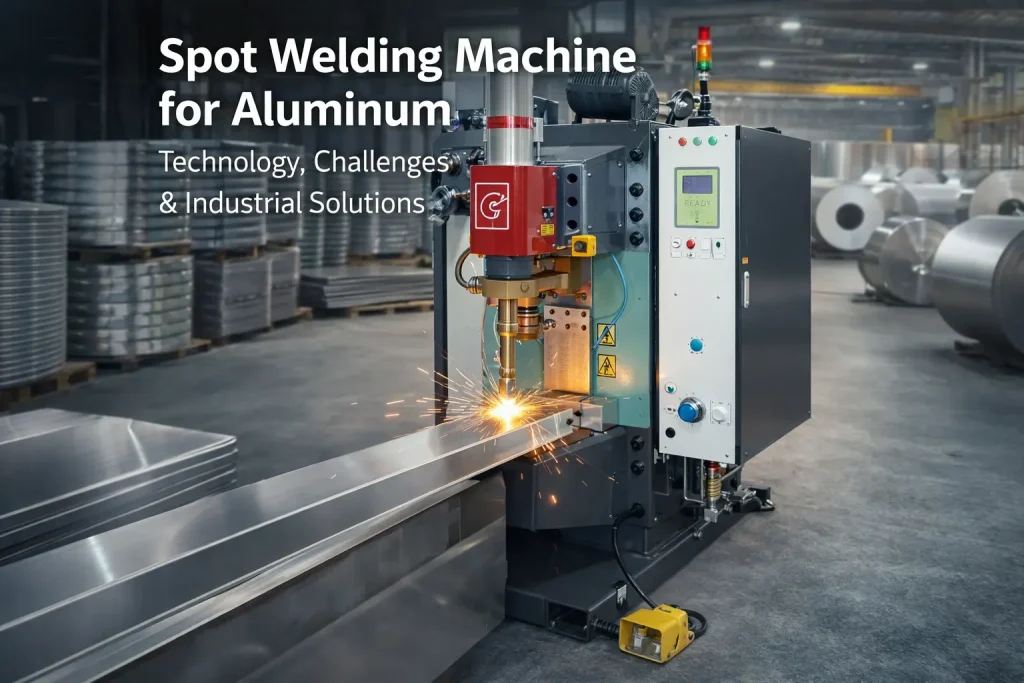
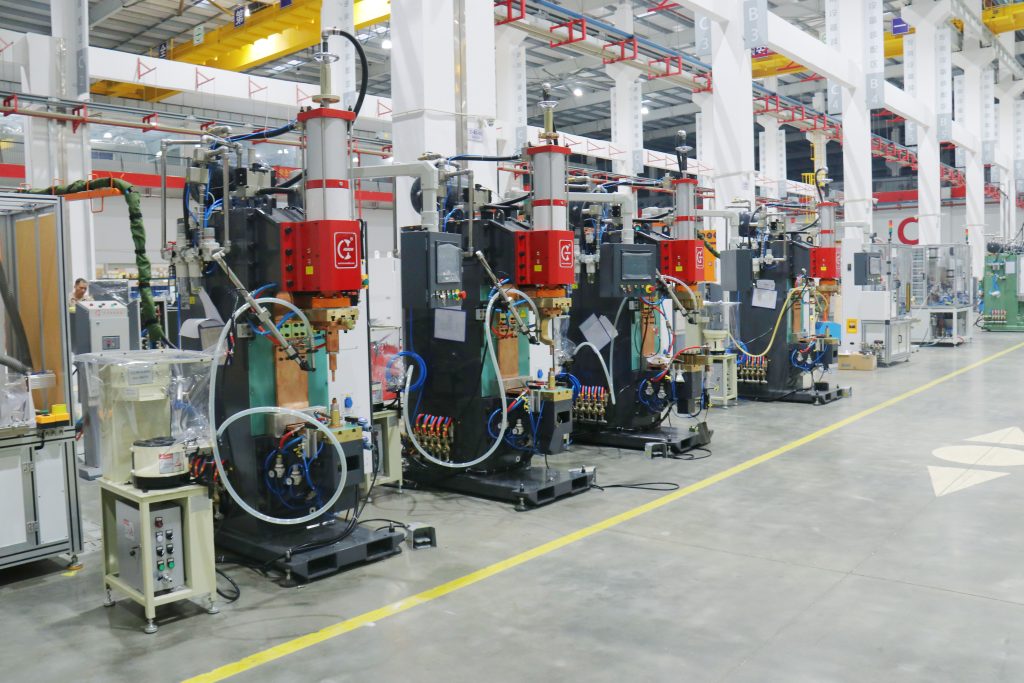
When evaluating welding processes, both laser welding and traditional resistance welding present distinct limitations. In comparison, Heron’s medium-voltage capacitor discharge spot and projection welder delivers multidimensional technological advancements, positioning it as the optimal solution for modern manufacturing.
The following comparison with mainstream technologies underscores its core advantages and illustrates why it has emerged as the preferred option for high-performance production.

I. Medium-Voltage Capacitor Discharge Spot and Projection Welder vs. Laser Welding Equipment: Cost-Effectiveness Meets Practicality
| Comparison Items | Medium-Voltage Capacitor Discharge Spot and Projection Welder | Laser Welding Equipment |
| Heat-Affected Zone | ≤0.5mm, precise temperature control with no substrate damage | Smaller, but requires high-cost equipment |
| Welding Speed | 0.1-0.3 seconds/point, ideal for mass production | Faster, but restricted by material thickness |
| Applicable Materials | Ideal for high-strength steel, hot-formed steel, and non-ferrous metals | Mainly limited to high-strength steel and stainless steel |
| Equipment Cost | Low, typically 3 times more economical than laser welding | High, often out of reach for SMEs |
| Power Grid Requirements | Consumes only 20% of AC and 50% of MFDC power (high adaptability) | Requires a stable high-voltage power supply, leading to high modification costs |
While laser welding equipment excels in controlling heat-affected zones and offers superior speed, medium-voltage capacitor discharge spot and projection welders provide distinct advantages in material compatibility, equipment cost, and power grid requirements. These systems effectively address applications involving thick plates and non-ferrous metals that laser welding cannot accommodate. Furthermore, they enable efficient mass production with lower capital investment.
This technology proves particularly suitable for cost-sensitive manufacturing scenarios requiring the welding of diverse materials, such as automotive hot-formed steel components.

II. Medium-Voltage Capacitor Discharge Spotand Projection Welder vs. Traditional Resistance Welder: From “Adequate” to Precision-Controlled Performance
| Comparison Items | Medium-Voltage Capacitor Discharge Spot and Projection Welder | Traditional Resistance Welder |
| Heat-Affected Zone | The heat-affected zone is extremely small. With ultra-short weld times, the energy is directly concentrated in the weld zone, resulting in almost no deformation. | The heat-affected zone is large. Heat input is difficult to control on thin sheets, often leading to deformation and burn-through defects. |
| Welding Safety | Medium-voltage technology eliminates the need for high-voltage isolation design or high-voltage transformers, greatly improving operational safety.
|
High-voltage capacitor bank present safety risks, increasing the operational and maintenance hazard level. |
| Applicable Materials | High-strength steel, hot-formed steel, and non-ferrous metals are all covered. | Poor adaptability for brass, copper, and high-strength steels, resulting in inconsistent weld quality. |
| Maintenance Costs | Low | high |
| Power Grid Requirements | Charging power is reduced by 50% compared to AC welders; cooling water consumption is 50% lower than MFDC welders; it can effectively save water and electricity.
|
Low energy-conversion efficiency, high power consumption, and elevated long-term operating costs. |
| Welding Quality | Equipped with a welding quality monitoring system that records and evaluates current, force, and other key parameters in real time. | Insufficient weld strength can easily lead to incomplete weld defects. |
Overall, medium-voltage capacitor discharge spot and projection welders provide significant advantages over traditional resistance welders, including the following key benefits:
- Elimination of Resistance Welding Defects: Capacitor discharge spot and projection welders prevent common issues such as cracking, deformation, and insufficient penetration.
- Stable Performance Under Grid Fluctuations: Unlike traditional resistance welders, which are highly sensitive to power instability, these welders maintain consistent output regardless of voltage variations.
- Compact and Space-Saving Design: Their streamlined footprint reduces installation space requirements, whereas traditional resistance welders tend to be bulky and occupy more floor area.
- Superior Handling of Galvanized Materials: Capacitor discharge spot and projection welders effectively weld galvanized steel without damaging the protective coating in non-welding zones, eliminating the need for grinding and post-treatment.

Medium-voltage capacitor discharge spot and projection welders are widely used across industrial applications, particularly in automotive manufacturing, where they support critical processes:
– Body Structural Components: Ideal for welding high-strength steels and hot-formed steels.
– Safety-Critical Assemblies: Enable reliable projection welding for over 360 types of safety nuts in chassis and body systems.
-Coated Materials: Excel in processing galvanized steel, bypassing post-grinding steps and reducing overall process costs.
If you’re still evaluating the “cost–quality–efficiency” equation in welding, Heron’s medium-voltage capacitor discharge spot and projection welders may provide the comprehensive solution you need.