If your production line is joining aluminum to steel, you’ve probably already discovered that not every self piercing rivet tool handles the combination well. Aluminum and steel behave differently under pressure, and a tool built around one material often struggles to deliver consistent results on the other. Getting this right matters — a mismatched tool means inconsistent joints, more downtime, and rework you shouldn’t need.
The good news is that a properly specified self-piercing rivet tool can join aluminum and steel reliably, without the brittleness risk that welding these two materials directly often introduces. This guide walks through what to look for, how an aluminum self piercing rivet gun compares to standard equipment, and how to choose the right setup for your production volume.
What Is a Self Piercing Rivet Tool, and Why Aluminum Changes the Equation

A self-piercing rivet tool joins two layers of material by driving a rivet through the top layer and forming it into the bottom layer — no pre-drilled hole required, and no heat involved. That last point matters more with aluminum than with most other materials.
Aluminum conducts heat differently than steel, expands and contracts at a different rate, and can form brittle intermetallic compounds when fused directly to steel through welding. A SPR tool avoids this entirely, since the joint is mechanical rather than thermal. But not every tool is engineered with aluminum’s specific behavior in mind — some are built primarily for steel and simply adapted for aluminum, which shows up in inconsistent joint quality over time.
Aluminum Self-Piercing Rivet Gun vs. Standard Rivet Tools
This is the comparison that actually matters for buyers working with mixed materials. A standard rivet tool, calibrated mainly for steel, often applies force and timing settings that don’t account for aluminum’s softer, more ductile behavior. That mismatch can lead to incomplete rivet formation or surface cracking, particularly on thinner aluminum sheet.
An aluminum self-piercing rivet gun is calibrated specifically for aluminum’s material properties — different force curves, different die geometry, and often a different rivet coating to prevent galvanic corrosion where aluminum meets steel. If your production line regularly handles aluminum, or a mix of aluminum and steel, this distinction is worth taking seriously rather than assuming any self-piercing rivet tool will do.
Key Features to Look for in a Self Piercing Rivet Tool for Mixed Metals
A few specific features separate a tool that handles mixed materials well from one that merely gets by.
Mold Flexibility for Aluminum and Steel
Switching molds every time your material mix changes slows production and adds cost. A self piercing rivet tool with a modular, universal mold design can apply a single mold configuration across multiple material combinations, which matters as more manufacturers mix aluminum, steel, and other alloys within the same assembly.
Flush Joint Quality
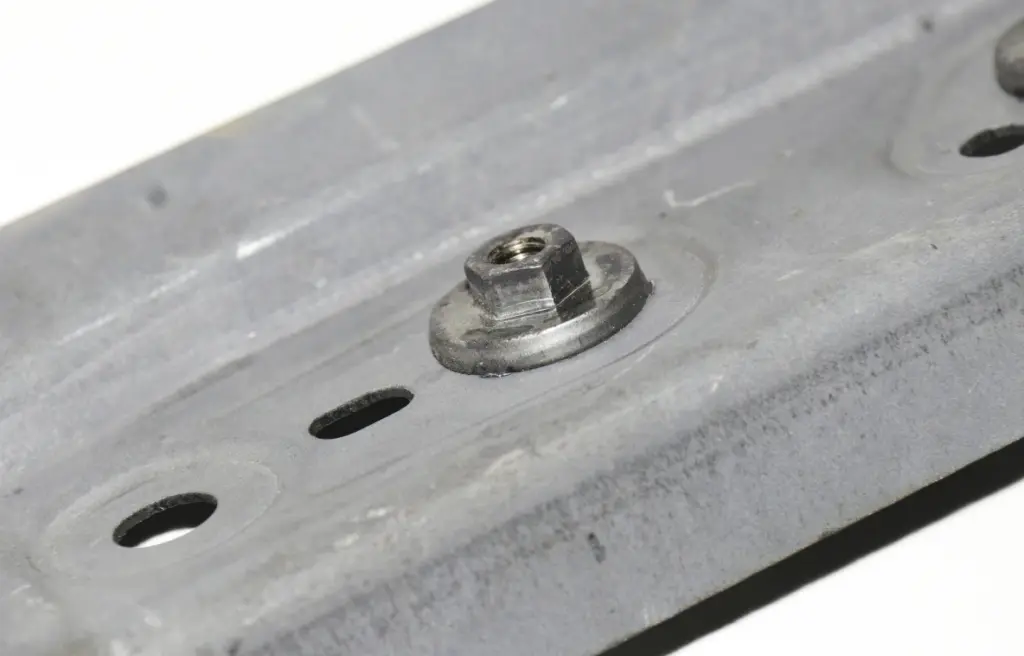
A raised, bumped rivet joint can create stress concentration points — a real risk on brittle or hot-stamped materials. Look for a tool capable of producing a flush joint that sits level with the surrounding surface, which reduces cracking risk and keeps visible panels looking clean.
Real-Time Quality Monitoring
Because a riveted joint can’t be visually inspected the way a weld bead can, quality monitoring matters more, not less. A self-piercing rivet tool with closed-loop, real-time monitoring can flag inconsistent joint formation during the process itself, rather than relying only on downstream sampling.
Manual Gun or Automated Machine? Choosing the Right Aluminum Self Piercing Rivet Gun Setup
Not every application needs full automation. For lower-volume work, repairs, or flexible assembly stations, a manual aluminum self piercing rivet gun offers control and mobility without the investment of a fully automated line.
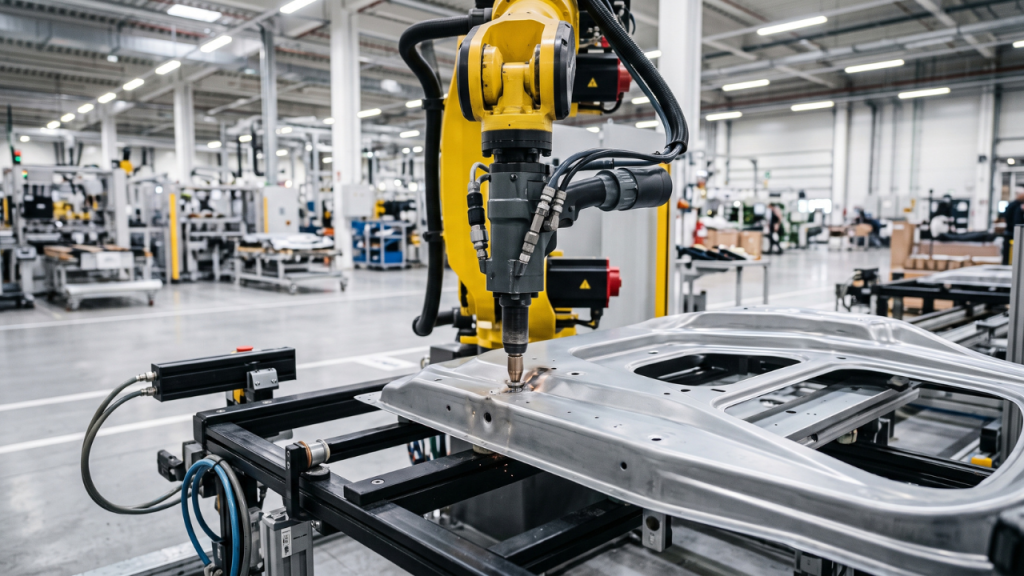
For high-volume production — especially where aluminum and steel joints repeat across many stations — an automated riveting machine built around the same aluminum-calibrated principles delivers faster cycle times and more consistent joint quality across a full production run. The right choice comes down to your volume, floor layout, and how much variability your material mix actually has, not which option sounds more advanced.
How Heron-Welder Supports Aluminum and Steel Riveting Lines
This is exactly the challenge Heron-Welder’s Flush Self-Pierce Riveting (FSPR) range was built to address. Heron’s self-piercing rivet tool lineup includes both manual riveting guns and automated riveting machines, engineered around modular mold design, flush-joint capability, and real-time quality monitoring — built specifically for the demands of mixed-material assembly, not adapted after the fact from steel-only equipment.
Whether you need an aluminum self piercing rivet gun for a manual workstation or a fully automated machine for high-volume production, Heron’s FSPR technology is designed to keep joint quality consistent across aluminum, steel, and other challenging material combinations, without forcing constant mold changes or manual compensation.
If you’re not sure which configuration fits your specific material mix and production volume, that’s a normal starting point. Talk to a Heron riveting specialist about your application, and get a recommendation built around what you’re actually assembling rather than a generic spec sheet.

FAQ: Self Piercing Rivet Tools for Aluminum and Steel
Q1. Can a SPR tool really join aluminum to steel reliably?
Yes. Because the joint is formed mechanically rather than through heat, a properly specified self-piercing rivet tool avoids the brittle intermetallic compounds that can form when aluminum and steel are welded directly.
Q2. What makes an aluminum self-piercing rivet gun different from a standard rivet gun?
An aluminum self piercing rivet gun is calibrated for aluminum’s specific force curves, die geometry, and often uses rivet coatings designed to prevent galvanic corrosion at the aluminum-steel interface — details a standard steel-focused tool may not account for.
Q3. Do I need a different mold for every aluminum-steel combination?
Not necessarily. Tools built around modular, universal mold designs can often apply the same mold across multiple material combinations, reducing changeover time significantly.
Q4. Is a manual rivet gun enough, or do I need an automated machine?
It depends on your volume. Manual guns work well for lower-volume or flexible assembly work, while automated machines suit high-volume lines where consistency across many stations matters most.
Q5. How is joint quality checked without a visible weld bead?
Modern SPR tools can include real-time, closed-loop quality monitoring that evaluates joint formation during the riveting process itself, rather than relying only on post-production sampling.
Final Thoughts: Get the Right Tool for Your Materials
Aluminum and steel don’t behave the same way under any joining process, and a self piercing rivet tool is no exception. Choosing equipment calibrated specifically for your material mix — rather than a generic tool adapted after the fact — is the difference between consistent, reliable joints and ongoing rework.
If your line is working with aluminum, steel, or a mix of both, Heron-Welder’s team can help you choose between a manual aluminum self piercing rivet gun and a fully automated setup based on your actual production needs. Talk to a Heron riveting specialist today and get equipment built around what you’re really assembling.