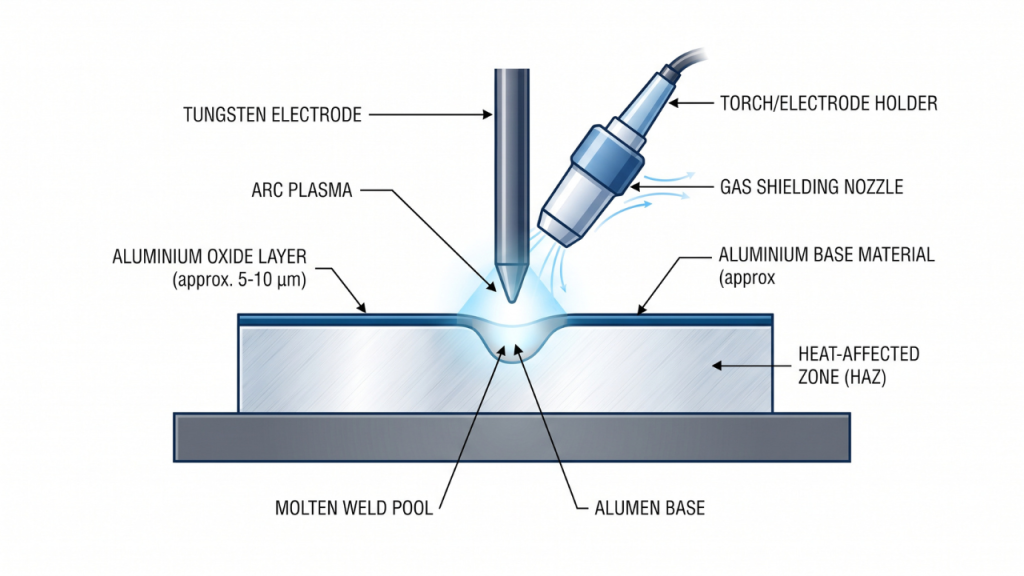
A sheet metal clincher joins thin metal parts without heat, rivets, screws, or adhesives. It presses the sheets together until they lock mechanically. For manufacturers tired of consumable costs, weld spatter, and slow assembly steps, a sheet metal clincher offers a clean, fast, and repeatable alternative.
This guide explains how a sheet metal clincher works, where it outperforms welding and riveting, and how to pick the right equipment for your line. It is written for engineers, plant managers, and procurement teams who need dependable clinching technology for appliance, electrical, automotive, and hardware production.
What Is a Sheet Metal Clincher?
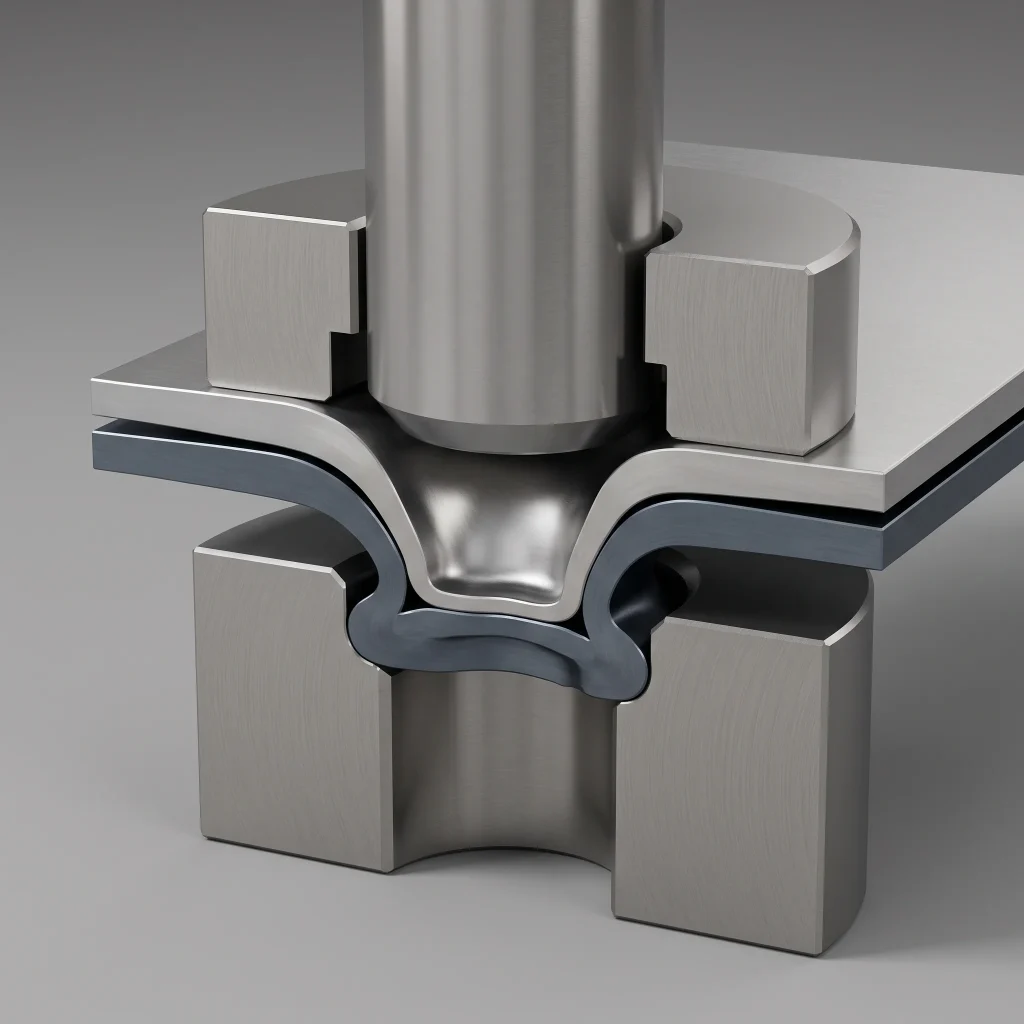
A sheet metal clincher is a machine or tool that forms a mechanical joint between two or more layers of sheet metal by cold forming. A punch pushes the layers into a die cavity. The metal flows sideways and creates an interlocking “button” that holds the sheets together.
Because the process is purely mechanical, a sheet metal clincher needs no filler material and no fasteners. It works on steel, stainless steel, aluminium, copper, and many coated or pre-painted sheets. It can also join dissimilar metals, which is difficult for most welding methods.
A sheet metal clincher can take the form of a stationary press, a hand-held unit, or a gun carried by a robot. All three share the same principle, and the right choice depends on your part size, volume, and layout.
How a Sheet Metal Clincher Works
The process takes only a moment, yet each stage matters:
- Positioning: The sheets are placed between the punch and the die.
- Clamping: The tool closes and holds the layers firmly.
- Penetration: The punch drives the metal into the die cavity and thins it at the bottom.
- Lateral flow: The die cavity or moving die segments push the material outward and form an undercut.
- Release: The tool retracts and the interlock stays in place.
The result is a round or oval joint with a button on one side and a recess on the other. Drive systems vary. Some machines use hydraulic or air-oil power, while others use servo drives that offer precise control over force and stroke. Whichever drive you choose, a good sheet metal clincher delivers the same joint cycle after cycle.
Key Benefits of a Sheet Metal Clincher
- No consumables: There are no rivets, screws, or filler wire to buy, store, or feed.
- No heat: Cold forming leaves no heat-affected zone, no distortion, and no spatter or fumes.
- Coating-friendly: Galvanized and pre-painted sheets stay intact, which saves rework.
- Dissimilar metals: Steel to aluminium and other combinations join without special processes.
- Low energy use: A sheet metal clincher uses far less energy per joint than resistance welding.
- Simple monitoring: Force and displacement signals make quality easy to track.
- Fast cycles: Joining takes a fraction of a second to a few seconds, which suits automated lines.
These benefits explain why more factories add a sheet metal clincher alongside, or instead of, traditional joining stations.
Types of Sheet Metal Clincher Equipment
Clinching equipment comes in three main formats. Each one suits a different production style.
Stationary and Press-Type Clinching Machines
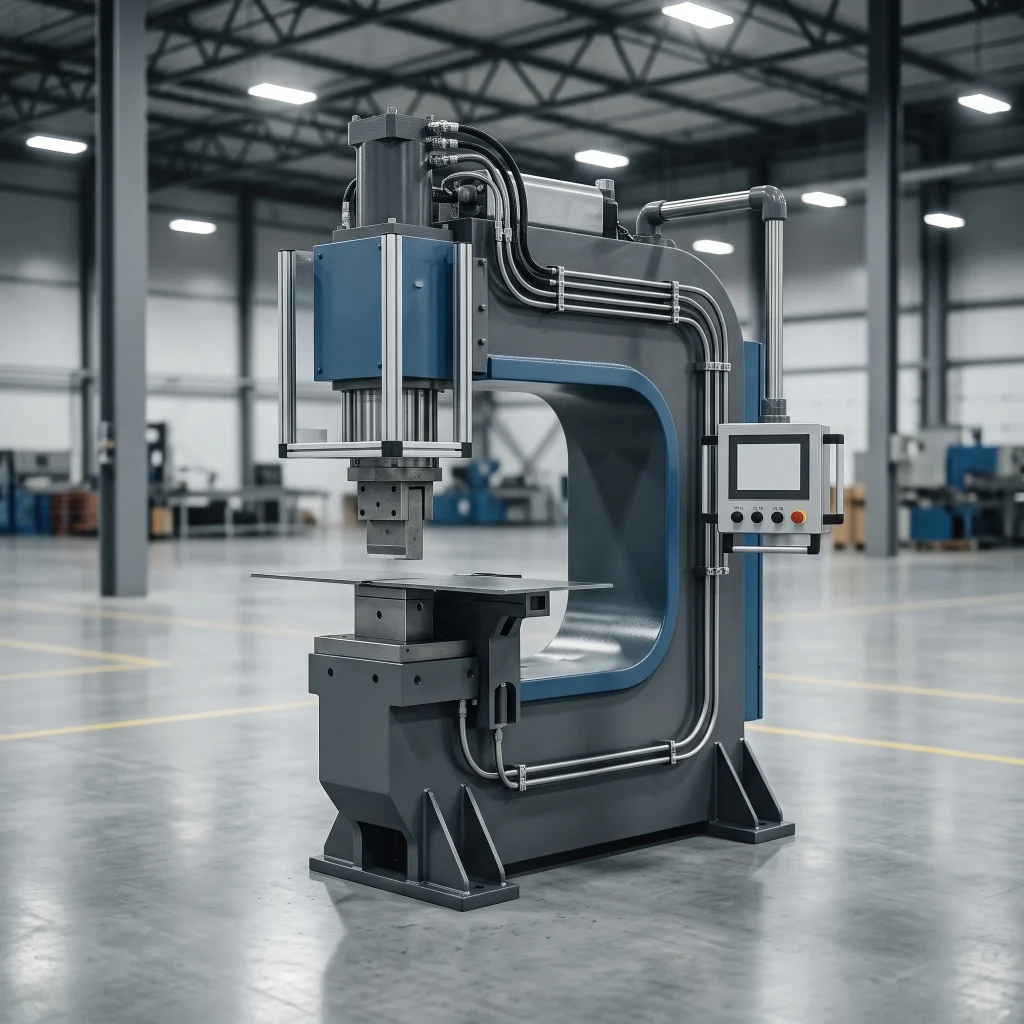
A stationary machine suits high-volume work where parts are brought to the tool. These machines are rigid, fast, and easy to integrate into production cells or lines. Heron offers a clinching machine range that includes stationary models plus 8T and 15T versions, so you can match the force to your material stack.
Hand-Held Clinching Units
For large panels and awkward assemblies, the tool goes to the part. A hand-held sheet metal clincher gives operators flexibility on enclosures, ducts, and frames. Heron’s hand-held clinching units include air-oil crocodile, bayonet, and other unit styles, so teams can choose the reach and force that suit their products.
Clinching Guns for Automation
Servo and air-oil clinching guns mount on robots or manipulators and join parts directly in the line. A gun-mounted sheet metal clincher brings flexibility to automated cells and can be combined with sensors and monitors for full process control.
Clinching Tooling: Punches and Dies
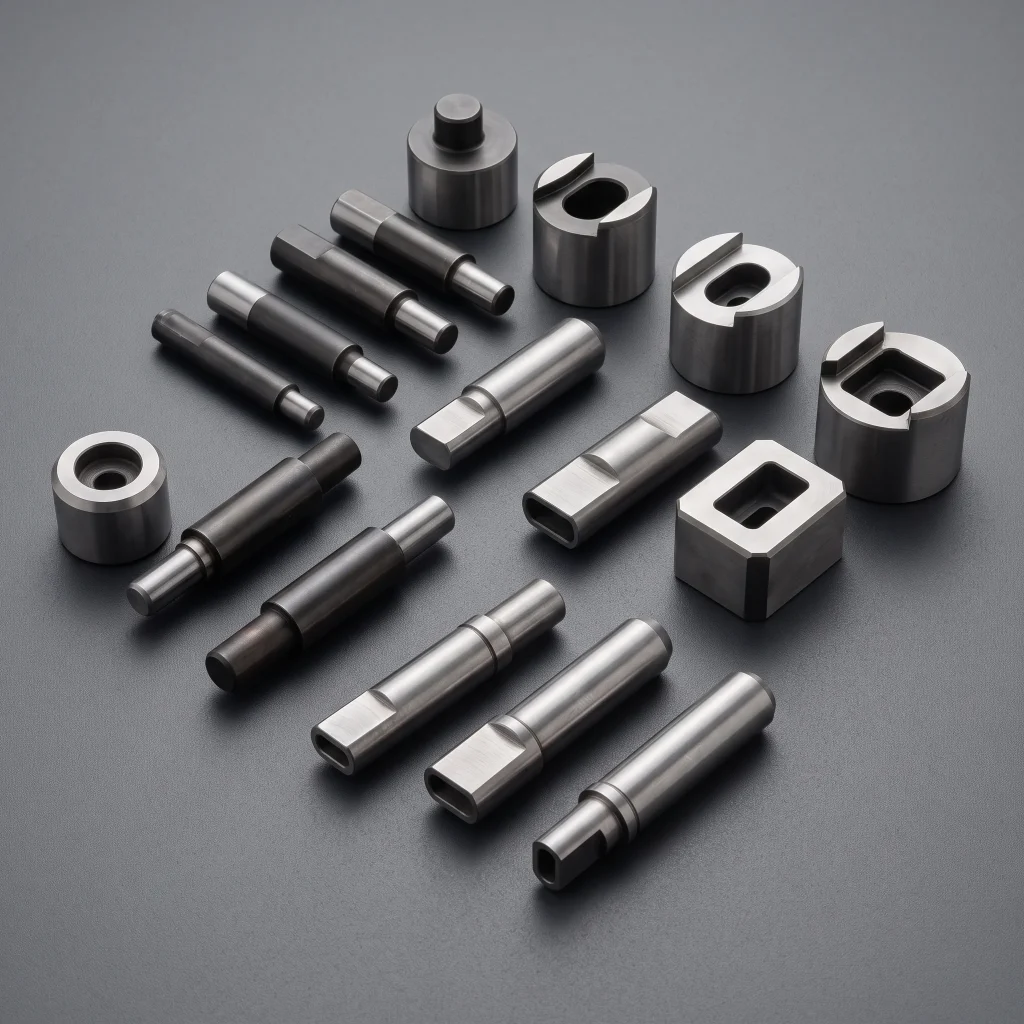
The tooling is the heart of any sheet metal clincher. Punch and die geometry determines button size, interlock strength, and tool life. Round tooling is the common choice, while oval and lance-style tooling suit specific part shapes and load directions. A well-matched set gives consistent joints on your actual material and thickness.
Heron’s punch and die tooling covers standard clinch tooling as well as oval and lance types. Inspect wear parts on a schedule, because worn dies reduce interlock and cause rejected joints. Always run trials with your own sheets, since coating, hardness, and thickness all change the result.
Sheet Metal Clincher vs Spot Welding vs Riveting
Choosing a joining method depends on strength, cost, and material. Here is how a sheet metal clincher compares:
- Versus spot welding: Spot welding gives high shear strength on steel and conducts electricity, but it needs heat, cooling, and electrode maintenance, and coated or dissimilar sheets are harder to weld. A sheet metal clincher avoids all of that, although joint strength is generally lower in shear and peel, so design checks matter.
- Versus self-pierce riveting: Riveting makes strong joints in tough, multi-material stacks, but every joint uses a rivet. A sheet metal clincher has no consumable, so cost per joint is lower, while very hard or thick stacks may favour riveting.
- Versus screws or adhesive: A sheet metal clincher is faster and cleaner, and it needs no curing time.
Many plants use several of these methods together. Heron supplies welding, riveting, and clinching equipment, so we can help you choose the right combination instead of pushing one process.
Where a Sheet Metal Clincher Fits Best
A sheet metal clincher is most common in these industries:
- Home appliances: Washer and dryer housings, oven frames, and panels
- HVAC and ducting: Duct sections, vents, and casings
- Electrical: Enclosures, cabinets, and mounting plates
- Automotive: Brackets, trim supports, and lighting parts
- Hardware and furniture: Shelving, frames, and storage units
A sheet metal clincher works best on ductile thin sheet, typically a few millimetres per layer. Very brittle or ultra-high-strength materials need testing before you commit.
How to Choose the Right Sheet Metal Clincher
Use this checklist when you specify a sheet metal clincher for a new application:
- Material and thickness: Confirm the total stack thickness, the alloys, and any coatings. This sets the force and tooling.
- Joint load: Define whether the joint sees shear, peel, or both. Add more points or change the tooling if needed.
- Access: Clinching needs tool access to both sides, so check the part geometry and throat depth.
- Volume and cycle time: High volume favours stationary machines or robot guns, while low volume or large parts suit hand-held units.
- Drive and control: Servo systems give precise force and stroke control, while air-oil systems offer robust, cost-effective power.
- Monitoring and integration: Decide early whether you need sensors, data logging, or links to a robotic cell.
Working through these six points keeps your sheet metal clincher investment tied to real production needs.
Quality Control for Clinched Joints
Every sheet metal clincher joint can be checked with a few simple measurements. Button diameter, neck thickness, and interlock, which is the undercut that holds the layers, show whether the joint formed properly. Sample checks with a gauge or cross-section confirm your settings.
For full confidence, add force and displacement monitoring on every joint. This flags missing sheets, wrong thickness, or tool wear in real time. Heron offers monitors and sensors that can be added to a sheet metal clincher setup, and the recorded data supports traceability for demanding customers.
Why Choose Heron as Your Sheet Metal Clincher Supplier
Heron has focused on metal joining since 1991 in Guangzhou, with more than 30 years of experience serving appliance, electrical, automotive, and hardware manufacturers. We build welding, riveting, and clinching equipment in one portfolio, so you get unbiased advice on the right process.
Our clinching solutions are available off the shelf or custom built, with servo guns, air-oil units, and premium tooling. You can upgrade them with monitors and sensors as your needs grow. Contact our team with your material, thickness, and volume, and we will recommend the right sheet metal clincher for your line.
FAQs About the Sheet Metal Clincher
Q1. What is a sheet metal clincher used for?
It joins thin sheet metal parts by cold forming, without welding or fasteners. Common uses include appliance housings, ducts, electrical enclosures, and brackets.
Q2. Is clinching as strong as spot welding?
Not usually in shear and peel strength, but it is often strong enough for the application and avoids heat and distortion. Test your own design, and add joints if you need more strength.
Q3. Can a sheet metal clincher join aluminium to steel?
Yes. Because the process is mechanical, dissimilar metals can be joined without the issues of welding, provided both materials are ductile enough to form the interlock.
Q4. Does a sheet metal clincher need rivets or heat?
No. A sheet metal clincher uses neither, so there are no consumables and no heat-affected zones.
Conclusion
A sheet metal clincher gives manufacturers a fast, clean, low-cost way to join sheet metal without heat or fasteners. Match the machine, tooling, and drive to your material and volume, and monitor quality with sensors. If you want help specifying a sheet metal clincher for your production line, send your application details to Heron and our team will guide you.