
Search “what is inverter welding” and you’ll mostly find content written for MIG, TIG, and stick welders — portable arc-welding machines built for fabrication shops and DIY projects. If that’s what you’re looking for, this isn’t the right guide.
But if you landed here because you’re specifying equipment for an industrial production line — spot welding car body panels, appliance components, or electrical assemblies — the more relevant question isn’t about portable arc welders at all. It’s about inverter technology as it applies to resistance welding, where it shows up under a more specific name: MFDC, or medium-frequency DC welding. This guide covers what that actually means, how it compares to traditional AC resistance welding, and how to decide which one your line actually needs.
First, a Quick Clarification on “What is Inverter Welding”
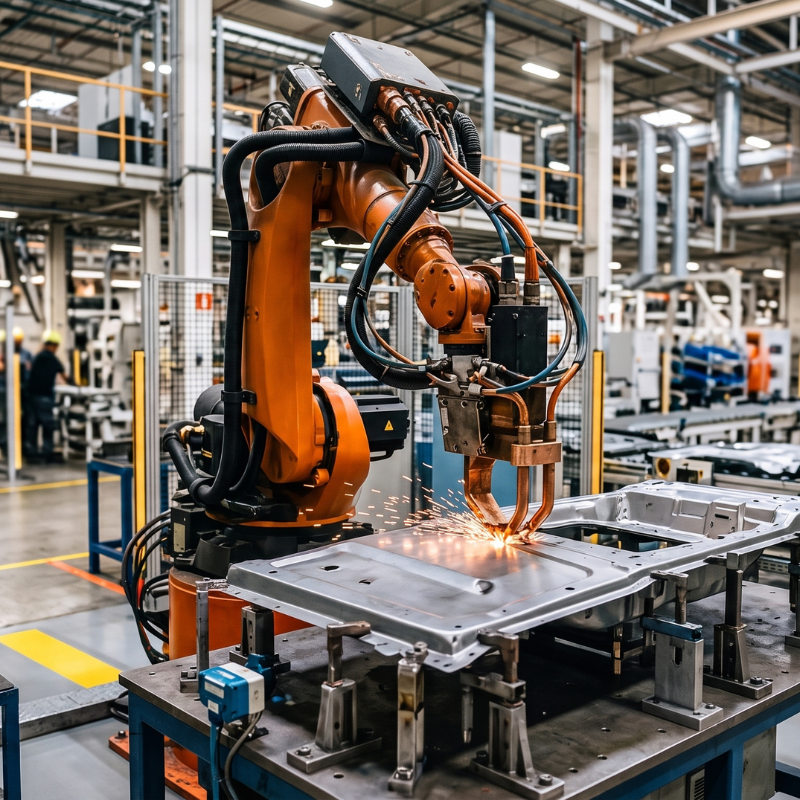
The term “inverter welder” is used loosely across the welding industry, and it means genuinely different things depending on context:
- In general arc welding (MIG, TIG, stick), “inverter welder” refers to portable machines that use electronic switching instead of a transformer to regulate output — popular for their light weight and portability.
- In industrial resistance welding — the category Heron-Welder builds equipment for — the equivalent technology is called MFDC (medium-frequency DC). It applies the same core principle (electronic switching instead of relying purely on line-frequency transformer behavior), but it’s engineered specifically for spot and projection welding, not open-arc processes.
If your work involves resistance spot welding sheet metal on a production line, MFDC is the term you actually want to be researching — even though “inverter welding” is often the more commonly searched phrase.
What is Inverter Welding Actually Mean in Resistance Welding
Traditional AC resistance welding runs current directly from the mains frequency — typically 50 or 60Hz — through a transformer and into the weld, without any of the electronic switching used in inverter welding. Because AC current crosses zero dozens of times per second, the current delivery is inherently pulsed and interrupted, which creates uneven heating at the weld point.
MFDC resistance welding takes a different approach, much like inverter-based arc welders do: incoming AC power is rectified to DC, then switched at a much higher frequency (typically in the range of 1,000Hz), then rectified again into a smooth, continuous DC output at the electrode. The result is current that reaches its target value quickly and stays stable through the entire weld cycle, instead of pulsing on and off with the line frequency.
This is the same underlying “inverter principle” used in arc welding — replacing transformer-only regulation with electronic switching — just applied to a completely different process and equipment category.
MFDC vs. AC Resistance Welding: The Real Industrial Comparison
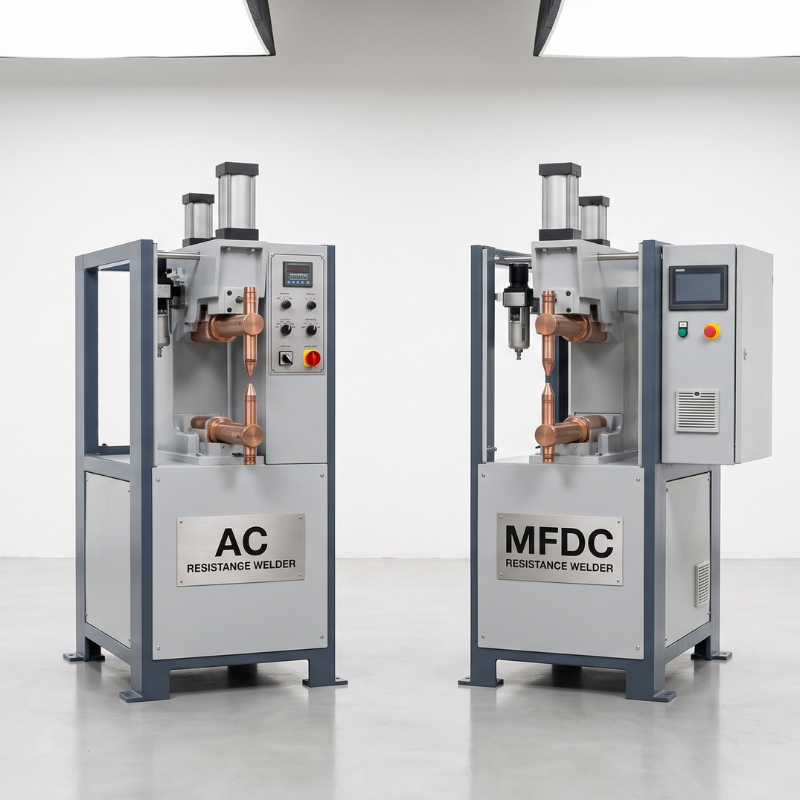
This is the comparison that actually matters for procurement and engineering buyers evaluating inverter welding against traditional AC resistance welding equipment. CLICK for more details.
Current Delivery and Weld Consistency
AC resistance welders deliver pulsed current with natural interruptions at every zero-crossing. MFDC systems deliver continuous, stable current, which generally produces more consistent nugget formation — particularly on materials sensitive to uneven heating, like high-strength steel, coated steel, and aluminum.
Energy Efficiency
MFDC systems — the resistance welding form of inverter welding — typically draw less power for comparable output than AC transformer-based systems, largely because the higher switching frequency allows for a smaller, more efficient transformer design. For high-volume production, that efficiency difference compounds meaningfully over time.
Material and Application Range
Because MFDC output is less dependent on part geometry and material type than AC systems, the same platform can often handle a broader range of materials — steel, aluminum, and dissimilar combinations — without a full process rebuild between jobs. AC systems can still handle a wide range of applications, but generally with a narrower, less forgiving process window.
Equipment Cost and Complexity
AC resistance welders are simpler in design and typically lower in upfront cost, which still makes them a reasonable choice for straightforward, high-current applications where advanced process control isn’t a priority. MFDC systems cost more upfront but offer more precision and flexibility, which often pays off for facilities handling varied materials or working within tighter quality tolerances.
When AC Resistance Welding Still Makes Sense
It’s worth being direct about this: inverter welding via MFDC isn’t automatically the “better” choice just because it’s the newer, more advanced technology. AC resistance welders remain a practical, cost-effective option for simpler applications — thicker mild steel, lower production volumes, or facilities where budget constraints outweigh the benefits of tighter process control. Heron continues to manufacture and support AC spot and projection welders for exactly this reason, alongside its MFDC line.
How to Decide Which Technology Fits Your Production Line
Rather than starting from the technology, it helps to start from three questions:
- What materials are you welding? High-strength steel, aluminum, or coated/dissimilar materials generally benefit more from MFDC’s stable current delivery.
- What’s your production volume and quality tolerance? High-volume lines with tight quality requirements typically see a faster return on MFDC’s added cost. Lower-volume or less demanding applications may not need it.
- What’s your budget and existing infrastructure? AC systems remain a sound, lower-cost option where the application doesn’t demand MFDC’s precision.
There’s no universally “correct” answer — it depends on matching the technology to the actual job, not defaulting to whichever term is trending.
How Heron-Welder Supports Both Inverter Welding (MFDC) and AC Resistance Welding
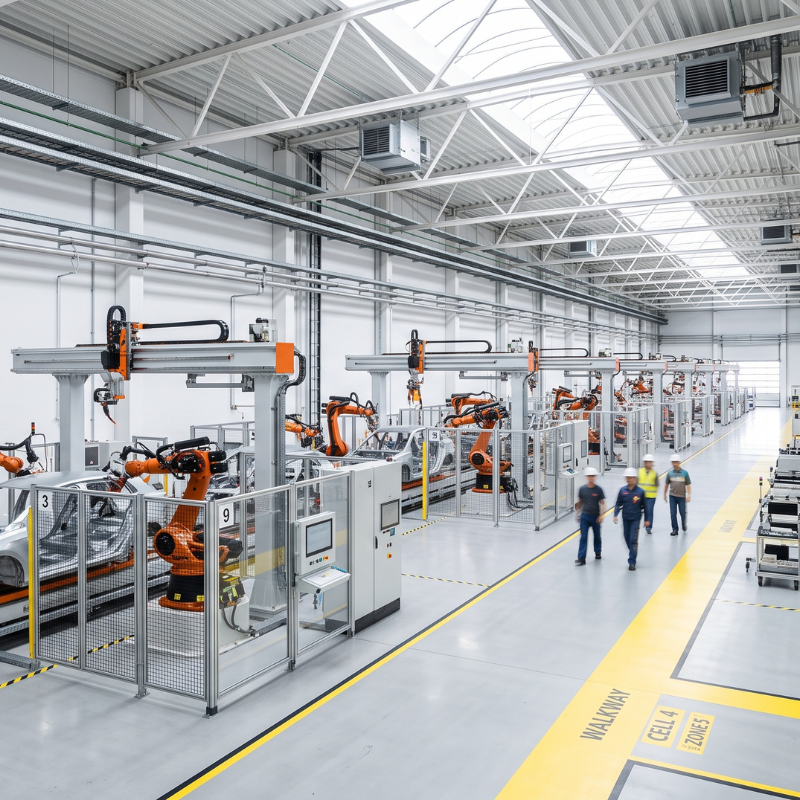
This is exactly why Heron-Welder manufactures both technology lines rather than pushing every customer toward one platform. Heron’s MFDC welders — Heron’s inverter welding line for resistance applications — are built around fast current rise, stable constant-current control, and a power range from 110 KVA up to 2500 KVA, suited to demanding materials and high-volume automotive, EV, electrical, and appliance production. Alongside that, Heron’s AC spot and projection welders remain a solid, cost-effective option for simpler applications where AC technology is genuinely the more practical fit.
The point isn’t to sell you on the more advanced-sounding option — it’s to help you land on the technology that actually matches your materials, volume, and budget. If you’re not sure which category fits your application, that’s a normal, common starting point. Heron welding specialist can guide you about your specific materials and production goals, and compare MFDC against AC before committing to either.
FAQs: What is Inverter Welding in Resistance Welding
Here are a few questions which clearifies “what is inverter welding in resistance welding”.
Q1. Is MFDC the same thing as an inverter welder?
Conceptually, yes — MFDC applies the same electronic switching principle used in inverter arc welders, but it’s engineered specifically for resistance spot and projection welding rather than open-arc processes like MIG or TIG.
Q2. Is MFDC always better than AC resistance welding?
Not necessarily. MFDC generally offers more stable current and better performance on demanding materials, but AC resistance welding remains a practical, lower-cost option for simpler, high-current applications where advanced process control isn’t essential.
Q3. Why is MFDC often more efficient than AC resistance welding?
MFDC’s higher switching frequency allows for a smaller, more efficient transformer design, which generally reduces energy loss compared to traditional line-frequency AC systems.
Q4. Can I switch from AC to MFDC on an existing production line?
It’s possible, but it typically involves more than just swapping equipment — current profiles, electrode setup, and process parameters usually need to be re-validated for the new technology rather than assumed to carry over directly.
Q5. Do I need MFDC if I’m only welding mild steel?
Not necessarily. Mild steel is generally more forgiving of AC’s pulsed current delivery, so AC resistance welding can still be a sound, cost-effective choice for straightforward mild steel applications.
Final Thoughts: Choosing the Right Current Technology, Not the Trend
“Inverter welding” means something different depending on which corner of the welding industry you’re standing in — and for industrial resistance welding, that usually means MFDC technology compared against traditional AC systems. Neither is universally correct. The right choice comes down to your materials, production volume, and quality requirements, not which term sounds more advanced.
If you’re weighing MFDC against AC for an upcoming line or equipment upgrade, Heron’s team can walk through your specific application and recommend the technology that actually fits — not just the one with the newer name. Compare MFDC and AC resistance welders with a specialist before making the call