Choosing the Best Resistance Welders starts with knowing your project’s exact needs. The right machine depends on material type, thickness, joint design, and production volume.
Welding is one of the core processes in modern manufacturing, and the choice of equipment can significantly impact production efficiency. Resistance welders have become a preferred option across various industries, including automotive, aerospace, electronics, and construction, because they provide strong joints without the need for filler metals or shielding gas
The method is clean, cost-effective, and highly suitable for mass production, but the challenge lies in selecting the right type of resistance welder for your specific needs.

Not every project requires the same machine. The thickness of the material, the design of the joint, the production speed, and the available power supply all influence which welder is the best fit.
For example, spot welding may be ideal for automotive sheet metal, while projection welding works better for fasteners in electrical assemblies. A mismatch between machine capability and project demand can lead to wasted resources, poor weld quality, and higher operating costs.
To make an informed decision, it is essential to understand both the technical and business factors behind welding equipment.
What Resistance Welding Actually Is?
Resistance welding is a process where two or more metal sheets or components are joined together by applying pressure and an electric current. The heat is created at the joint because of the natural electrical resistance of the metals being welded. Unlike arc welding or MIG welding, resistance welders do not require filler material, shielding gas, or flux. This makes the process clean, efficient, and suitable for mass production.
The most common types of resistance welding include:
-
Spot welding – Used to join thin sheets of metal, especially in automotive body panels and household appliances.
-
Projection welding – Designed for joining fasteners like nuts, bolts, and studs onto sheet metal.
-
Seam welding – Used for continuous welds, ideal for sealed pipes, tanks, and exhaust systems.
-
Flash welding – Used to join thicker sections like bars, tubes, and structural components in heavy industries.
Each of these welders has specific applications, and selecting the right one depends on the material, thickness, and project goals.
Why Choosing the Best Resistance Welders Matters?
Selecting the right resistance welder is not just about technical details; it is also a business decision. Welding is directly linked to productivity, product quality, and operating costs.
The right welder can:
-
Improve production speed and consistency.
-
Lower operating costs by reducing consumables.
-
Deliver uniform weld quality across all joints.
-
Allow for automation and factory scalability.
On the other hand, the wrong choice can lead to:
-
Weak welds or poor-quality joints.
-
High maintenance expenses.
-
Excess energy consumption.
-
Delays and downtime in production.
When equipment is matched properly to project needs, it reduces risk and supports long-term efficiency.
Step 1: Define Your Welding Requirements
The first step in choosing a resistance welder is to define exactly what your project requires. Without this clarity, it’s easy to overspend or purchase a machine that does not meet your needs.
-
Material Type
-
Mild steel requires less power because of its lower resistance.
-
Stainless steel needs higher pressure and precise control.
-
Aluminum requires much higher current due to its thermal conductivity.
-
-
Material Thickness
-
Thin sheets (0.5–1 mm) can be welded with smaller machines.
-
Thicker sheets (2–3 mm or more) demand higher current and electrode force.
-
-
Joint Design
-
Spot welding for flat sheet connections.
-
Projection welding for attaching fasteners.
-
Seam welding for continuous joints.
-
Flash welding for structural and heavy sections.
-
-
Production Volume
-
Low-volume projects may use manual or portable welders.
-
High-volume factories require automated, robotic, or multi-gun welding systems.
-
-
Power Supply Availability
-
Some machines run on single-phase, while large units require three-phase power.
-
Always check the compatibility of your factory’s power system with the equipment.
-
By defining these factors, you ensure that your choice is aligned with technical needs and cost efficiency.
READ MORE: Butt welding machine application range
Step 2: Understand the Main Types of Resistance Welders
Different welding machines are designed for specific applications. Here’s a breakdown:
| Type of Welder | Best Use | Example Applications |
|---|---|---|
| Spot Welder | Sheet metal assembly | Automotive body panels, appliances |
| Projection Welder | Welding fasteners | Nuts, bolts, electrical components |
| Seam Welder | Continuous joints | Exhaust systems, fuel tanks, sealed pipes |
| Flash Welder | Thick structural sections | Aerospace parts, tubes, axles, railway components |

Spot Welders
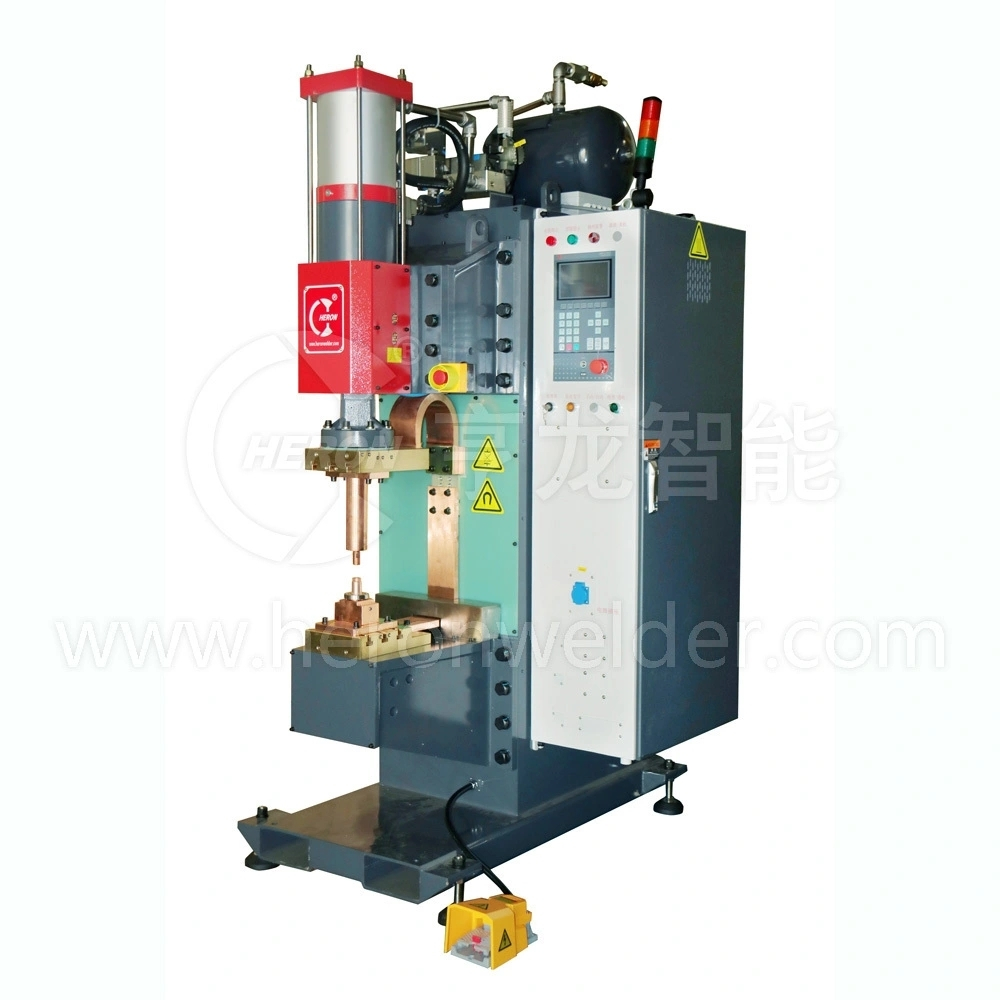
The most common type. They create weld nuggets at selected spots between sheets. Common in car manufacturing and home appliances. Available in handheld or robotic models.
Projection Welders
These focus on pre-designed projections on parts to localize heat. Ideal for fasteners, brackets, and precise electrical connections.
Seam Welders
They use wheel-shaped electrodes to produce continuous overlapping welds. Essential for projects requiring leak-proof joints.
Flash Welders
Designed for large cross-sectional areas. They heat the surfaces until plastic and then press them together. Mostly used in aerospace, railway, and heavy engineering.
Step 3: Evaluate the Technical Factors
When choosing between machines, it is critical to look at measurable technical specifications:
-
Current Capacity
-
Higher current is required for thicker metals.
-
Example: A 50 kVA welder can handle up to 2 mm steel.
-
-
Electrode Force
-
Pressure ensures proper contact and weld quality.
-
Adjustable force is vital when working with different materials.
-
-
Duty Cycle
-
Indicates how long the machine can run before cooling.
-
High duty cycle is necessary for continuous, high-volume production.
-
-
Automation Compatibility
-
Modern welders should integrate with robotic systems and programmable logic controllers (PLC).
-
-
Energy Efficiency
-
Medium-frequency DC (MFDC) welders are more energy-efficient than older AC models.
-
Step 4: Consider Cost vs Long-Term Value
A low purchase price does not always mean savings. Welding is a long-term process where operational costs matter.
Cost Considerations
-
Purchase Price – Initial cost of the machine.
-
Maintenance – Replacement of electrodes, cooling systems, and service.
-
Energy Use – Modern welders consume less power.
-
Downtime Costs – Lost production hours due to breakdowns.
-
Scalability – The ability to expand with automation or add more lines.
It’s better to choose a machine that balances purchase cost with efficiency and durability.
Step 5: Safety and Compliance
Compliance with safety and welding standards protects workers and ensures smooth audits.
Look for:
-
ISO 14327 – Resistance welding testing standards.
-
ANSI/AWS – Guidelines for electrode materials and safety.
-
CE or UL certification – Regional safety compliance.
Choosing certified equipment lowers risks of accidents and rejects in customer inspections.
Step 6: After-Sales Support and Training
Even advanced machines are ineffective without trained operators. Evaluate suppliers on:
-
Operator training programs.
-
Availability of spare parts.
-
Remote or on-site technical support.
-
Warranty and service contracts.
Strong after-sales support ensures long-term reliability.
Practical Checklist Before Buying the Best Resistance Welders
Here’s a condensed checklist:
-
Define material type and thickness.
-
Identify the required welding process.
-
Match the machine current and force with needs.
-
Review duty cycle rating.
-
Check automation readiness.
-
Confirm energy efficiency.
-
Verify compliance certifications.
-
Compare lifetime costs.
-
Request supplier references.
-
Confirm after-sales support.
Future Trends in Resistance Welding
The industry is moving toward:
-
Automation – Robotics handle up to 90% of welding in advanced factories.
-
AI monitoring – Sensors track weld quality in real time.
-
Green technology – MFDC welders reduce carbon footprint with lower power usage.
Keeping future trends in mind prevents equipment from becoming outdated too soon.
Q1: What thickness of material can resistance welders handle?
Most spot welders are designed for thin to medium sheet metals, typically between 0.5 mm and 3 mm in thickness. This range makes them perfect for automotive body panels, appliance shells, and light structural parts. For projects involving thicker sections, heavy-duty machines like flash welders are better suited. They can handle bars, tubes, and structural components where cross-sections may reach several centimeters. The key is matching the machine’s current output and electrode force to the thickness of the material.
Q2: Do resistance welders work with aluminum?
Yes, resistance welders can work with aluminum, but it is more challenging compared to steel. Aluminum has high thermal conductivity and low electrical resistance, meaning it quickly dissipates heat. As a result, welders must use much higher current levels and carefully controlled pressure to achieve strong welds. Specialized electrodes and advanced machines like medium-frequency DC welders (MFDC) are often used to handle aluminum effectively in industries such as automotive and aerospace.
Q3: Are resistance welders energy efficient?
Modern resistance welders, especially MFDC welders, are significantly more efficient than older AC-based machines. On average, they can be 15–20% more energy efficient, which translates to lower electricity bills and reduced carbon footprint. They also provide better heat control, shorter weld times, and less wear on electrodes. Over the life of the machine, energy efficiency directly contributes to lower operating costs and improved sustainability, making them a strong choice for large-scale production.
Q4: How long do electrodes last?
The lifespan of electrodes in resistance welding depends on several factors: material type, weld settings, cooling, and maintenance. On average, electrodes may last for hundreds to thousands of welds before they need dressing or replacement. When welding high-conductivity metals like aluminum, electrode wear is faster. Proper water cooling, correct pressure adjustment, and timely tip maintenance can extend electrode life significantly. Regular inspection and tip reshaping (tip dressing) also help maintain consistent weld quality.
Q5: What industries use resistance welders the most?
Resistance welders are widely used in industries that rely on mass production and high-strength joints. The automotive industry is the largest user, with thousands of spot welds required in every car body. The aerospace sector uses resistance welding for lightweight aluminum and titanium parts. Electronics manufacturing applies projection welding for joining small electrical contacts and fasteners. Construction and structural industries rely on flash welders for heavy-duty joints, while household appliance manufacturers use spot welders for sheet assemblies like washing machines, refrigerators, and ovens.
Conclusion
Selecting the best resistance welder is not just about choosing a machine; it is about aligning technology with your project goals. Every factor matters — from the type of material and thickness you are working with, to the kind of joints required, the production volume, and the available power supply. A careful review of these points ensures that the machine you invest in can deliver consistent quality, reduce downtime, and improve long-term efficiency.
Spot welders, projection welders, seam welders, and flash welders each have their place, and understanding their applications helps avoid costly mistakes. Beyond technical capacity, it is equally important to evaluate energy efficiency, duty cycle, automation compatibility, and compliance with international safety standards. Support from the supplier, training for operators, and access to spare parts also play a major role in keeping production smooth.
When all these elements are considered together, the decision becomes clearer. The right resistance welder is more than equipment — it is a strategic asset that supports productivity, quality, and growth for years to come.