
If your resistance spot welding electrodes are burning through faster than expected, you’re not alone — and it’s rarely bad luck. Premature wear on resistance spot welding electrodes is almost always a symptom of something upstream: unstable current, inconsistent pressure, or the wrong electrode for the job. The good news is that once you identify which of these is driving the wear, cutting it by 30–50% is a realistic, achievable target rather than a marketing promise.
This guide breaks down why resistance spot welding electrodes wear out, what’s actually within your control, and how manufacturers in automotive, EV, electrical, appliance, and compressor production are extending electrode life without slowing down their lines.
Why Electrode Wear Is Costing You More Than You Think
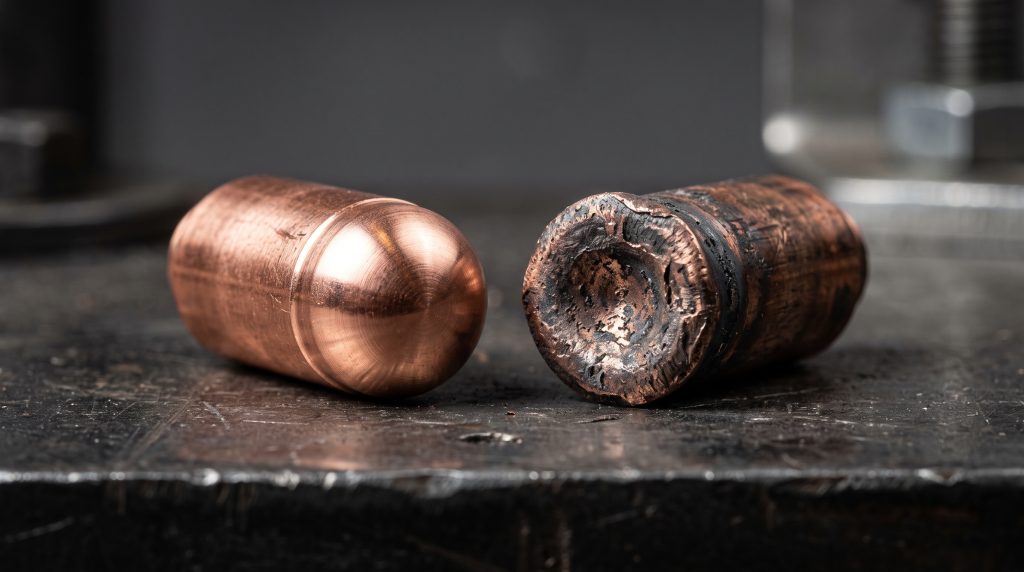
On paper, an electrode tip is a small, inexpensive consumable. In practice, wear on resistance spot welding electrodes touches almost every part of your production cost structure:
- Unplanned downtime for tip dressing or replacement
- Inconsistent weld quality as tip diameter grows and current density drops
- Increased scrap and rework from weak or inconsistent nuggets
- Higher labor cost from manual dressing cycles and operator troubleshooting
For high-volume lines — think automotive body shops or appliance assembly — even a modest increase in electrode life translates into meaningful savings across thousands of weld cycles per shift. That’s why electrode wear deserves the same engineering attention as current and time settings, not an afterthought handled with “replace and move on.”
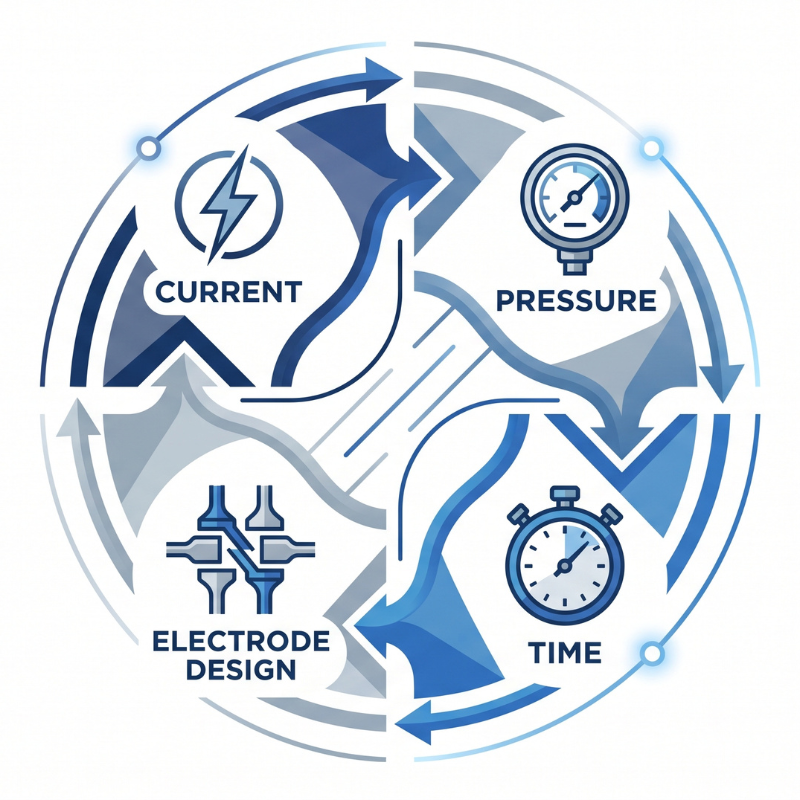
The Four Root Causes of Premature Wear in Resistance Spot Welding Electrodes
Before chasing a fix, it helps to understand where the wear is actually coming from. In most factories, it’s one (or a combination) of four factors.
Inconsistent Welding Current
Traditional AC resistance spot welding systems interrupt current dozens of times per second as it crosses zero. This discontinuous heating creates uneven thermal stress at the electrode face, accelerating pitting and mushrooming — especially when welding coated steels or high-strength alloys. The electrode absorbs the instability that the current delivery system fails to control.
Poor Electrode Pressure Control
The electrode force directly affects contact resistance and how much mechanical stress the tip absorbs on every cycle. Too much pressure flattens and deforms the tip prematurely; too little causes arcing and surface damage. When pressure is set manually and left unchanged across different material stacks and thicknesses, wear becomes unpredictable — and so does weld quality.
Wrong Electrode Material or Tip Geometry
Not all applications call for the same electrode. Tip diameter, dome shape, and copper alloy composition all need to match the sheet thickness, coating type, and material being welded. Generic resistance spot welding electrodes used across every job are a common — and avoidable — source of uneven current density and faster wear, particularly on high-strength or coated steels. For more details.
Uncontrolled Welding Time
When welding time is set by operator habit rather than data, it’s easy to overshoot. Excess heat input enlarges the heat-affected zone and puts additional thermal load on the electrode with every extra cycle, wearing it down faster than necessary — without any corresponding gain in weld strength.
How to Extend the Life of Resistance Spot Welding Electrodes
Once you know where wear is coming from, the fixes for resistance spot welding electrodes are practical and largely about control, not guesswork.
Stabilize Current with MFDC Technology
Medium-frequency DC (MFDC) welding delivers continuous, stable current instead of the pulsed, interrupted output of conventional AC systems. Because the current reaches target value in milliseconds and stays consistent through the weld cycle, thermal stress on the electrode face is far more even — reducing pitting and mushrooming over time.
Automate Pressure and Force Settings
Rather than relying on manual adjustment for every job change, automated electrode force control lets you set and recall pressure curves based on material type and thickness. This keeps force consistent from part to part, which protects both the electrode and the weld nugget.
Match Electrode Material to the Application
Choosing the right copper alloy and tip geometry for the sheet thickness and coating you’re working with isn’t a minor detail — it’s one of the most direct levers you have over electrode life. A properly matched electrode maintains better current concentration and holds its shape longer under repeated cycles.
Monitor and Dress Electrodes Proactively
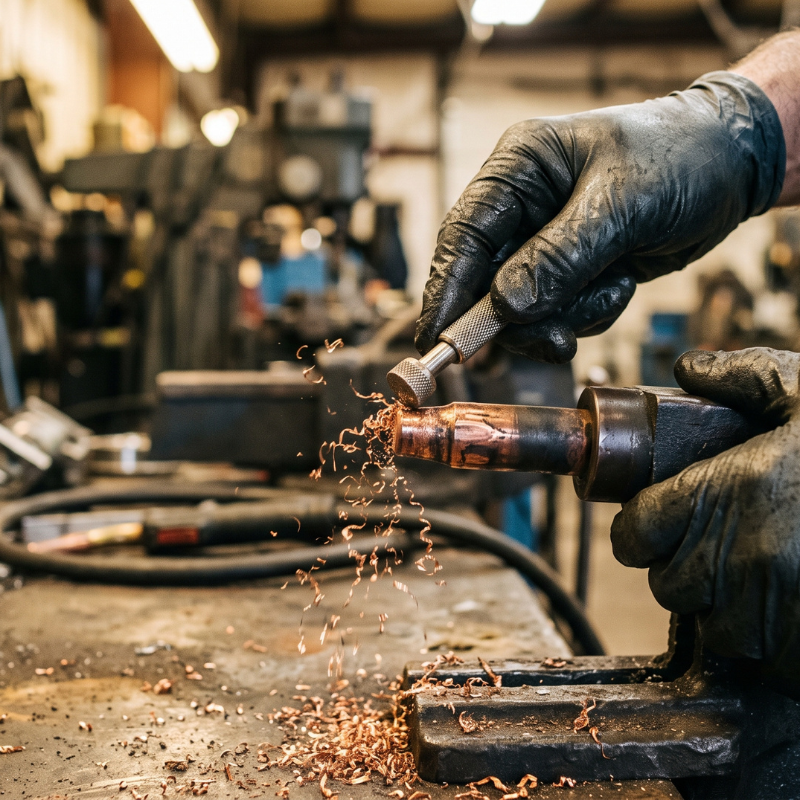
Waiting until a weld defect shows up on the line is the most expensive way to discover a worn electrode. Proactive dressing schedules for resistance spot welding electrodes, informed by real production data rather than fixed intervals, catch wear before it affects quality — and reduce the frequency of dressing overall by keeping current and pressure consistent in the first place.
What Cutting Electrode Wear Actually Means for Your Production Line
Reducing electrode wear isn’t just about spending less on tips. It compounds into:
- Fewer unplanned stops for dressing or replacement
- More consistent nugget formation across a production run
- Lower scrap and rework rates
- Reduced strain on operators who would otherwise be troubleshooting inconsistent welds
For teams running multi-shift production across automotive, EV, electrical, or appliance manufacturing, that consistency is often worth more than the electrode cost savings alone.
How Heron-Welder Helps Extend the Life of Resistance Spot Welding Electrodes
This is exactly the problem Heron-Welder’s MFDC systems are engineered to solve. With over 30 years of resistance welding experience, Heron builds welding machines that control the variables that drive wear on resistance spot welding electrodes — rather than leaving them to operator judgment.
Heron’s MFDC platforms deliver continuous, stable current output, intelligent electrode pressure control with automatic curve optimization by material and thickness, and a validated database of thousands of tested parameter sets covering mild steel, stainless steel, and aluminum alloys. Combined with Heron’s range of electrodes, shunts, and pins engineered for specific sheet thickness and coating combinations, the goal is straightforward: give your line consistent, repeatable welds that don’t wear out your electrodes faster than they need to.
Whether you’re running high-volume automotive body-in-white production or lower-volume appliance and compressor assembly, the right welding machine setup can be the difference between electrode wear being an unpredictable cost center and a controlled, budgeted line item.
If electrode wear, spatter, or inconsistent nuggets are showing up on your line more often than they should, it’s worth having a technical conversation before assuming it’s just a consumables problem. Talk to a Heron welding specialist to review your current setup and see where wear is actually coming from.
FAQ: Resistance Spot Welding Electrodes
Q1. Why do resistance spot welding electrodes wear out so quickly?
Most premature wear comes from inconsistent current, incorrect electrode pressure, or using an electrode material/geometry that doesn’t match the application. Fixing the root cause is more effective than simply replacing tips more often.
Q2. How often should spot welding electrodes be dressed or replaced?
There’s no universal number — it depends on material, current, pressure, and cycle volume. Data-driven monitoring, rather than a fixed calendar interval, gives a more accurate picture of when dressing is actually needed.
Q3. Does the resistance spot welding electrodes material affect weld quality, not just electrode life?
Yes. The right copper alloy and tip geometry affect current density and heat distribution at the weld zone, which directly influences nugget formation and joint strength — not only how long the electrode lasts.
Q4. Can upgrading to MFDC welding really reduce electrode wear?
MFDC technology delivers continuous, stable current instead of the pulsed output of conventional AC systems, which reduces the uneven thermal stress that accelerates electrode pitting and deformation.
Q5. Is electrode wear more of a problem with high-strength or coated steel?
Yes, generally. These materials are more sensitive to inconsistent current and pressure, which makes proper electrode selection and stable process control even more important than with mild steel.
Final Thoughts: Turning Electrode Wear Into a Controlled Variable
Resistance spot welding Electrodes wear will never be fully eliminated — it’s a consumable process by nature. But it doesn’t have to be unpredictable. When current, pressure, electrode selection, and welding time are properly controlled, manufacturers routinely see wear rates drop significantly, along with fewer defects and less unplanned downtime.
If you’re ready to stop treating electrode wear as a fixed cost and start treating it as a variable you can manage, Heron-Welder’s engineering team can walk through your current setup and recommend a system built around your specific materials and production volume. Get a tailored electrode & equipment quote and see what a properly controlled welding process can do for your line.


