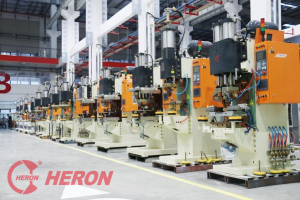
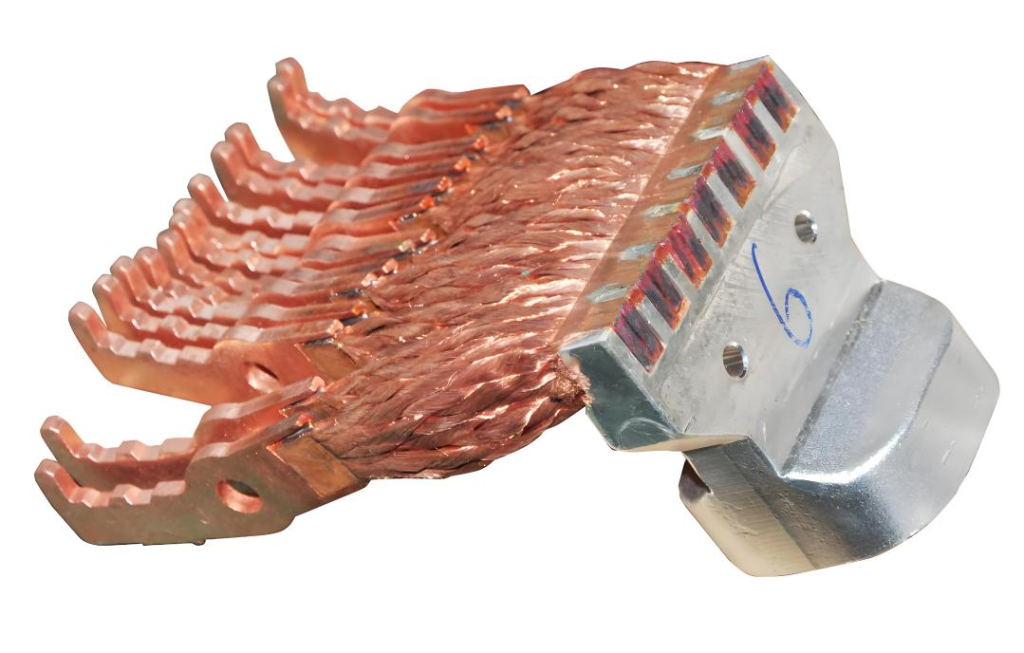
Spot weld aluminum has become a critical manufacturing capability as industries accelerate lightweight design in electric vehicles, aerospace, rail transportation, and advanced equipment manufacturing. However, aluminum’s high electrical conductivity, rapid heat dissipation, and surface oxide layer make it one of the most technically demanding materials for resistance spot welding. Industry data shows that unoptimized aluminum spot welding processes can result in defect rates as high as 8%-12%, directly impacting production yield, product reliability, and total manufacturing cost.
This article provides a comprehensive, engineering-focused explanation of how to spot weld aluminum efficiently, covering process principles, key technical characteristics, and MFDC solutions for stable, high-quality welds.
What Is Resistance Spot Welding
Resistance spot welding (RSW) is a process that joins materials by forming a weld nugget using short-time, high-current, low-voltage through clamped workpieces. Heat from electrical resistance at the faying surfaces causes localized melting. The current stops, and electrode force forges the molten metal into a solid joint.
Spot Weld Aluminum: Process Principles
Spot weld aluminum requires precise heat control combined with pressure. The process follows a three-stage closed loop: pre-squeeze, heating, and forge cooling, each stage adapted to aluminum’s material characteristics. Unlike conventional spot welding, aluminum welding must accommodate its high electrical conductivity, high thermal conductivity, and stable oxide layer, demanding higher welding current and more precise parameter control.
The spot weld aluminum process can be divided into three stages: pre-squeeze, heating, and forge cooling.
1. Pre-squeeze stage
Electrodes apply 1000–2000 N of force to the aluminum plate to ensure contact and reduce surface resistance. No current is applied; the main purpose is to prepare for subsequent welding.
2. Heating stage
High current (up to tens of thousands of amperes) is delivered within a very short time, heating the contact surface to 500–800°C and forming a 2-4 mm molten weld nugget.
3. Forge cooling stage
After power is cut off, electrode force is maintained to cool and crystallize the molten metal under pressure, forming a dense weld joint. Proper force prevents expulsion, porosity, or incomplete fusion.
Key Technical Characteristics of Spot Weld Aluminum
1. High current, short welding time
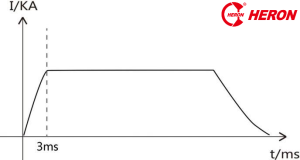
Aluminum has high electrical and thermal conductivity, requiring high current and short welding time. Spot weld aluminum needs three times the current used for carbon steel spot welding, typically 15-25kA, with a shorter welding time of 100-160ms.
2. Electrode force and shape requirements
Spot weld aluminum requires high electrode force to compensate for thermal expansion and reduce cracking. Electrode diameter guidelines based on plate thickness: Ø13 mm is recommended for plates less than 1.0mm thickness; Ø16 mm for 1.0-1.5mm; Ø20 mm for 1.5-2.0mm; and ≥Ø25 mm for 2.0mm.
3. Strict surface cleaning
Aluminum oxide forms instantly in air, with a melting point of 2050℃ (far exceeding the melting point of aluminum’s 660℃) and must be removed. Poor cleaning leads to defects like incomplete penetration and porosity. Industrial methods include stainless steel wire brushing and chemical cleaning. In aerospace and defense, oxide layer uniformity is tightly controlled for weld repeatability.
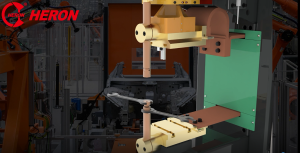
Spot Weld Aluminum: Core Process Challenges
1. Surface oxide layer instability
The oxide layer causes initial contact resistance variation up to ±45%, affecting welding stability. If not effectively penetrated, it will leads to incomplete heat penetration or defects like porosity and slag inclusions.
2. Thermal management and shunting
High thermal conductivity causes rapid heat loss and current shunting, especially in multi-spot applications, making nugget consistency hard to maintain.
3. Solidification cracking risk
Aluminum’s wide plastic temperature range (about 480–640°C) increases hot cracking susceptibility during nugget solidification.
Why MFDC Technology Is Critical for Spot Weld Aluminum
Traditional AC spot welders suffer from current zero-crossing, limiting heat input efficiency to 60–70%. In contrast, MFDC (Medium Frequency Direct Current) spot welding is the industry-standard solution for aluminum applications.
Advantages of MFDC for Spot Weld Aluminum
- Higher thermal efficiency: Continuous DC output eliminates zero-crossing losses, achieving over 95% efficiency compared to 60-70% with AC welders.
- Precise current control: Millisecond-level accuracy reaches ±1% enables real-time compensation for oxide variation and shunting, far surpassing traditional AC welders (20ms level).
- Less spatter and electrode wear: Eliminating current peak impact reduces spatter by over 80%, improving surface quality and workshop
- Stable nugget formation: Nugget diameter stability is significantly improved in multi-layer and mixed-material joints.
Critical Parameters for Spot Weld Aluminum
1. Welding current
Typical aluminum spot welding currents range from 25-80kA, depending on sheet thickness and alloy composition-much higher than steel spot welding (10-30kA). This is due to aluminum’s high conductivity and low resistivity, requiring greater current to generate sufficient heat for weld nugget formation.
2. Electrode force
Electrode force for spot weld aluminum is typically 1000-2000N, about 2-3 times higher than for steel spot welding machines (300-1000N). Proper pressure reduces contact resistance and minimizes spatter.
3. Welding time
Welding time is usually 0.1-2 seconds to concentrate heat before dissipation. Millisecond-level short welding is common due to aluminum’s high thermal conductivity, requiring rapid heat input and weld nugget formation.
Industrial Applications of Spot Weld Aluminum
1. Automotive and EV manufacturing
Spot weld aluminum is used for key components like battery trays, body structures, and lightweight frames. With the rise of CTP battery technology, battery trays have evolved from simple load-bearing parts to performance integrated cores, demanding higher welding precision. Automakers like BYD widely use aluminum spot welding for high-accuracy battery trays welding.
2. Aerospace manufacturing
Spot weld aluminum is used for aircraft bulkheads and engine mounts, where lightweighting must not compromise reliability. The low distortion and high joint consistency of aluminum spot welding make it ideal for these applications.
3. Rail transportation
High-speed train interior panels and structural components rely on aluminum spot welding for strength and sealing.
4. Architectural and industrial fabrication
Aluminum curtain walls and high-speed rail panels achieve high strength and lightweight requirements through aluminum spot welding, while minimizing deformation that could affect precision.
Engineering Recommendations for Manufacturers
For manufacturers, overcoming spot weld aluminum challenges is crucial for enhancing product competitiveness and entering high-end sectors like new energy and aerospace. Prioritize spot welding equipment with MFDC technology, implement standardized surface preparation, use validated parameter databases over empirical tuning, and partner with experienced resistance welding solution providers.
With over 30 years of expertise in resistance welding, Heron Intelligent Equipment provides spot weld aluminum solutions for automotive, electrical, and advanced manufacturing. Mastering efficient aluminum spot welding means gaining a competitive edge in high-end manufacturing.
HERON offers advanced industrial solutions with a focus on precision and efficiency. Their spot welder for aluminum is designed to deliver strong, reliable welds while minimizing material distortion. Ideal for automotive, aerospace, and manufacturing applications, HERON’s equipment ensures consistent performance and productivity. Choosing HERON means investing in a spot welder for aluminum that combines cutting-edge technology with ease of use, helping your operations run smoothly and efficiently.