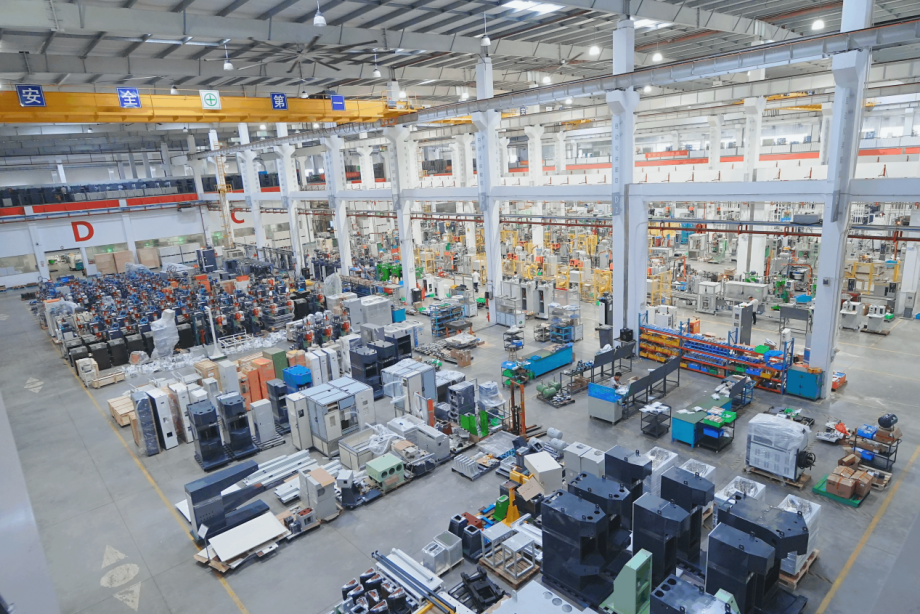
Industrial Spot Resistance Welder technology has become an essential component in modern manufacturing, particularly for high-volume production in the automotive and appliance industries.
These systems are designed to join metal sheets efficiently by applying controlled electric current and pressure, creating strong and precise welds that meet the stringent quality and safety requirements of industrial applications.
Unlike traditional welding methods, spot resistance welders deliver consistent results across large production runs, reducing material waste and minimizing the risk of defects.
In automotive manufacturing, this technology is used extensively for body panels, chassis components, and battery enclosures, where strength, durability, and repeatability are critical.
Similarly, in appliance production, spot resistance welding ensures accurate joining of compressors, housings, and sheet metal assemblies without deforming delicate components. Modern systems also integrate automation, robotics, and real-time weld monitoring, providing manufacturers with improved throughput, cost efficiency, and production reliability.
As manufacturers look for ways to optimize operations and maintain consistent product quality, understanding the features, applications, and benefits of industrial spot resistance welders becomes increasingly important.
Industrial Spot Resistance Welder Solutions for Automotive and Appliance Manufacturing
Industrial spot resistance welding is a critical technology for modern manufacturing, especially in automotive and appliance production lines. With the growing need for high-volume, consistent, and automated welding solutions, manufacturers rely on industrial spot resistance welders to ensure product quality, productivity, and process efficiency.
This article provides a detailed guide on industrial spot resistance welder solutions, highlighting technologies, applications, automation, quality control, and selection criteria that manufacturers need to consider.
1. Introduction to Industrial Spot Resistance Welder Solutions
Industrial spot resistance welding is a process that joins metal sheets by applying electric current through electrodes at specific points. The process is widely used in manufacturing automotive body parts, electrical appliances, and metal assemblies, where strength, consistency, and speed are essential.
Modern industrial spot welding solutions are designed not only for single welds but also for integration into automated production lines, enabling manufacturers to reduce labor costs, increase throughput, and maintain consistent weld quality across high-volume operations.
2. What Is an Industrial Spot Resistance Welder and How It Works
2.1 Resistance Spot Welding Process in Industrial Production
Resistance spot welding works by passing a high electric current through overlapping metal sheets under pressure from electrodes. The heat generated by the electrical resistance melts the metal locally, forming a weld nugget. Once cooled, the welded point forms a strong mechanical bond.
Key steps in the process:
-
Clamping: Electrodes hold the metal sheets together.
-
Current Application: High electric current is applied through the electrodes.
-
Heat Generation: Electrical resistance produces heat, melting the sheet metal locally.
-
Cooling & Solidification: The weld nugget cools, forming a permanent bond.
This process is highly repeatable, making it ideal for automotive and appliance manufacturing.
2.2 Main Components of an Industrial Spot Welding System
-
Welding Power Supply: MFDC, Capacitor Discharge (CD), or inverter-based.
-
Electrodes and Gun: Provide clamping and conduction of current.
-
Control System: Regulates current, time, and electrode force.
-
Fixture/Jigs: Ensure proper alignment and positioning of sheets.
-
Safety Systems: Protect operators and ensure compliance with industrial standards.

3. Why Automotive and Appliance Manufacturing Requires Industrial Spot Resistance Welding
3.1 Production Requirements in Automotive Parts Manufacturing
Automotive production demands high-strength, lightweight, and precise metal joining. Body panels, chassis components, battery enclosures, and motor parts require consistent weld quality for safety and durability.
Spot welding allows manufacturers to:
-
Maintain consistent weld strength in high-volume production.
-
Reduce labor-intensive manual welding.
-
Integrate automated solutions into robotic production lines.
3.2 Joining Challenges in Home Appliance Production Lines
Appliance manufacturing, including compressors, washing machines, and refrigerators, requires metal joining with minimal deformation. Spot resistance welding enables manufacturers to:
-
Join thin metal sheets efficiently.
-
Reduce material distortion during welding.
-
Produce reliable, long-lasting assemblies for appliances.
4. Key Technologies Used in Industrial Spot Resistance Welder Systems
4.1 MFDC Spot Welding Machine Technology
Medium-Frequency Direct Current (MFDC) spot welders are widely used in automotive and appliance industries for their:
-
High energy efficiency compared to traditional AC welders.
-
Ability to weld high-strength steel with precision.
-
Short welding cycles suitable for high-speed production lines.
MFDC welders are ideal for applications where weld consistency and quality control are critical.
4.2 Capacitor Discharge and Inverter Spot Welding Systems
-
Capacitor Discharge (CD) Welders: Generate short, high-energy pulses for thin metals and delicate components.
-
Inverter Spot Welders: Provide precise control of current and time, suitable for varying sheet thicknesses.
These systems allow manufacturers to handle diverse materials efficiently.
4.3 Servo-Controlled Welding Guns and Force Control
Modern systems often use servo motors to control electrode force, ensuring:
-
Uniform weld nugget formation.
-
Reduced electrode wear.
-
Stable welding for robotic or automated applications.
Servo-controlled systems are especially beneficial in automotive assembly lines where precision is critical.
5. Automated and Robotic Industrial Spot Welding Solutions
5.1 Robotic Spot Welding Systems for Automotive Production
Automotive assembly lines increasingly use robotic spot welding cells to handle high volumes. These robots:
-
Reduce manual labor.
-
Maintain consistent weld quality.
-
Work with heavy-duty components efficiently.
Robotic spot welders can be programmed to follow complex weld paths, increasing flexibility in car body assembly.
5.2 Automated Spot Welding Lines for Appliance Manufacturing
Appliance production benefits from fully automated welding lines where:
-
Multiple welders operate in sequence.
-
Conveyors transport assemblies between welding stations.
-
Weld monitoring ensures consistent quality across batches.
Automation reduces production errors and increases throughput.
5.3 Integrated Welding Cells and Smart Production Systems
Integrated welding cells combine welders, robots, sensors, and control systems to provide:
-
Real-time weld quality monitoring.
-
Automated material handling and assembly alignment.
-
Centralized data collection for production analytics.
Such systems are increasingly adopted in high-volume industrial applications, including automotive and appliance manufacturing.
6. Quality Control and Welding Monitoring in Industrial Spot Resistance Welding
6.1 Welding Current, Time and Force Monitoring
Monitoring parameters such as current, welding time, and electrode force ensures:
-
Consistent weld nugget size.
-
Reduced weld failures.
-
Compliance with industrial standards.
6.2 Weld Nugget Consistency and Online Quality Inspection
Modern industrial spot welders can integrate online weld inspection systems using:
-
Nugget diameter measurement
-
Ultrasound or X-ray inspection
-
Digital logging for traceability
This ensures products leaving the line meet safety and durability requirements.
7. Typical Applications in Automotive Manufacturing
7.1 Body and Structural Parts Spot Welding
-
Car doors, hoods, roofs, and chassis components
-
Spot welding ensures high-strength joints for safety
7.2 Battery, Motor and Electrical Component Welding
-
Electric vehicles require battery enclosures welded with precision
-
Electric motor laminations benefit from consistent weld points

8. Typical Applications in Appliance Manufacturing
8.1 Compressor Shell and Housing Welding
-
Compressors for refrigeration and HVAC systems are often thin-sheet assemblies
-
Industrial spot resistance welders provide precise welds without deformation
8.2 Sheet Metal Assemblies for Household Appliances
-
Washing machines, ovens, and refrigerators use spot welding for frame and panel assembly
-
Automated welding ensures consistent production quality
9. How to Select the Right Industrial Spot Resistance Welder Solution
9.1 Material Type and Sheet Thickness Considerations
-
Determine whether the application requires high-strength steel, aluminum, or thin gauge materials
-
Choose MFDC, CD, or inverter systems based on material conductivity and thickness
9.2 Production Volume and Automation Level
-
High-volume lines benefit from robotic or automated spot welders
-
Smaller lines may use semi-automatic or single-station welders
9.3 Power Supply Selection (MFDC vs CD vs Inverter)
-
MFDC: Best for high-volume automotive applications
-
CD: Ideal for thin or sensitive materials
-
Inverter: Flexible for mixed-material production lines
9.4 Integration With Existing Production Lines
-
Check compatibility with conveyor systems, robotic arms, and production software
-
Ensure control systems can integrate with your factory monitoring tools
10. System Design and Customization for Industrial Spot Welding Projects
10.1 Turnkey Spot Welding Production Line Solutions
-
Heron offers customized production lines, integrating welders, robots, conveyors, and monitoring systems
-
Turnkey solutions reduce installation time and improve efficiency
10.2 Customized Fixtures, Jigs and Welding Stations
-
Proper fixture design ensures weld alignment and repeatability
-
Custom jigs reduce material handling time and operator errors
11. Benefits of Using Industrial Spot Resistance Welder Solutions in High-Volume Manufacturing
11.1 Productivity and Throughput Improvement
-
Automated welders reduce manual labor and increase production speed
-
Multiple stations allow simultaneous welding of complex assemblies
11.2 Stable Welding Quality and Reduced Rework
-
Real-time monitoring ensures consistent weld nuggets
-
Reduces scrap and rework, saving material costs
11.3 Energy Efficiency and Cost Control
-
Modern MFDC and inverter systems consume less energy than traditional AC welders
-
Lower operating costs and higher efficiency over time
12. Choosing an Industrial Spot Resistance Welder Manufacturer and System Partner
When selecting a partner, consider:
-
Experience in automotive and appliance manufacturing
-
Ability to provide automation and turnkey solutions
-
Technical support and maintenance services
-
Proven track record with high-volume production lines
For manufacturers looking for reliable solutions, Heron Welder offers industrial spot resistance welders, automated systems, and custom production line integration. Contact them directly to buy or consult on a system solution suitable for your production requirements.
FAQs – Industrial Spot Resistance Welder Solutions
1. What is an industrial spot resistance welder?
An industrial spot resistance welder is a machine that joins two or more metal sheets at specific points using electric current and electrode pressure, forming a strong weld nugget. It is widely used in automotive and appliance manufacturing for consistent, high-volume production.
2. How does a spot resistance welder work?
The machine clamps the metal sheets with electrodes, passes a high electric current through the contact points, and melts the metal locally. After cooling, the weld forms a durable mechanical bond. Modern systems use MFDC, capacitor discharge (CD), or inverter technology for precise control.
3. What materials can industrial spot welders join?
They are suitable for steel, stainless steel, aluminum, and other conductive metals. Selection of the machine type depends on material thickness, conductivity, and production requirements.
4. Why is spot resistance welding preferred in automotive and appliance manufacturing?
It offers high-speed, consistent, and reliable welds, reduces labor, ensures product safety, and integrates easily with automated and robotic production lines.
5. What are the common types of industrial spot welders?
-
MFDC welders for high-speed and high-strength applications
-
Capacitor discharge welders for thin metals
-
Inverter-based welders for flexible and mixed-material lines
6. How is welding quality monitored?
Advanced systems use real-time weld monitoring, including current, electrode force, and weld nugget size, ensuring consistent quality and reducing rework.
7. Can spot welders be automated or robotic?
Yes. Many industrial systems integrate robotic arms and automated welding lines for automotive panels, appliance assemblies, and other high-volume production, improving throughput and accuracy.
8. How do I choose the right industrial spot resistance welder?
Consider material type, sheet thickness, production volume, automation requirements, and power supply type (MFDC, CD, or inverter). Integration with existing production lines is also critical.
9. What are the advantages of using industrial spot welders in high-volume manufacturing?
-
Increased productivity and throughput
-
Consistent weld quality and reduced defects
-
Lower labor and energy costs
-
Easy integration into automated lines
10. Where can I buy reliable industrial spot resistance welder solutions?
Manufacturers seeking dependable systems for automotive and appliance production can consult trusted suppliers like Heron Welder, which offers industrial spot welders, automated solutions, and turnkey production line integration.
Summary
Industrial spot resistance welding is central to modern automotive and appliance manufacturing. Choosing the right spot welder system with the proper technology, automation, and quality monitoring is critical to production efficiency, product reliability, and long-term cost savings.
By integrating MFDC, CD, or inverter-based welders, robotic automation, and custom fixtures, manufacturers can achieve high-volume production with consistent weld quality. Companies like Heron Welder specialize in tailored solutions that align with these industrial requirements.