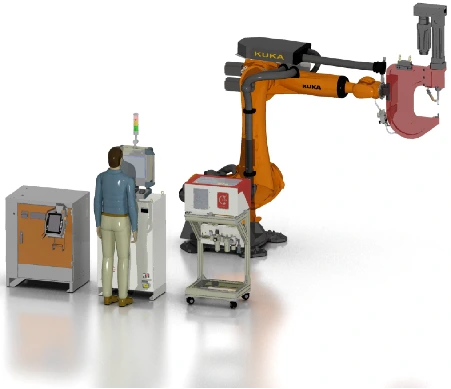
Joining aluminum to steel used to be a straightforward materials problem. Now it’s a production problem too. As vehicle bodies mix more aluminum, high-strength steel, and die-cast alloys to cut weight, engineers are finding that traditional joining methods — welding especially — struggle to keep up. This is exactly the gap an automated riveting machine is built to close, and it’s worth understanding how before you spec equipment for a new line.
This guide covers why dissimilar-material joining has become harder, what a properly designed automated riveting machine actually solves, and what to check before choosing one for aluminum, steel, or mixed-material production.
Why Joining Aluminum and Steel Is Getting Harder, Not Easier
Vehicle lightweighting isn’t a passing trend — it’s a direct response to decarbonization targets, EV range requirements, and cost pressure across the automotive industry. But mixing materials to hit weight targets creates real joining challenges:
- Different melting points. Aluminum melts at a much lower temperature than steel, which makes conventional welding between the two prone to brittle, unreliable joints.
- Different physical and chemical properties. Coefficients of expansion, conductivity, and corrosion behavior all differ, complicating any process that relies on heat.
- More complex body structures. As structures become more intricate to save weight elsewhere, traditional joining tools often can’t physically reach the ideal connection point.
None of this is a reason to avoid mixed-material design — it’s a reason to rethink the joining method itself.
How an Automated Riveting Machine Solves the Dissimilar-Material Problem
Self-Piercing Instead of Melting
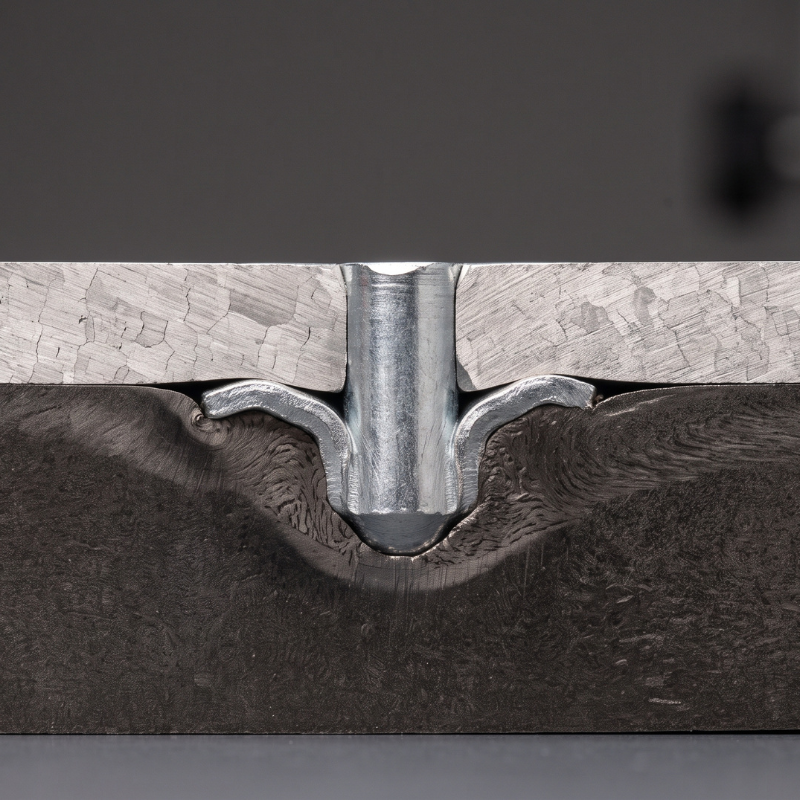
Rather than relying on heat to fuse materials, a self-pierce riveting machine mechanically joins layers by piercing and forming a rivet through them — no melting, no heat-affected zone, and no risk of the brittle intermetallic layers that can form when welding aluminum to steel directly. This is why self-pierce riveting has become a standard joining method for dissimilar-material vehicle bodies rather than a niche alternative.
Flush Joints Instead of Raised Surfaces
Standard self-pierce riveting can leave a raised bump on the finished surface, which isn’t just a cosmetic issue — it can create stress concentration points that increase cracking risk, particularly on hot-stamping steel and die-cast aluminum-magnesium alloys. Flush self-pierce riveting (FSPR) technology addresses this directly, producing a smooth, flat joint that reduces that risk while also improving the finished appearance of the part.
Consistent Quality Across Every Cycle
The real value of an automated riveting machine over a manual process isn’t just speed — it’s consistency. Automated systems apply the same force, positioning, and cycle parameters on every single joint, which matters enormously across thousands of riveting points on a production run where a single weak joint can compromise structural integrity.
What to Look for in an Automated Riveting Machine
Understanding the technology is one thing; specifying the right riveting machine for your actual production line is another.
Mold Flexibility Across Material Combinations
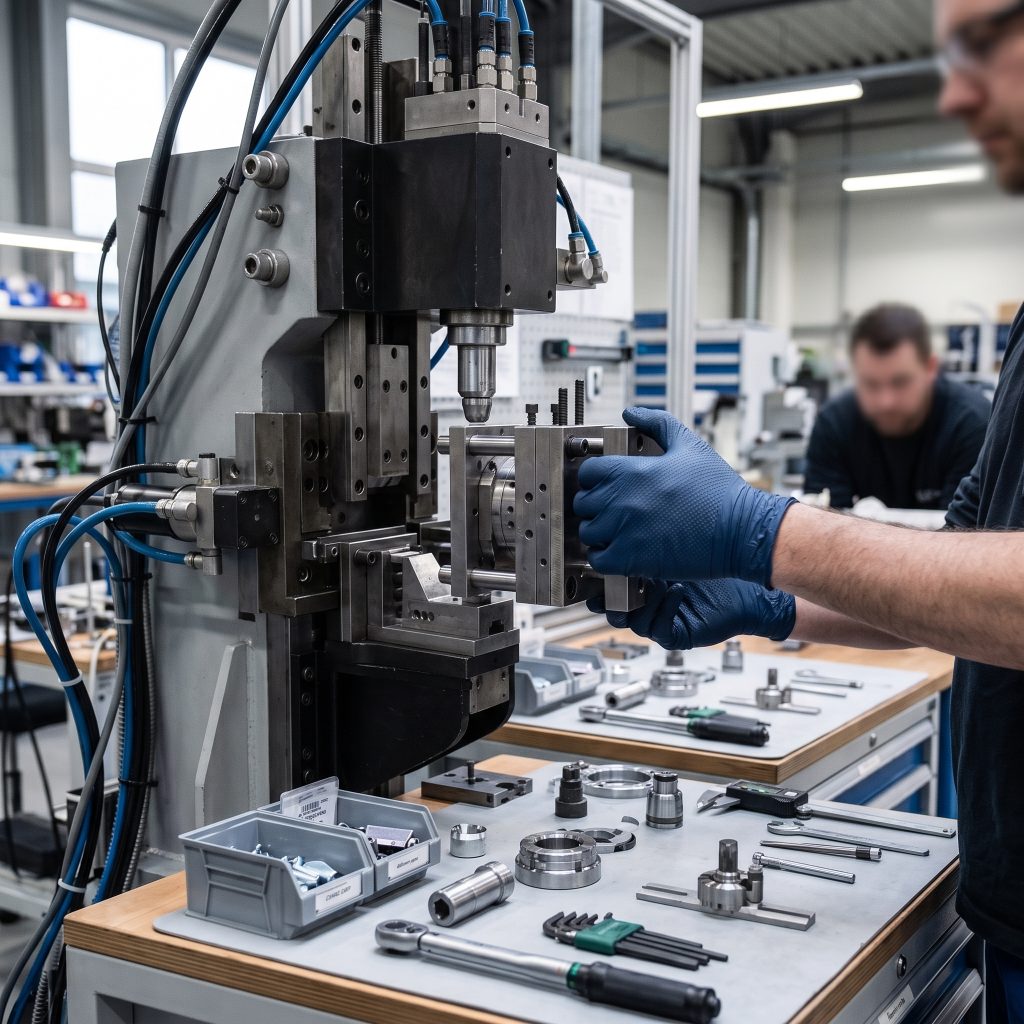
Traditional riveting setups often require a new mold every time the material changes — a real bottleneck when a single vehicle body combines several different alloys. Look for an automated riveting machine built around modular, universal mold design, so a single mold can be applied across multiple material combinations instead of requiring a full retool.
Quick Mold Changeover
Even with flexible mold design, some changeovers are unavoidable. The equipment’s actual changeover time — not just its theoretical capability — is worth verifying directly, since this has a real impact on production efficiency and unplanned downtime.
Real-Time Quality Monitoring
Given how much rides on joint integrity in a vehicle body, an automated riveting machine with integrated, closed-loop quality monitoring gives you continuous feedback on riveting quality throughout production, rather than relying solely on spot-check inspections after the fact.
Integration with Robotic or Standalone Cells
Whether your production line runs on robotic cells or standalone workstations, the riveting equipment needs to integrate cleanly into your existing automation setup rather than becoming an isolated bottleneck station.
Where This Matters Most: EVs and Lightweight Vehicle Bodies
Nowhere is this more pressing than in EV manufacturing, where every kilogram removed from the body directly extends range, and every joining decision affects both weight and structural performance. As EV production scales, the demands on an automated riveting machine shift too — from occasional dissimilar-material joints to high-speed, high-volume riveting across multiple stations and joint types, all while holding tight quality tolerances.
This is also where mold flexibility and quick changeover stop being nice-to-haves and start being genuine cost drivers, since EV platforms often mix more alloy combinations across a single body than traditional vehicle designs.
How Heron-Welder Supports Aluminum and Steel Riveting
This is the exact problem Heron-Welder’s Flush Self-Pierce Riveting (FSPR) technology was developed to solve. Heron pioneered FSPR and has supported global manufacturers with automated riveting machines and riveting systems since 1981, integrating the process into automotive and aerospace production lines across both robotic cells and standalone workstations.
Heron’s automated riveting machines are built around the specific challenges outlined above: modular, universal molds that reduce the need for constant retooling across different material combinations, quick mold-change systems that cut changeover downtime, and integrated real-time quality monitoring that provides closed-loop feedback throughout the riveting process rather than after it. For manufacturers working with aluminum, high-strength steel, hot-stamping steel, or die-cast alloys, that combination is what turns a genuinely difficult joining challenge into a repeatable, reliable production process.
If you’re designing a line around mixed materials and want to know whether an automated riveting machine is the right fit for your specific alloy combinations, talk to a Heron riveting specialist before finalizing your joining process. It’s a more reliable starting point than working backward from a general spec sheet.
FAQ: Automated Riveting Machines for Aluminum and Steel
Q1. Can an automated riveting machine really join aluminum to steel reliably?
Yes. Because self-pierce riveting mechanically joins the materials rather than relying on heat, it avoids the brittle intermetallic layers that make direct welding between aluminum and steel difficult.
Q2. What’s the difference between standard self-pierce riveting and flush self-pierce riveting (FSPR)?
Standard self-pierce riveting can leave a raised surface at the joint, which can increase the risk of cracking in certain materials. FSPR technology produces a flush, flat joint, reducing stress concentration and improving surface finish.
Q3. Do I need a different mold for every material combination?
Not necessarily. Machines built around modular, universal mold design can often apply a single mold across multiple material combinations, which reduces both cost and changeover time compared to a dedicated mold per material.
Q4. Is automated riveting suitable for high-volume EV production?
Yes — in fact, this is where automated riveting machines add the most value, since EV bodies often combine more material types across a single structure, and consistent, high-speed joining becomes essential at production scale.
Q5. How does quality monitoring work on an automated riveting machine?
Integrated quality monitoring systems assess each riveting point in real time during production, providing closed-loop feedback rather than relying only on post-production inspection to catch defects.
Q6. Is self-pierce riveting stronger than welding for mixed materials?
It’s not necessarily “stronger” in every case, but it avoids the specific failure modes that come with welding dissimilar metals — such as brittle intermetallic compounds — making it a more reliable choice for many aluminum-to-steel and mixed-alloy applications.
Final Thoughts: Choosing Equipment Built for Mixed Materials
As vehicle bodies continue to mix aluminum, steel, and specialty alloys to meet weight and efficiency targets, the joining method matters as much as the material choices themselves. An automated riveting machine built specifically for these combinations — with flexible molds, fast changeover, and real-time quality feedback — turns a genuinely difficult engineering problem into a dependable part of your production line.
If you’re evaluating equipment for a mixed-material body program, Heron’s team can walk through your specific alloy combinations and production volume to recommend the right configuration. Get a quote for your riveting line and start from a process built around what you’re actually joining.