
If you’re weighing clinching vs riveting for a new production line, you’ve probably already ruled out welding for at least part of the job. Maybe it’s an aluminum bracket that cracks under a welded joint, or a galvanized panel that rusts the moment the coating burns off around the weld. Both problems push manufacturers toward mechanical joining, and that’s where the clinching vs riveting decision gets genuinely difficult, because both methods solve the “no heat, no filler” problem in different ways, with different tradeoffs on strength, speed, and tooling cost.
Heron Welder manufactures both clinching machines and self-pierce riveting equipment, which puts us in an unusual position to settle the clinching vs riveting question. Most articles comparing clinching vs riveting are written by a supplier of one method explaining why the other is inferior. We build both, sell both, and get asked to help customers choose between them almost every week, so this is less a sales pitch and more a breakdown of what actually determines the right call.
What’s Actually Different Between Clinching and Riveting
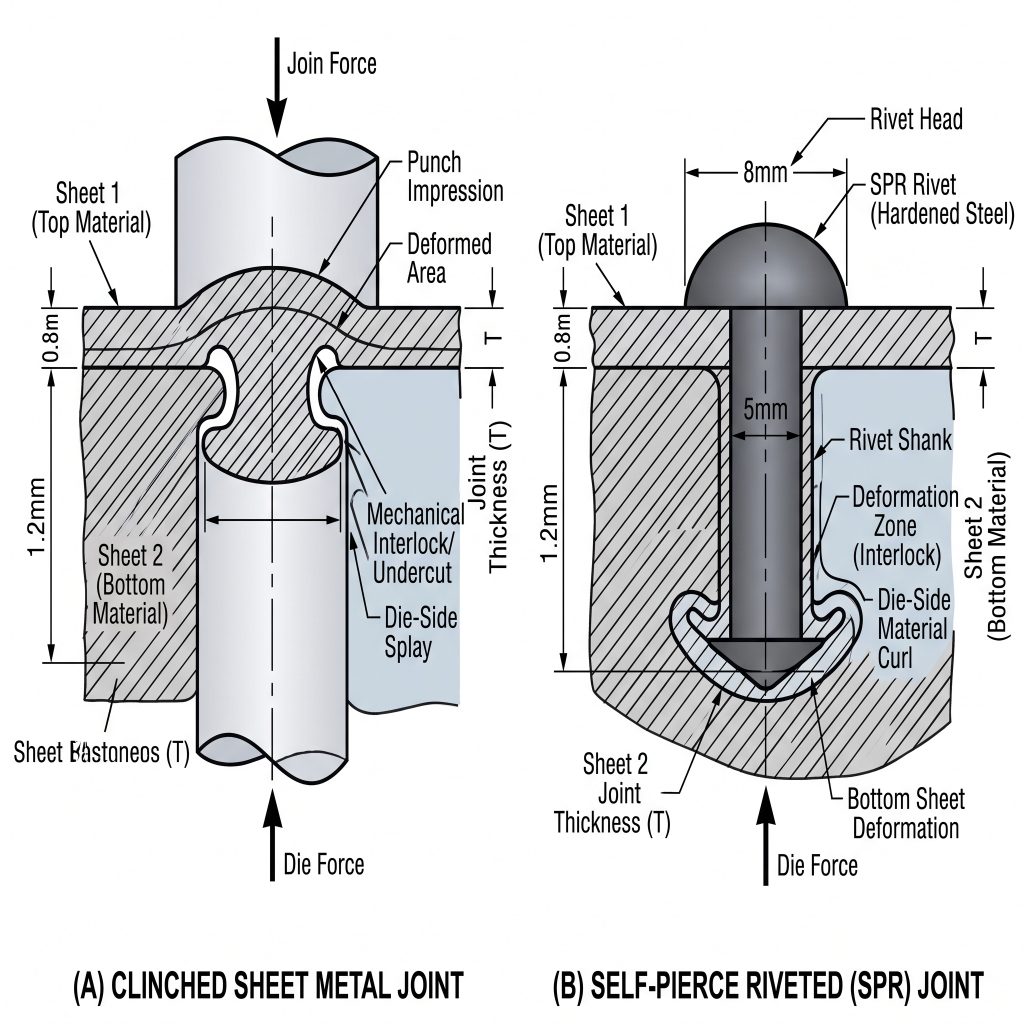
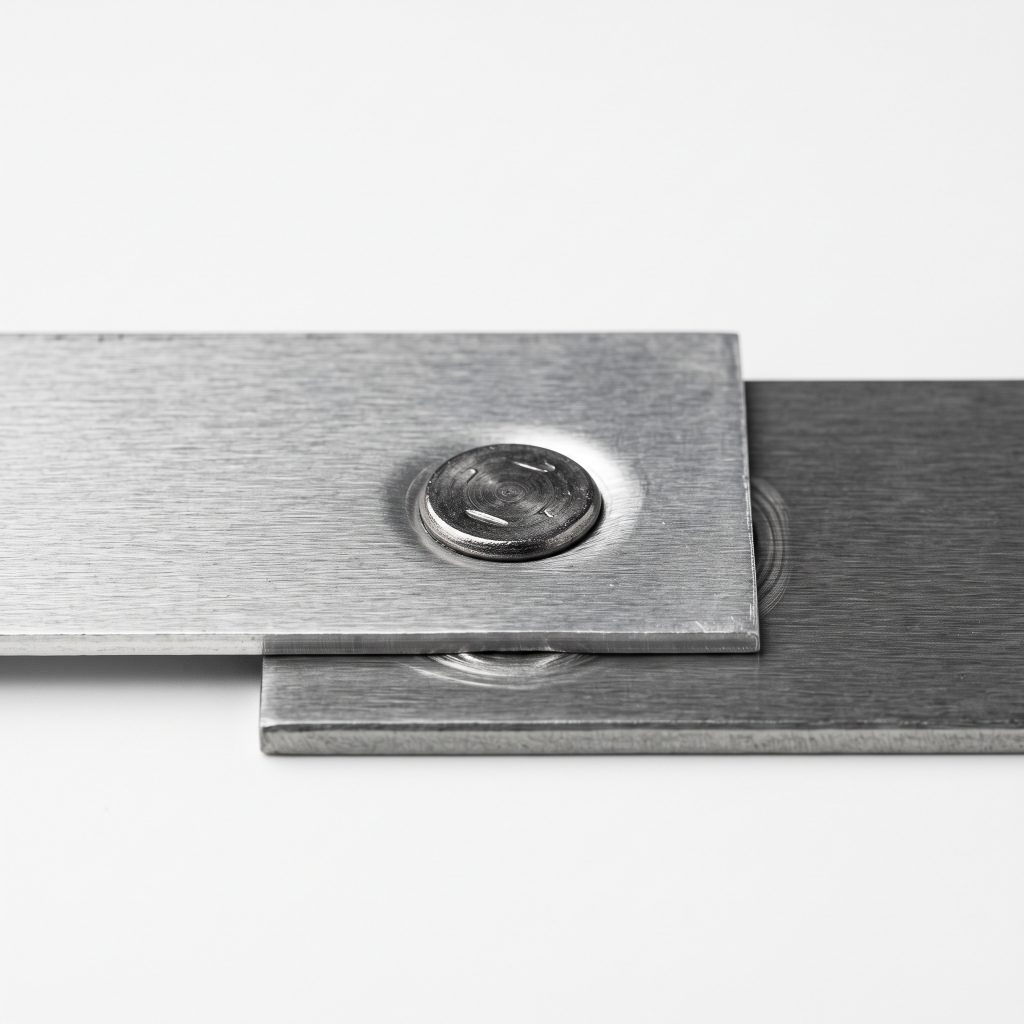
Clinching joins sheet metal by forming an interlock directly out of the material itself. A punch presses the sheets into a die, the metal deforms and flows into a mechanical lock, and no additional hardware, rivet, or filler is added. The joint is essentially the base metal reshaped into a fastener. This only works within certain thickness and ductility ranges, generally 0.3mm to 3mm combined sheet thickness, and it performs best on materials that can deform without cracking, like mild steel, galvanized steel, and most aluminum grades.
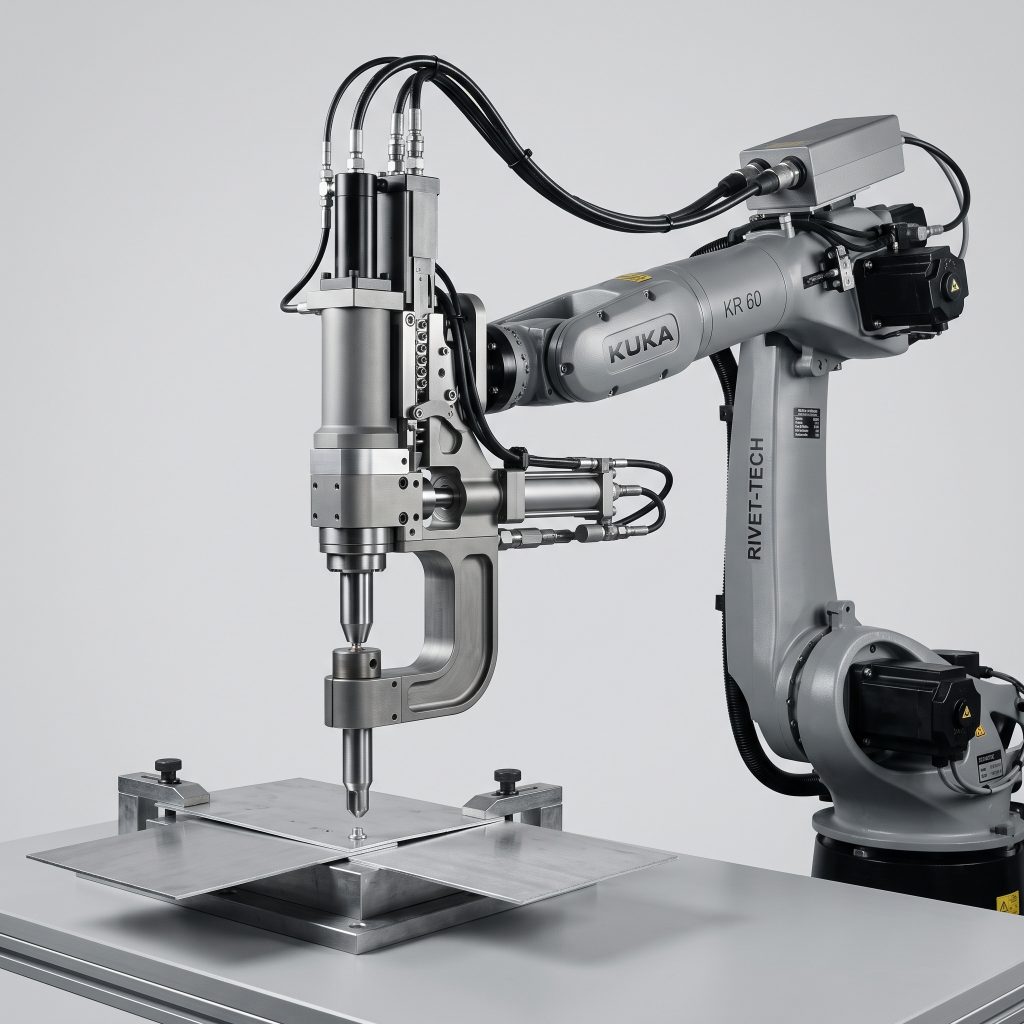
Self-pierce riveting, or FSPR, uses a semi-tubular rivet driven through the top sheet and flared into the bottom sheet by a die, without piercing all the way through. Unlike a standard rivet, there’s no pre-drilled hole. The rivet does the piercing and the joining in one stroke. Because the joint includes a physical fastener, FSPR can handle a wider range of material combinations, including joining aluminum to high-strength or ultra-high-strength steel, which is exactly the combination that gets difficult in a clinching vs riveting comparison for clinching and nearly impossible for resistance welding.
That’s the core mechanical distinction underneath every clinching vs riveting debate: clinching reshapes the material, riveting adds a fastener into the material. Everything else, cost, cycle time, material range, follows from that difference.
Where Clinching Wins: Cost, Speed, and Clean Recycling
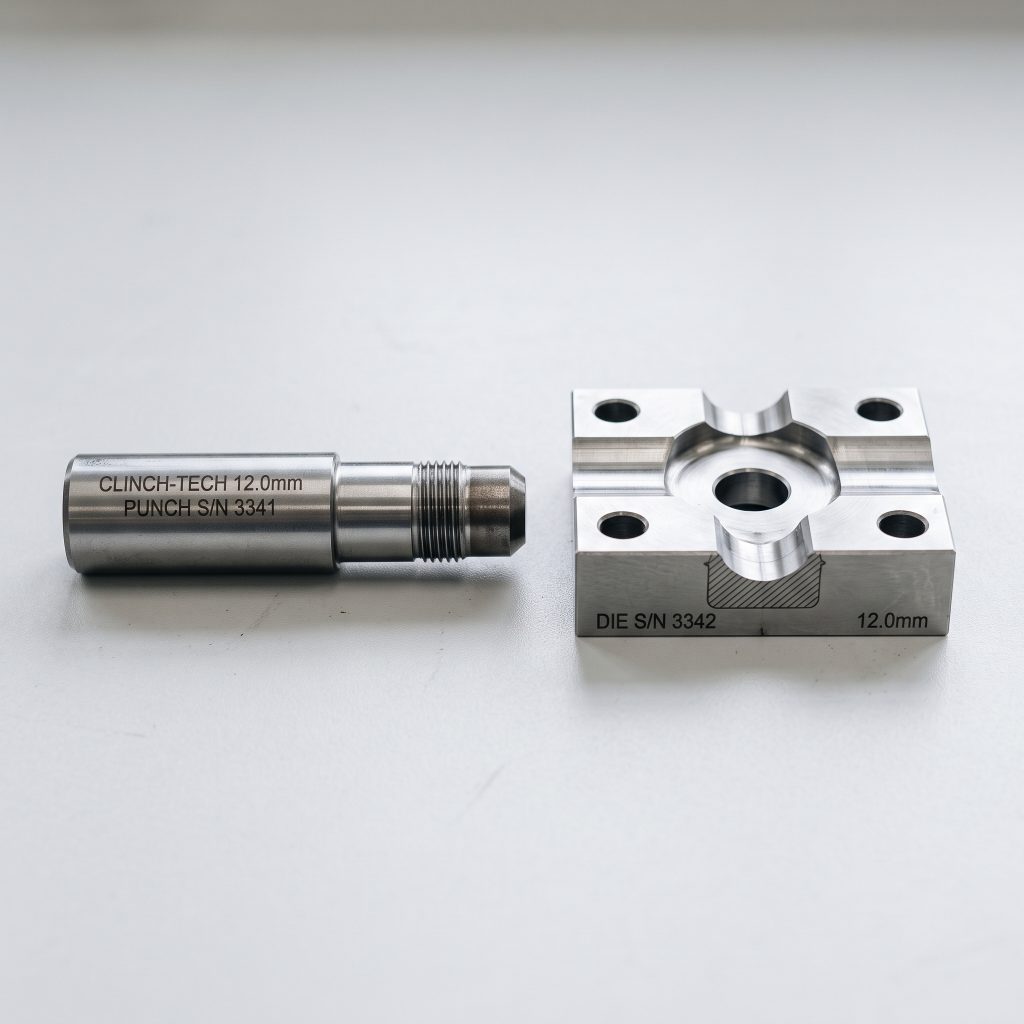
For same-material or similar-material joints within the ductility and thickness limits, clinching usually wins the clinching vs riveting cost comparison outright. There’s no rivet to buy, store, or feed, which removes a recurring consumable cost that adds up fast at production volume. A washing machine cabinet running tens of thousands of units a year accumulates meaningful savings just from not buying rivets.
Clinching also tends to run faster in high-volume, repetitive applications, since there’s no rivet feed mechanism to synchronize with the press cycle. And because the joint is pure base metal with no added fastener, clinched assemblies are easier to recycle, since there’s no dissimilar-metal fastener to separate out during scrap processing. For manufacturers under pressure to hit sustainability or scrap-value targets, that’s not a minor detail in the clinching vs riveting decision.
Where Riveting Wins: Dissimilar Metals and High Structural Loads
Self-pierce riveting earns its cost premium in two scenarios where clinching struggles: joining materials that don’t deform well together, and applications where the joint needs to carry higher structural load, particularly in shear and peel. This is the flip side of the clinching vs riveting equation that procurement teams often underweight until a part fails in testing.
Automotive body-in-white work increasingly mixes aluminum panels with ultra-high-strength steel reinforcements to hit weight targets without giving up crash performance. Clinching can’t reliably join that combination because the steel side won’t deform enough to form a clean interlock. FSPR handles it because the rivet itself carries the load, independent of how ductile either sheet is.
Riveted joints also test stronger under repeated cyclic loading in many automotive fatigue tests, which matters for structural components that flex over the vehicle’s service life, not just static brackets.
Clinching vs Riveting by Industry: What Automotive, Appliance, and Hardware Plants Choose
Automotive Body and Chassis Work
Structural components and multi-material body panels lean toward FSPR, especially anywhere aluminum meets high-strength steel. Heron’s FSPR technology was developed specifically to solve riveting problems on integrated die-castings and ultra-high-strength steel for new energy vehicle platforms, a fairly specific problem set that standard riveting equipment wasn’t built for.
Home Appliance Cabinets and Brackets
Washing machine cabinets, dishwasher panels, and AC bracket assemblies are usually same-material galvanized or cold-rolled steel, well within clinching’s sweet spot. One appliance manufacturer using a Heron clinching line reported reducing labor and material costs by more than 20% after switching from resistance welding, largely because clinching eliminated the rust-prone welded joints that were shortening the bracket’s service life.
Hardware and Compressor Manufacturing
This category is mixed. Toolboxes and wire mesh products often clinch cleanly. Compressor shells joining copper tube to steel housing typically stay on resistance welding rather than either mechanical method, since that combination needs the thermal bond welding provides.
The Question Most Comparison Guides Skip: Can Your Supplier Actually Build Both
Here’s the part that rarely gets addressed honestly in a clinching vs riveting writeup: most manufacturing lines don’t need only clinching or only riveting. A single appliance cabinet might clinch the outer shell while a bracket subassembly gets riveted, or a vehicle body might use FSPR on the aluminum hood and clinching on interior steel panels within the same production sequence. If your equipment supplier only builds one of the two, you’re stuck sourcing a second vendor, a second service contract, and a second parts inventory for consumables and tooling.
Heron builds both clinching machines and FSPR riveting equipment on the same manufacturing floor in Guangzhou, which means a plant running mixed-method assembly can standardize on one supplier for controls, service, and spare parts across both processes. That’s a practical advantage no single-method supplier’s clinching vs riveting comparison can offer you, because most of them are written by companies that only make one of the two machines.
Choosing Between Clinching and Riveting for Your Production Line
If your parts are same-family metals within standard thickness ranges and cost per unit is the driving factor, start with clinching. If you’re joining aluminum to steel, working with ultra-high-strength materials, or the joint needs to hold up under repeated structural load, self-pierce riveting is the safer starting point in the clinching vs riveting decision.
The honest answer for a lot of production lines is both, applied selectively across different joints in the same assembly. If you’re not sure which category your application falls into, send us your material specs, sheet thicknesses, and load requirements, and Heron’s engineering team can tell you plainly which method fits, even if that means we’re only quoting you on one machine instead of two.
Frequently Asked Questions
Q1. Is clinching stronger than riveting?
Not universally. Clinching performs well in shear on same-material joints within its thickness range, but self-pierce riveting generally holds up better under peel loads and repeated cyclic stress, which matters more for structural automotive components than for appliance brackets. That’s the main strength factor in most clinching vs riveting comparisons.
Q2. Can clinching join aluminum to steel?
Only in limited cases, and it depends heavily on the specific alloy and thickness combination. For aluminum to high-strength or ultra-high-strength steel, self-pierce riveting is the more reliable choice because the rivet, not the base metal, carries the joint.
Q3. How much does a clinching machine cost compared to an FSPR riveting machine?
FSPR equipment generally carries a higher upfront cost due to the rivet feed system and more complex tooling, and it also has an ongoing rivet consumable cost that clinching doesn’t. Clinching machines typically cost less to acquire and run, but the right comparison depends on your specific application and volume.
Q4. Does clinching require any consumables?
No. Clinching uses only the base sheet metal, with punch and die wear being the main maintenance item. This is one of the clearest cost advantages of clinching vs riveting at high production volumes.
Q5. Which is faster in a production cycle, clinching or riveting?
Clinching is usually faster per cycle since there’s no rivet to feed and seat. FSPR adds a small amount of cycle time for rivet placement, though this is often offset by the fact that riveting doesn’t require the same cooling or fixture time that resistance welding does.
Ready to figure out which method fits your assembly line? Talk to a Heron joining engineer and get a straight answer on clinching vs riveting for your actual materials and volumes, not a generic recommendation.

