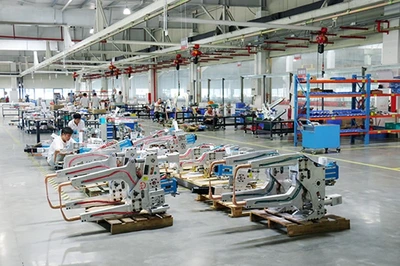
Resistance Spot Welding Equipment plays a critical role in modern industrial manufacturing where production speed, weld consistency, and operational efficiency directly affect product quality and manufacturing costs. Industries such as automotive, appliance manufacturing, HVAC production, electrical components, and sheet metal fabrication rely heavily on advanced resistance spot welding systems to achieve strong and repeatable metal joining performance.
As manufacturing operations continue moving toward automation and smart factory integration, the demand for high-performance spot welding equipment continues to increase across global industrial markets.
Modern industrial manufacturers are not only looking for basic welding machines. They require intelligent welding automation systems that can improve productivity, reduce weld defects, minimize downtime, and maintain precise welding control during high-volume production.
Technologies such as MFDC spot welding, robotic welding automation, servo welding systems, and digital weld monitoring are helping factories achieve better manufacturing stability and long-term operational efficiency.
Choosing the right resistance spot welding equipment is now an important investment decision because the welding system directly impacts production quality, energy consumption, labor efficiency, and manufacturing scalability.
Whether manufacturers are producing automotive body panels, HVAC components, steel cabinets, or electrical assemblies, selecting the correct welding solution can significantly improve production performance and operational reliability.
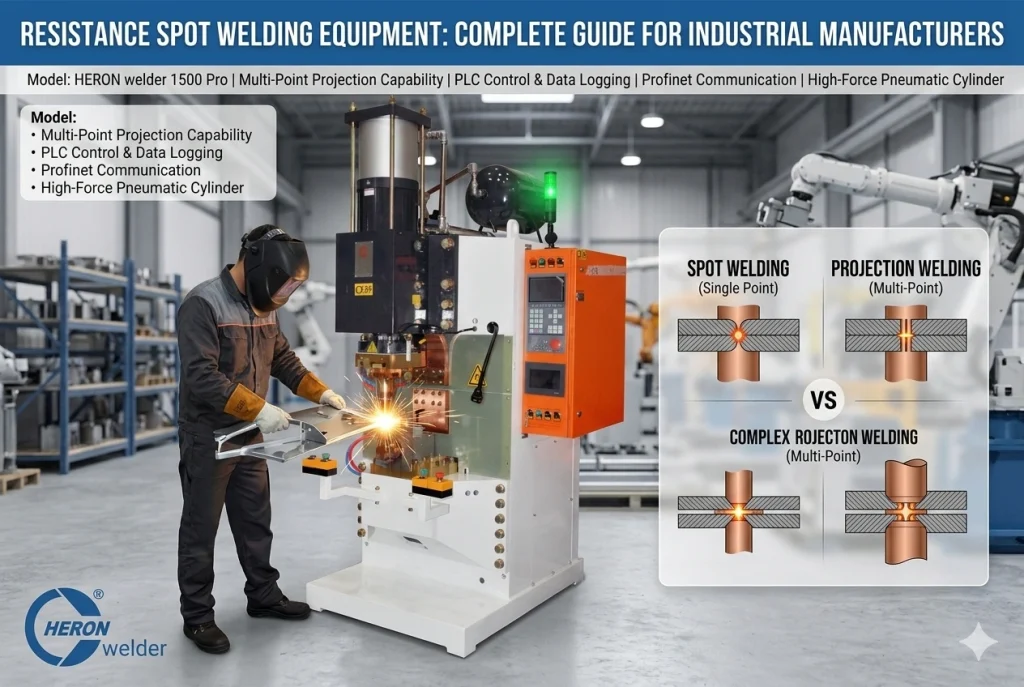
Resistance Spot Welding Equipment: Complete Guide for Industrial Manufacturers
Industrial manufacturers continue to invest in faster, more consistent, and automated production systems. One technology that plays a major role in modern manufacturing is resistance spot welding equipment. From automotive body production to HVAC component assembly and electrical manufacturing, spot welding systems are widely used because they deliver speed, repeatability, and strong weld quality.
Manufacturers today are under pressure to improve production efficiency, reduce defects, lower operational costs, and maintain consistent weld performance. This is why advanced resistance spot welding machines and automated welding systems are becoming standard equipment in industrial production lines.
This guide explains how resistance spot welding equipment works, its industrial applications, the different machine types available, automation trends, and the factors manufacturers should consider before investing in a welding system.
What Is Resistance Spot Welding Equipment?
Resistance spot welding equipment is an industrial welding system that joins metal sheets using heat generated by electrical resistance and pressure applied through welding electrodes.
During the welding process:
- Two metal sheets are pressed together.
- Electrical current flows through the materials.
- Heat is generated at the contact point.
- Pressure forms a weld nugget that permanently joins the metals.
This process is commonly used in:
- Automotive manufacturing
- Sheet metal fabrication
- Appliance production
- HVAC manufacturing
- Electrical component assembly
Resistance spot welding equipment is especially effective for high-volume manufacturing because it allows fast welding cycles with minimal filler materials.
Understanding the Resistance Spot Welding Process
The welding process depends on three major factors:
- Welding current
- Electrode force
- Welding time
Manufacturers must balance these variables carefully to maintain consistent weld quality and avoid common welding defects such as expulsion, overheating, or weak joints.
Modern industrial spot welding equipment includes intelligent welding controllers that monitor these parameters automatically.
Key Components of a Resistance Spot Welding Machine
A typical resistance spot welding machine includes:
- Welding transformer
- Welding controller
- Electrodes
- Pneumatic or servo force system
- Cooling system
- Power supply
- Welding gun
Advanced systems may also include:
- Robotic welding integration
- Digital weld monitoring
- Quality inspection systems
- Production automation controls
Types of Resistance Spot Welding Equipment Used in Industry
Industrial manufacturers use different types of spot welding equipment depending on production requirements, material thickness, and automation levels.
Manual Spot Welding Equipment
Manual spot welders are commonly used for:
- Small production runs
- Repair operations
- Light fabrication work
These systems are more affordable but less efficient for high-volume production.
Pneumatic Spot Welding Machines
Pneumatic welding systems use compressed air to apply electrode force.
Advantages include:
- Faster welding cycles
- Stable weld pressure
- Improved repeatability
- Lower operator fatigue
These machines are widely used in appliance and sheet metal industries.
Servo-Controlled Spot Welding Systems
Servo spot welding systems provide:
- Precise force control
- Better weld consistency
- Reduced energy consumption
- Improved welding accuracy
Servo technology is especially valuable for manufacturers working with high-strength steel and thin materials.
MFDC Resistance Spot Welding Equipment
Modern factories increasingly adopt MFDC resistance spot welding equipment because it improves energy efficiency and welding precision.
Benefits include:
- Faster current response
- Stable welding current
- Reduced power consumption
- Better weld quality
- Smaller transformer size
MFDC spot welding systems are widely used in automotive manufacturing and robotic welding automation.
Robotic Spot Welding Equipment for Automated Production
Robotic spot welding systems are now common in smart factories and automated production lines.
These systems help manufacturers:
- Increase production speed
- Reduce labor costs
- Improve welding consistency
- Minimize production downtime
Automotive manufacturers often use robotic spot welding equipment for body panel assembly and structural welding applications.
Main Applications of Resistance Spot Welding Equipment
Resistance spot welding equipment is used across many industrial sectors because it supports fast and repeatable manufacturing processes.
Automotive Body Manufacturing
The automotive industry is one of the largest users of spot welding equipment.
Applications include:
- Car body panels
- Chassis components
- Structural assemblies
- Battery enclosures
- EV manufacturing
A single vehicle may require thousands of spot welds during production.
Appliance and HVAC Component Welding
HVAC and appliance manufacturers use spot welding systems for:
- Compressor components
- Refrigerator panels
- Air conditioner housings
- Metal brackets
- Ventilation systems
Consistent welding quality is critical in these applications because weak welds can reduce product durability.
Sheet Metal Fabrication
Sheet metal manufacturers rely on resistance spot welding equipment for:
- Cabinets
- Enclosures
- Industrial storage systems
- Steel furniture
- Fabricated assemblies
The process supports high-volume manufacturing with reliable weld quality.
Electrical and Electronic Component Production
Electrical manufacturers use precision spot welding for:
- Electrical connectors
- Battery tabs
- Copper components
- Electronic assemblies
Modern spot welding machines provide precise welding current control to avoid damaging sensitive components.
Benefits of Modern Resistance Spot Welding Equipment
Industrial manufacturers choose spot welding systems because they improve production performance and operational efficiency.
Higher Welding Efficiency and Productivity
Resistance spot welding is a fast process with short welding cycles.
This helps manufacturers:
- Increase production output
- Reduce manufacturing time
- Improve workflow efficiency
Automated spot welding systems can perform continuous high-speed production with minimal interruptions.
Consistent Weld Quality and Precision
Modern welding controllers ensure:
- Stable current delivery
- Consistent electrode pressure
- Accurate weld timing
This improves weld consistency and reduces production defects.
Reduced Manufacturing Costs
Manufacturers reduce costs through:
- Lower material waste
- Faster production cycles
- Reduced labor requirements
- Lower energy consumption
MFDC welding systems also improve power efficiency compared to traditional AC welders.
Energy-Efficient Welding Performance
Energy efficiency has become important for industrial manufacturers seeking sustainable operations.
Modern welding equipment reduces:
- Power loss
- Heat generation
- Operational waste
This lowers long-term production costs.
How to Choose the Best Resistance Spot Welding Equipment
Selecting the right welding system depends on production goals, material requirements, and automation needs.
Production Volume Requirements
Manufacturers with high-volume production often require:
- Automated spot welding systems
- Robotic integration
- High-speed welding capability
Lower-volume facilities may use manual or pneumatic systems.
Material Type and Thickness
Different materials require different welding parameters.
Manufacturers should evaluate:
- Material conductivity
- Metal thickness
- Surface coating
- Joint design
High-strength steel applications often require advanced welding current control.
Welding Automation Needs
Factories adopting Industry 4.0 manufacturing increasingly invest in:
- Robotic spot welding
- Intelligent welding systems
- Smart factory integration
- Digital quality monitoring
Automation improves long-term production scalability.
Quality Monitoring and Smart Welding Features
Modern industrial welding equipment should support:
- Real-time weld monitoring
- Data collection
- Defect detection
- Production tracking
These features help manufacturers maintain quality standards.
Industrial Automation and Robotic Spot Welding Systems
Automation is changing industrial welding operations worldwide.
Robotic spot welding systems help factories:
- Operate continuously
- Improve precision
- Reduce operator dependency
- Maintain production consistency
Smart welding systems now integrate:
- Digital controls
- AI-assisted monitoring
- Automated quality inspection
- Production analytics
Manufacturers adopting welding automation often experience:
- Lower defect rates
- Faster production cycles
- Improved operational stability
MFDC Resistance Spot Welding Equipment Explained
What Is MFDC Spot Welding?
MFDC stands for Medium Frequency Direct Current welding.
This technology converts AC power into medium-frequency DC current for more stable welding performance.
Advantages of MFDC Welding Technology
MFDC welding systems provide:
- Faster welding response
- Higher precision
- Reduced spatter
- Better weld penetration
- Lower power consumption
These advantages make MFDC spot welding popular in automated manufacturing.
MFDC vs Traditional AC Spot Welding Systems
Compared to traditional AC systems, MFDC welders offer:
- Better welding consistency
- Smaller transformers
- Improved energy efficiency
- Reduced operating costs
This is why many industrial manufacturers are upgrading to MFDC resistance spot welding equipment.
Common Problems in Resistance Spot Welding and Their Solutions
Even advanced welding systems can experience operational challenges.
Inconsistent Weld Quality
Causes include:
- Incorrect welding current
- Electrode wear
- Poor pressure control
Solutions:
- Intelligent welding controllers
- Routine electrode maintenance
- Automated parameter monitoring
Electrode Wear Issues
Electrodes wear over time due to heat and pressure.
Manufacturers should:
- Inspect electrodes regularly
- Use proper cooling systems
- Replace worn electrode caps
Welding Spatter and Surface Defects
Spatter can damage product appearance and reduce weld quality.
Solutions include:
- Optimized welding parameters
- Stable electrode force
- Improved current control
Important Features to Look for in Industrial Spot Welding Equipment
Manufacturers should evaluate several technical features before purchasing industrial welding equipment.
Precision Welding Control Systems
Modern controllers improve:
- Weld consistency
- Process repeatability
- Production stability
Intelligent Welding Monitoring
Advanced systems provide:
- Real-time data analysis
- Defect alerts
- Production diagnostics
These capabilities improve manufacturing quality control.
High-Speed Welding Capability
Fast welding cycles are critical for:
- Automotive manufacturing
- Appliance production
- High-volume fabrication
Resistance Spot Welding Equipment for Automotive Manufacturing
The automotive sector requires reliable and automated welding systems.
Manufacturers use spot welding equipment for:
- Vehicle structures
- Body panels
- EV battery systems
- Structural reinforcement components
Robotic welding integration is especially important because automotive production lines demand continuous operation and consistent weld quality.
Why Industrial Manufacturers Invest in Automated Spot Welding Equipment
Manufacturers increasingly invest in automated welding systems because they provide long-term operational benefits.
Key advantages include:
- Increased production consistency
- Reduced labor dependency
- Faster manufacturing speed
- Lower operational costs
- Improved factory productivity
Automation also helps manufacturers remain competitive in global industrial markets.
Choosing the Right Resistance Spot Welding Equipment Manufacturer
Selecting the right supplier is critical for long-term manufacturing success.
Manufacturers should evaluate:
- Engineering experience
- Automation capabilities
- Technical support
- Custom system integration
- Industry expertise
Industrial buyers often prefer suppliers with experience in automotive, HVAC, appliance, and metal fabrication industries.

Why Heron Welder Is a Trusted Resistance Spot Welding Equipment Manufacturer
Heron Welder specializes in industrial welding automation systems, MFDC welding technology, robotic welding equipment, and customized production solutions for manufacturers worldwide.
The company provides:
- Resistance spot welding machines
- MFDC welding systems
- Robotic welding solutions
- Intelligent welding controllers
- Automated production lines
Heron’s systems are widely used in:
- Automotive manufacturing
- Compressor production
- Appliance assembly
- Electrical component manufacturing
The company focuses on helping industrial manufacturers improve:
- Production efficiency
- Welding consistency
- Automation capability
- Long-term operational performance
Future Trends in Resistance Spot Welding Equipment
Industrial welding technology continues to evolve with smart manufacturing trends.
Future developments include:
- AI-powered welding systems
- Real-time weld analytics
- Smart factory integration
- Energy-efficient welding solutions
- Fully automated production systems
Manufacturers investing in advanced welding automation today are better prepared for future industrial production demands.
Frequently Asked Questions (FAQs)
1. What is resistance spot welding equipment used for?
Resistance spot welding equipment is used to join metal sheets through heat generated by electrical resistance and pressure. It is widely used in automotive manufacturing, HVAC production, appliance assembly, sheet metal fabrication, and electrical component manufacturing.
2. How does resistance spot welding equipment work?
The equipment applies pressure between two metal surfaces while passing electrical current through the materials. The resistance generates heat at the contact point, creating a strong weld joint without using filler materials.
3. What industries commonly use spot welding equipment?
Industries that commonly use industrial spot welding equipment include:
- Automotive manufacturing
- Appliance production
- HVAC manufacturing
- Metal fabrication
- Electrical and electronics industries
- Battery manufacturing
4. What is the advantage of MFDC resistance spot welding equipment?
MFDC spot welding equipment provides:
- Better welding precision
- Faster current response
- Reduced energy consumption
- Improved weld consistency
- Smaller transformer size
- Better performance for automated welding systems
5. What materials can be welded using resistance spot welding equipment?
Resistance spot welding is commonly used for:
- Mild steel
- Stainless steel
- Galvanized steel
- Aluminum alloys
- High-strength steel sheets
Material thickness and conductivity affect welding performance and machine selection.
6. What is the difference between manual and robotic spot welding equipment?
Manual spot welding equipment requires operator control, while robotic spot welding systems automate the welding process for higher production speed, improved consistency, and reduced labor dependency in industrial manufacturing.
7. How can manufacturers improve spot welding quality?
Manufacturers can improve weld quality by:
- Using precise welding current control
- Maintaining proper electrode force
- Monitoring weld parameters
- Performing regular electrode maintenance
- Using intelligent welding controllers
8. Why is automated spot welding important in modern manufacturing?
Automated spot welding systems help manufacturers:
- Increase production efficiency
- Reduce welding defects
- Improve production consistency
- Lower operational costs
- Support Industry 4.0 smart factory integration
9. What features should manufacturers look for in resistance spot welding equipment?
Important features include:
- MFDC welding technology
- Intelligent welding control systems
- Robotic integration capability
- Real-time weld monitoring
- Energy-efficient performance
- High-speed production capability
10. How do manufacturers choose the right resistance spot welding equipment supplier?
Manufacturers should evaluate:
- Industry experience
- Engineering capabilities
- Automation expertise
- Technical support
- Custom welding solutions
- Product reliability
- Global manufacturing experience
Choosing an experienced industrial welding equipment manufacturer helps ensure long-term production efficiency and stable weld quality.
Summary
Resistance spot welding equipment remains one of the most important technologies in industrial manufacturing. From automotive production to appliance assembly and HVAC fabrication, manufacturers rely on modern spot welding systems to improve efficiency, maintain consistent weld quality, and support automated production.
As factories move toward Industry 4.0 manufacturing, the demand for intelligent welding automation, robotic integration, and MFDC welding technology will continue to grow.
Industrial manufacturers selecting welding equipment should focus on:
- Production requirements
- Automation goals
- Welding precision
- Long-term operational efficiency
- Supplier expertise
Modern resistance spot welding equipment is no longer just a production tool. It is now a critical part of smart manufacturing strategy, operational scalability, and industrial competitiveness.