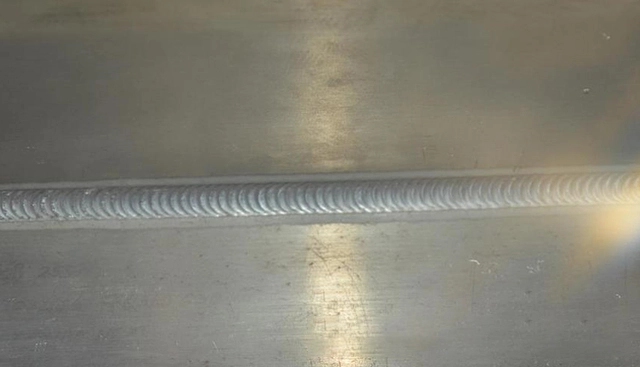
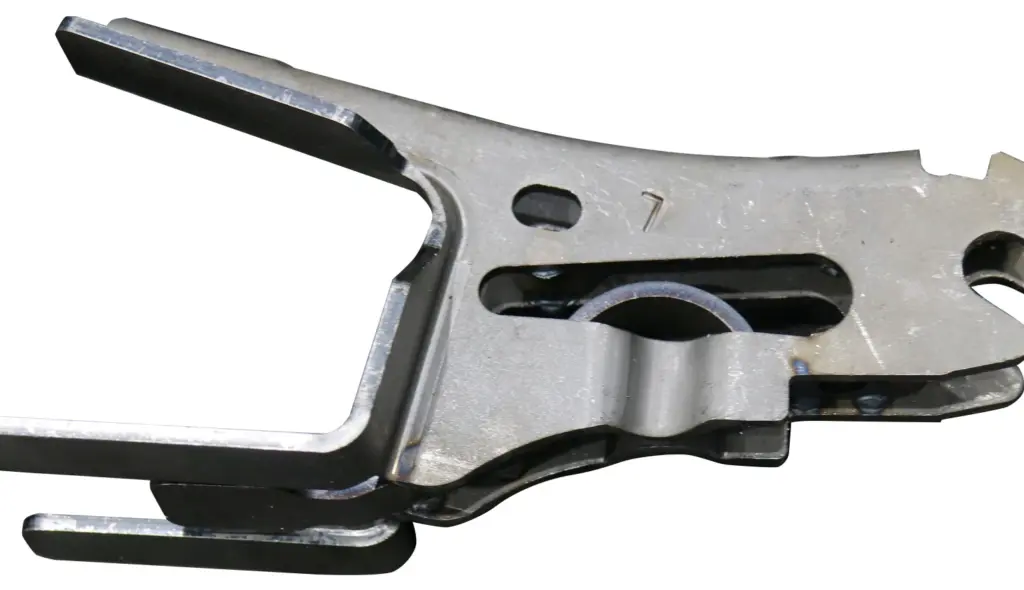
If your production line needs welds that hold pressure, resist leaks, and hold up under years of vibration and stress, spot welding alone won’t always cut it. That’s where seam resistance welding comes in — a process built specifically for continuous, tight, repeatable joints on metal sheets, tubes, and containers.
For engineers sourcing equipment for automotive components, appliance housings, or electrical enclosures, understanding how this process works — and what to look for in a machine — makes the difference between a smooth production ramp-up and months of rework. This guide breaks down the technology, the specs that actually matter, and where seam welding fits into modern manufacturing.
What Is Seam Resistance Welding?
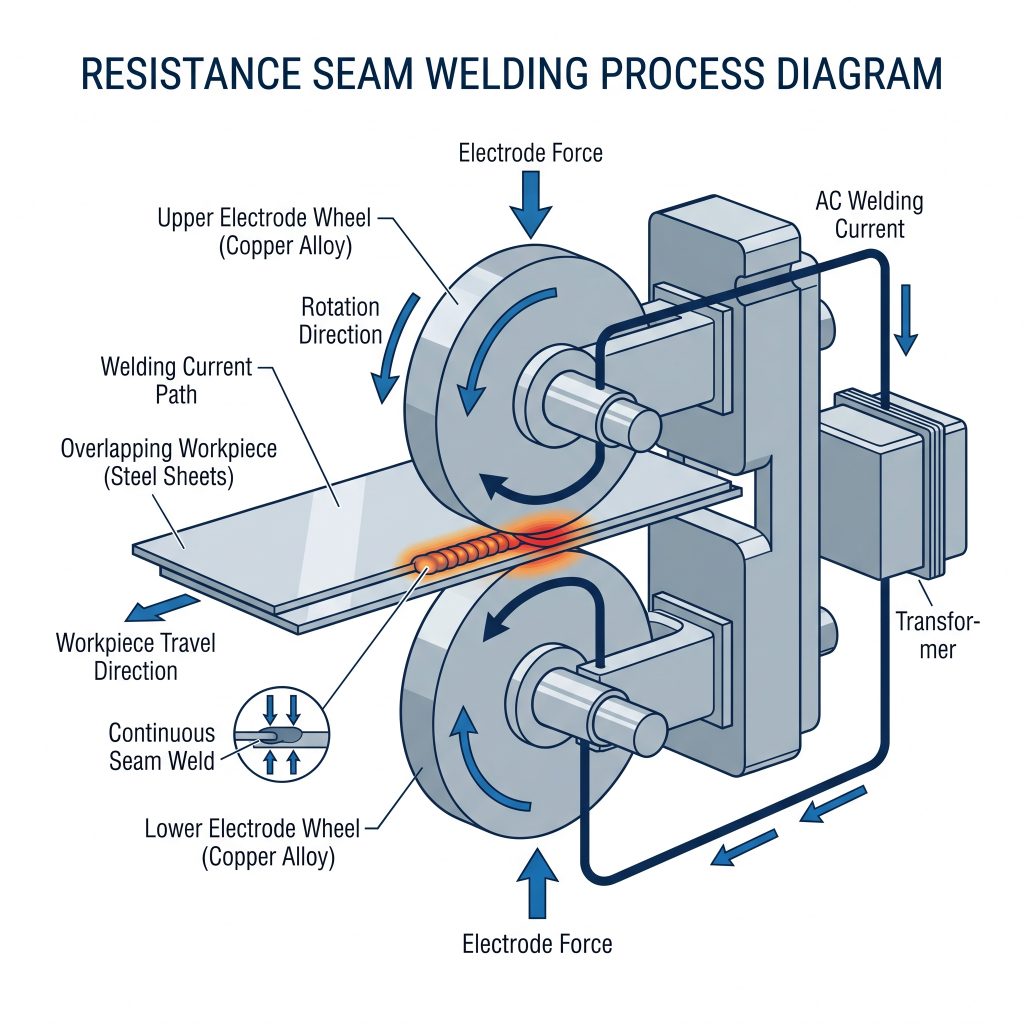
Seam resistance welding is a metal-joining process that creates a continuous or closely spaced line of welds along the overlapping edges of two workpieces. Instead of the fixed electrode tips used in spot welding, seam welders use rotating wheel (roller) electrodes. As the wheels roll along the joint, they apply pressure and current simultaneously — producing a series of overlapping welds that form a strong, often gas- or liquid-tight seam.
How the process works
The workpieces are positioned between two roller electrodes. As current passes through, resistance at the contact point generates localized heat, softening the metal at the joint. Pressure from the rotating wheels then fuses the material together as they move along the seam. Depending on the pulse timing, the result can be a fully continuous seam or a series of closely spaced roll spots — the choice depends on whether the application demands complete tightness or simply a strong mechanical bond.
How it differs from spot and projection welding
Spot welding creates individual, isolated welds at fixed points. Projection welding concentrates current at raised points on the metal to control weld location. Seam welding, by contrast, is a moving, continuous process — which is exactly why it’s the go-to method for parts that need to hold liquids, gases, or withstand ongoing mechanical stress along an entire joint line, not just at isolated points.
Key Specifications to Evaluate in a Seam Welding Machine
Not all seam resistance welding machines are built the same, and the right specification depends heavily on your material, thickness, and production volume. Here’s what engineers typically need to check before selecting equipment.
Power and current range
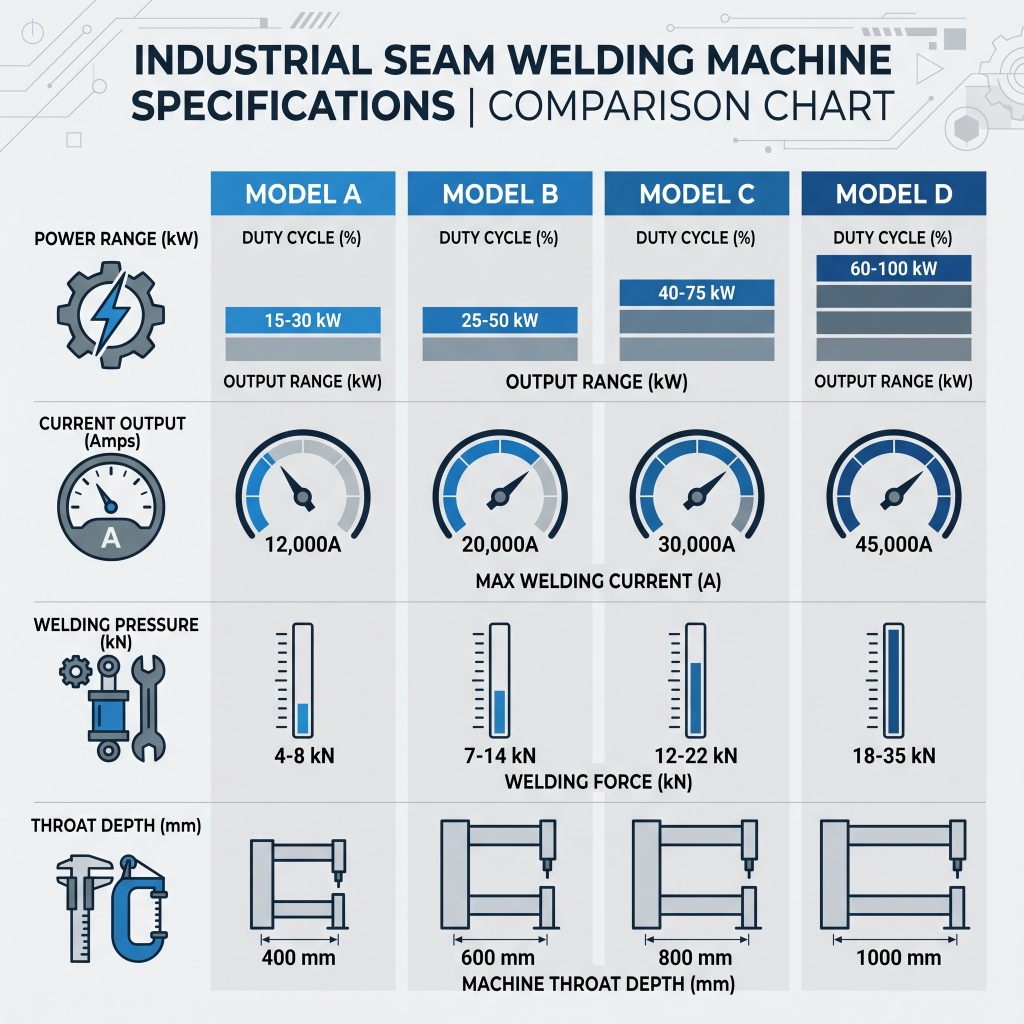
Seam welders are generally available across a wide power band — commonly from around 200 KVA up to 880 KVA for medium-frequency DC (MFDC) machines — with short-circuit current output ranging roughly between 20 KA and 60 KA depending on the model. Higher-power machines are typically chosen for thicker gauge materials or higher-volume automotive lines, while lower-power configurations suit lighter components like electrical housings.
Welding pressure and throat depth
Pressure delivery (often in the range of roughly 1,200 to 35,000 N depending on air supply and model) determines how consistently the machine can fuse thicker or higher-strength materials. Throat depth — the distance the workpiece can extend into the machine — matters especially for larger parts like fuel tanks or duct assemblies, where the seam isn’t always near the edge.
Material thickness compatibility
Seam resistance welding is typically used on thinner sheet metal, generally in the 0.1–2.5mm range, which covers most fuel tank shells, appliance housings, and tubing applications. Confirming your machine’s tested thickness range against your actual material specs avoids costly trial-and-error during commissioning.
Where Seam Resistance Welding Is Used
Many industries use seam resistance welding machines; some are mentioned here:
Automotive manufacturing
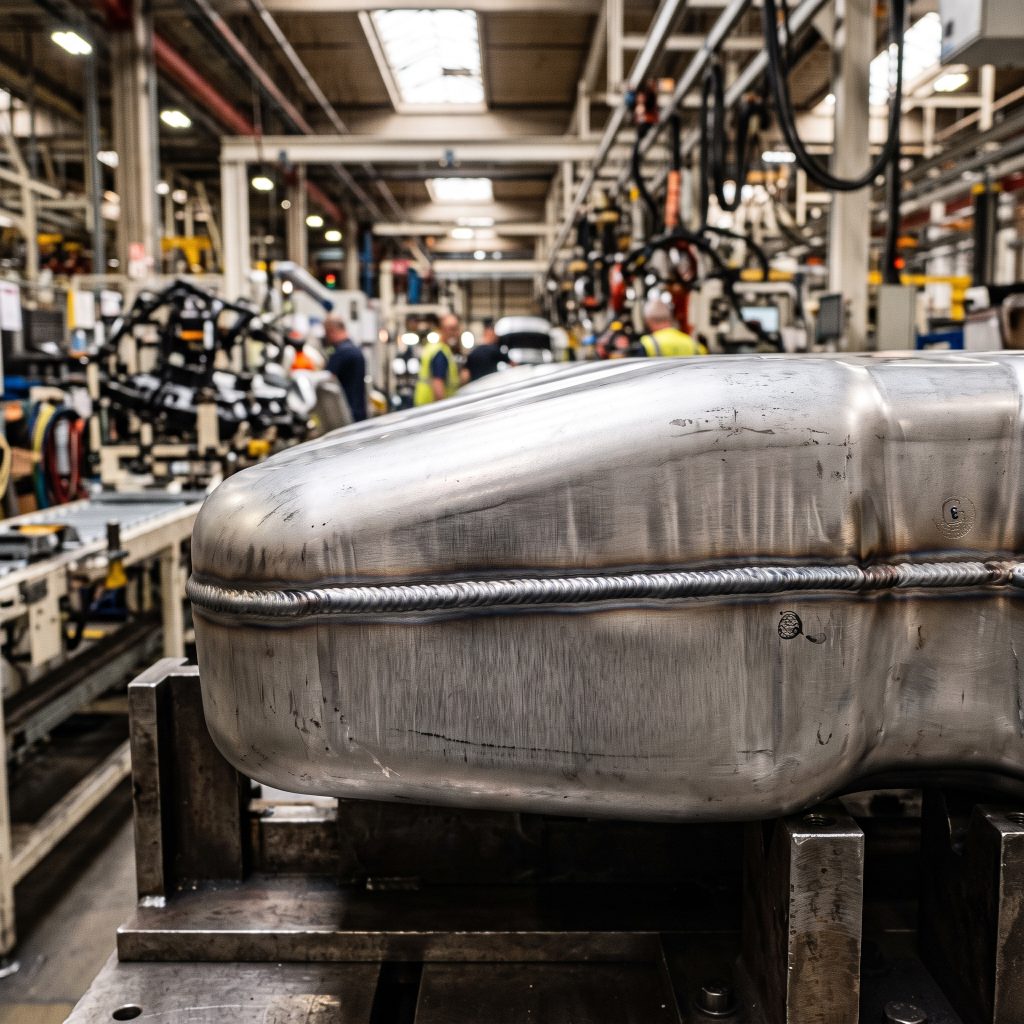
Seam resistance welding machines play a central role in joining components that must hold pressure or resist leaks — fuel tanks, shock absorber oil tubes, and other tubular or sealed assemblies. Because the weld runs continuously along the joint rather than at isolated points, it holds up better under the vibration and pressure cycles common in vehicle operation.
Home appliances
Appliance manufacturers rely on seam welding for housings, tanks, and enclosures that need a clean, structurally sound seam — particularly where the finished part must be watertight or maintain a smooth external finish for consumer-facing products.
Electrical and hardware components
From sealed enclosures to metal containers and barrels, seam welding is widely used wherever an assembly needs to be gas- or liquid-tight without the added cost and complexity of fusion welding or added filler material.
Common Challenges OEM Engineers Face — and What to Look For in a Machine
Engineers evaluating seam welding equipment often run into the same recurring issues: inconsistent weld quality on longer runs, electrode wear that shortens maintenance intervals, and machines that can’t be reconfigured easily as product lines change.
A well-built seam resistance welding machine should offer stable current control across the full welding cycle (not just at start-up), durable electrode assemblies designed to reduce wear-related downtime, and enough configuration flexibility — bench, floor-mounted, circumferential, or longitudinal — to match different part geometries without buying an entirely new machine for every product variant.
Why Heron-Welder for Seam Welding Equipment
Heron-Welder has been developing resistance welding technology for automotive, appliance, electrical, and hardware manufacturers for decades, with seam welders built on the company’s proprietary MFDC inverter technology and controller systems. Heron’s seam welding machines use a patented silver-tile electrode holder designed for durability, and are built on a modular platform — meaning configurations can be adapted (bench, floor-standing, or custom throat depth) to match your part geometry rather than forcing your process to fit a fixed machine.
Heron’s equipment has been applied across real production environments — from automotive shock absorber oil tube welding to sealed containers and copper/silver tap components — giving the company practical experience with the thin-gauge, leak-tight applications that seam welding is built for.
If you’re specifying equipment for a new line or replacing aging machines, it’s worth talking through your material thickness, part geometry, and volume requirements with Heron’s engineering team before finalizing a spec — getting this right up front avoids expensive retrofits later.
FAQ
Q1. What materials can be seam welded?
Seam resistance welding works well on a range of weldable metals and sheet thicknesses, commonly in the 0.1–2.5mm range, including steel and coated steel used in automotive and appliance manufacturing. Exact compatibility depends on the specific metal and coating type, so it’s best to confirm with your equipment supplier.
Q2. Is seam resistance welding the same as spot welding?
No. Spot welding creates individual, separated welds at fixed points, while seam welding uses rotating electrodes to produce a continuous or closely spaced line of welds — making it the better choice when a joint needs to be gas- or liquid-tight.
Q3. What industries use seam resistance welding the most?
Automotive (fuel tanks, tubing), home appliances (tanks and housings), and electrical/hardware manufacturing (sealed enclosures and containers) are among the most common users of seam welding technology.
Q4. How do I know what power (KVA) seam welder I need?
It depends on your material thickness, joint length, and production speed requirements. Thicker materials and higher-volume lines generally require higher KVA and current output. An equipment engineer can help match a machine to your specific part.
Q5. Can seam welders be customized for different part shapes?
Yes. Depending on the manufacturer, seam welders can be configured for circumferential (round parts like tanks) or longitudinal (straight-line) welding, and modular designs allow throat depth and pressure settings to be adapted to different assemblies.
Get the Right Seam Welder for Your Production Line
Choosing the right seam resistance welding machine isn’t just about specs on paper — it’s about matching equipment to your material, part geometry, and production goals. Heron-Welder’s engineering team works directly with automotive, appliance, and hardware manufacturers to spec machines that fit real production requirements, not just catalog numbers.