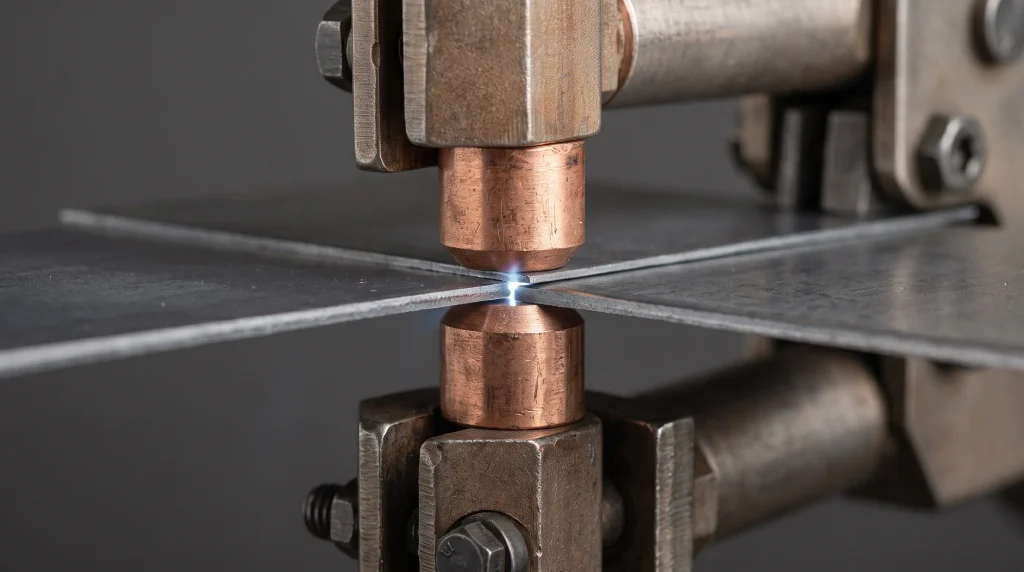
What is a resistance welder, and why do so many manufacturers rely on it for high-volume production? A resistance welder is an industrial machine that joins metal parts by passing a strong electric current through them while pressing them together. The natural electrical resistance of the metal turns that current into heat, melts a small zone at the joint, and forms a permanent weld in a fraction of a second. No flux, filler wire or shielding gas is required.
In this guide, we explain what is a resistance welder in practical terms: how it works, which components matter, which types are available, and which industries depend on it. If you are an engineer, plant manager or procurement lead comparing equipment, this article gives you the clarity to choose with confidence.
What Is a Resistance Welder? A Clear Definition
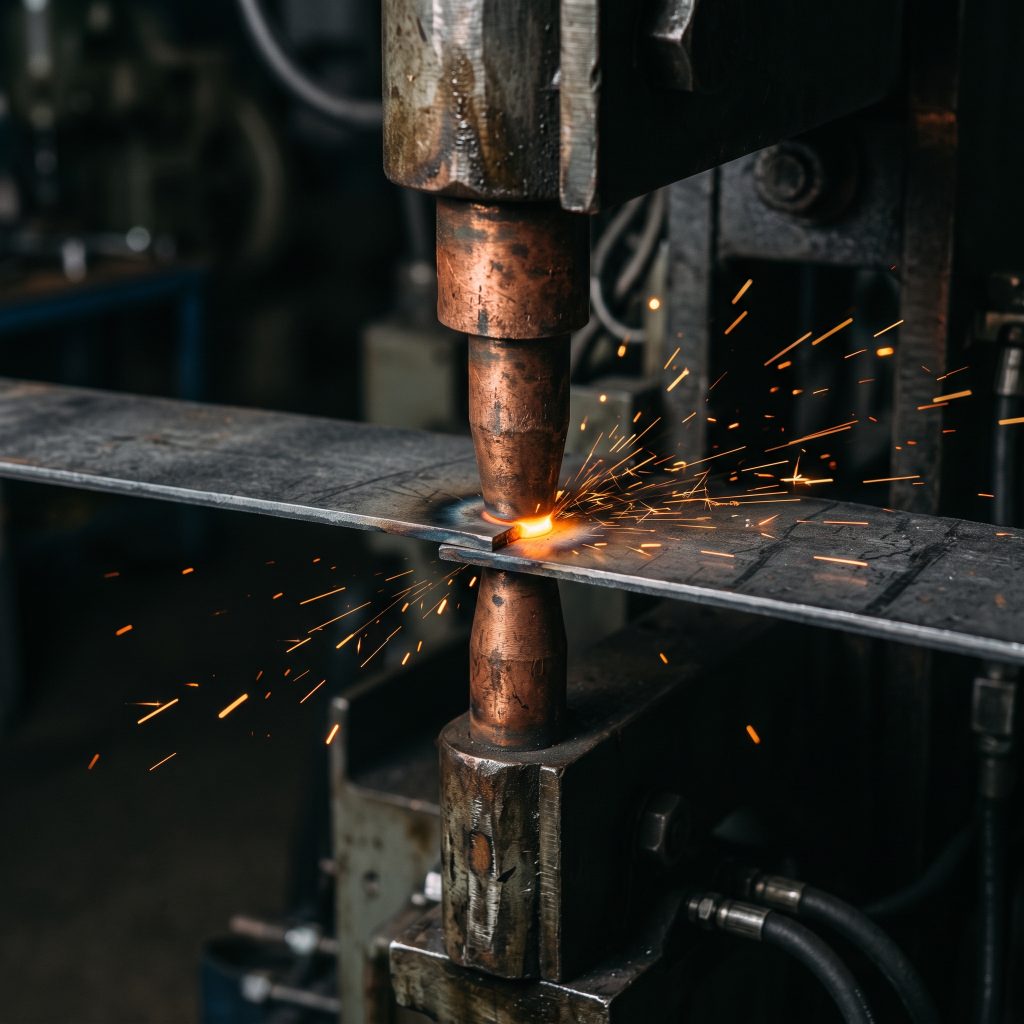
A resistance welder is a machine that creates a weld by using electrical resistance as the heat source. Two or more metal parts are clamped between electrodes, and a high current flows through the joint. The resistance at the contact point generates intense, localized heat. The metal softens or melts, the applied force fuses the surfaces, and a solid joint forms as the material cools.
So, what is a resistance welder in simple terms? It is a fast, repeatable joining system built for production. Unlike arc welding, it needs no open flame, no consumable filler and no shielding gas. The process is clean, consistent and easy to automate. That is why it has become a standard method in automotive, home appliance, electrical and hardware manufacturing.
The process is formally known as resistance welding, and it covers a family of related techniques, including spot, projection, seam and butt welding. Each one uses the same core principle in a different geometry.
How Does a Resistance Welder Work?
To understand what is a resistance welder at a technical level, start with the physics. The heat generated at the weld follows Joule’s law, expressed as Q = I² × R × t:
- Q is the heat produced
- I is the welding current
- R is the electrical resistance at the joint
- t is the time the current flows
Because heat rises with the square of the current, even a small increase in amperage has a large effect on the weld. A resistance welder therefore uses a transformer to step the voltage down to a few volts while raising the current to thousands, or even tens of thousands, of amperes. That is how it melts a precise zone without overheating the whole part.
The Four Stages of a Weld Cycle
Every resistance welder follows a controlled sequence:
- Squeeze: The electrodes close and apply force so the parts make firm contact.
- Weld: Current flows for a preset time, and the joint heats until a molten nugget forms.
- Hold: The current stops, but the electrodes keep pressing while the nugget cools and solidifies.
- Release: The electrodes open, and the part is ready to move on.
This entire cycle often lasts less than a second. That speed is a major reason why resistance welding dominates mass production lines.
Key Components of a Resistance Welder
Knowing what is a resistance welder also means knowing what is inside one. Whatever the type, most machines share these core elements:
- Welding transformer or inverter: Converts mains power into the low-voltage, high-current output the weld needs.
- Controller: Manages current, weld time and sequence. Modern controllers store programs and adjust parameters in real time.
- Electrodes: Usually made of copper alloys, they conduct current and apply force. Their shape and condition directly affect weld quality.
- Force system: A pneumatic, hydraulic or servo mechanism applies consistent pressure to the workpieces.
- Cooling system: Water circulation protects the transformer, cables and electrodes from heat.
- Frame or fixture: Holds the machine rigid so electrode alignment stays stable under load.
When these parts are well engineered, the welder delivers the same result thousands of times in a row.
Types of Resistance Welders
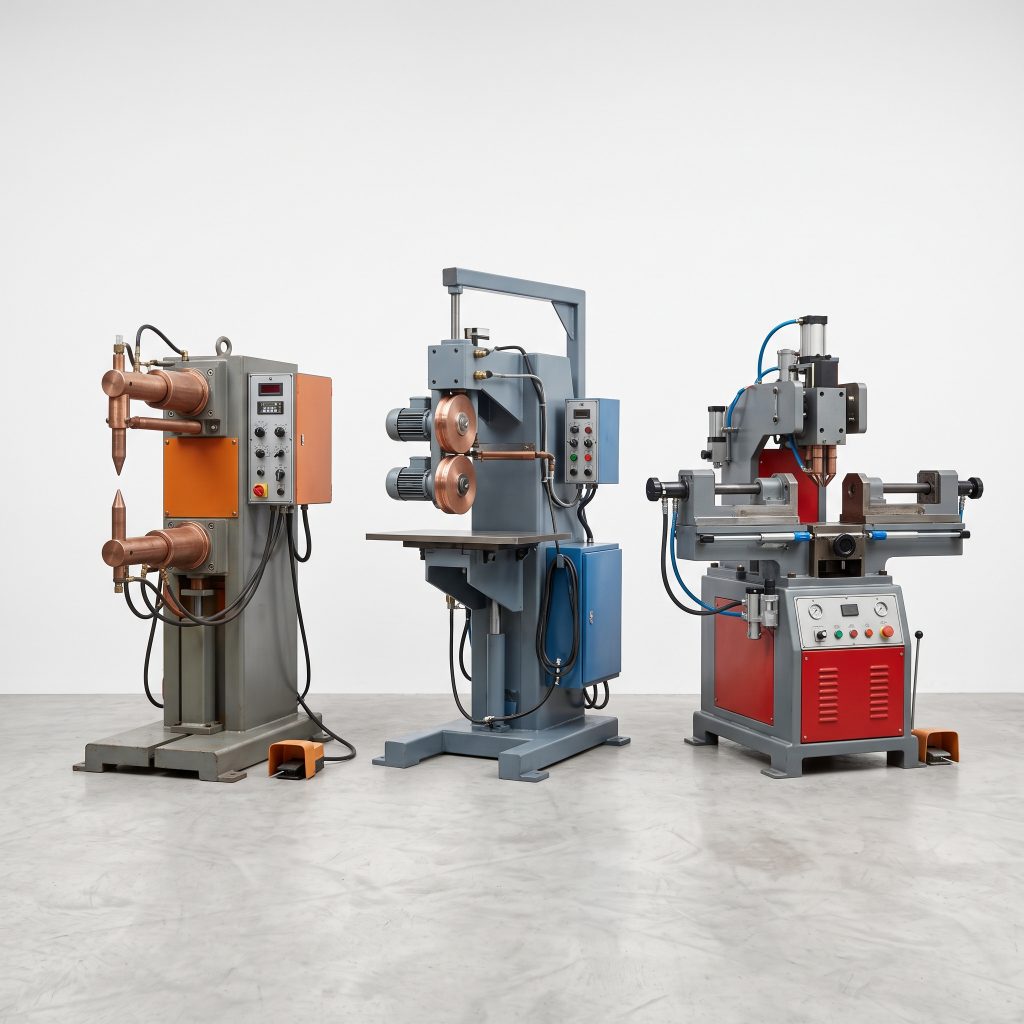
Now that you know what is a resistance welder, it helps to see how the main types differ. Each is designed for a specific joint style and material combination.
Spot Welders
Spot welding is the most recognized form. Two copper electrodes clamp overlapping sheets and create a small, round weld nugget at one point. Spot welders are used on car bodies, appliance housings, enclosures and brackets, where thousands of individual welds must be made quickly and consistently.
Projection Welders
Projection welding concentrates the current at small raised features, called projections, that are formed or machined into one of the parts. This lets you make several welds at once and weld fasteners such as nuts and bolts to sheet metal. It is a common choice for hardware, automotive parts and electrical components.
Seam Welders
A resistance seam welder replaces the point electrodes with rotating wheels. As the wheels roll along the joint, they create a continuous, overlapping weld. The result is a gas-tight and liquid-tight seam, which is essential for fuel tanks, water tanks, metal drums, oil heaters and electric kettles. Seam welders are available in circular and longitudinal configurations, and in both AC and MFDC versions.
Butt Welders
Butt welding joins two pieces end to end. The parts are held in contact, current heats the interface to a plastic or molten state, and a forging force fuses them together. This method suits wire, bar, ring and rod joining, and it is widely used for non-ferrous metals, low-carbon steel and alloys.
Capacitor Discharge Welders
A capacitor discharge welder stores energy in capacitors and releases it in a few milliseconds. The extremely short pulse produces a very small heat-affected zone. That makes it ideal for small parts, dissimilar metals, stud welding and heat-sensitive components.
MFDC Welders
An MFDC resistance welder uses medium-frequency direct current, typically around 1,000 Hz, delivered through an inverter. The output is smooth and stable, with high electrical efficiency. MFDC is especially effective on coated steels, high-strength steels and aluminum, where precise heat control determines weld quality.
Advantages of Using a Resistance Welder
Manufacturers choose this technology for good reasons. Here is what a resistance welder offers in production:
- High speed: Welds take milliseconds to a few seconds, which supports high-volume output.
- Repeatability: Programmed current, time and force give the same result on every cycle.
- No consumables: There is no filler wire, flux or shielding gas to buy, store or manage.
- Low distortion: Heat is localized, so surrounding material stays cooler and parts hold their shape.
- Easy automation: The process integrates well with robots, transfer systems and full production lines.
- Clean operation: There is little smoke, spatter or post-weld cleanup compared with arc processes.
- Energy efficiency: Heat is generated exactly where it is needed, so little energy is wasted.
For high-volume manufacturers, these advantages translate directly into lower cost per part and more stable quality.
Where Is a Resistance Welder Used? Key Applications
Understanding what is a resistance welder becomes much clearer when you see where it works every day.
Automotive: Car bodies contain thousands of spot welds, and resistance welders also join brackets, seat frames, fuel tanks and exhaust components.
Home appliances: Washing machine drums, refrigerator shells, oven liners and kettles are routinely produced with spot, projection and seam welding.
Electrical and electronics: Switchgear, busbars, terminals, battery components and relays rely on precise, low-heat joining.
Compressors and motors: Compressor shells, motor housings and related components need strong, sealed and consistent joints.
Hardware and construction: Wire mesh, fasteners, racks, shelving and steel bar products are made with projection and butt welders.
Across all these sectors, the common thread is the same: a need for strong, repeatable joints at production speed.
Limitations to Consider
A balanced answer to what is a resistance welder must also include its limits:
- Joint access: Electrodes must reach both sides of the joint, which restricts some part designs.
- Material thickness: The process works best on thin to medium sheet. Very thick sections need other methods.
- Initial investment: Machines, tooling and power infrastructure require upfront capital.
- Electrode maintenance: Electrodes wear and need regular dressing or replacement to protect weld quality.
- Power demand: High current draw requires a suitable electrical supply.
These limits are manageable with proper planning, and for the right applications the return on investment is strong.
How to Choose the Right Resistance Welder
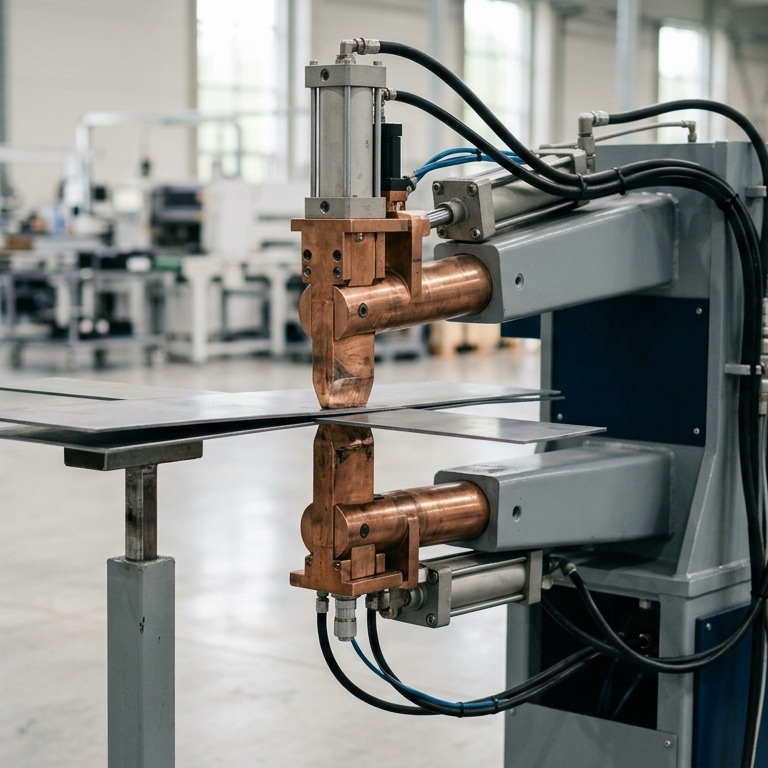
Once you know what is a resistance welder and how each type behaves, selection becomes a structured decision. Consider these factors:
- Joint type: Choose spot, projection, seam or butt welding according to how the parts connect.
- Material and coating: Steel, stainless steel, aluminum, copper and coated sheets each respond differently. MFDC often performs best on difficult materials.
- Thickness and combination: Total stack thickness and dissimilar-metal joints affect power and force requirements.
- Production volume: High-output lines call for automation, fast cycle times and robust cooling.
- Power rating: Match the machine’s kVA capacity to your parts, not just your budget.
- Quality control: Look for real-time monitoring and data recording to support traceability.
- Supplier capability: Work with a manufacturer that can customize machines, provide application testing and support your line after installation.
Always test your real parts before committing. A qualified manufacturer can run sample welds and recommend the right power source, electrodes and parameters.
Frequently Asked Questions
Q1. What is a resistance welder and how is it different from arc welding?
A resistance welder uses electrical resistance and pressure to create the weld, with no filler metal or gas. Arc welding uses an electric arc and usually adds filler material. Resistance welding is faster and easier to automate, while arc welding is more flexible for thick sections and field work.
Q2. What materials can a resistance welder join?
A resistance welder can join carbon steel, stainless steel, aluminum, copper and many alloys. Results depend on the machine type, power source and welding parameters. Aluminum and copper conduct heat and current very well, so they need higher energy and more precise control.
Q3. How strong is a resistance weld?
A properly set up resistance weld forms a fused nugget that is often as strong as, or close to, the base metal. Strength depends on correct current, force, time and clean electrode contact.
Q4. Is a resistance welder suitable for automation?
Yes. Programmable controllers, short cycle times and consistent results make resistance welding one of the most automation-friendly joining methods. Robotic cells and dedicated production lines are common in modern factories.
Conclusion: Why Understanding a Resistance Welder Matters
So, what is a resistance welder? It is a precise, efficient and highly repeatable machine that joins metal through controlled heat and pressure. From spot and projection welders to seam, butt, capacitor discharge and MFDC systems, each type solves a specific production challenge. Choosing the right one improves quality, lowers cost per part and keeps your line running reliably.
At Heron, we design and manufacture resistance welding equipment for automotive, appliance, electrical, compressor and hardware producers worldwide. If you are planning a new line or upgrading an existing one, our engineers can help you select the right machine for your parts and volume. Contact the Heron team today to discuss your application and request a tailored solution.