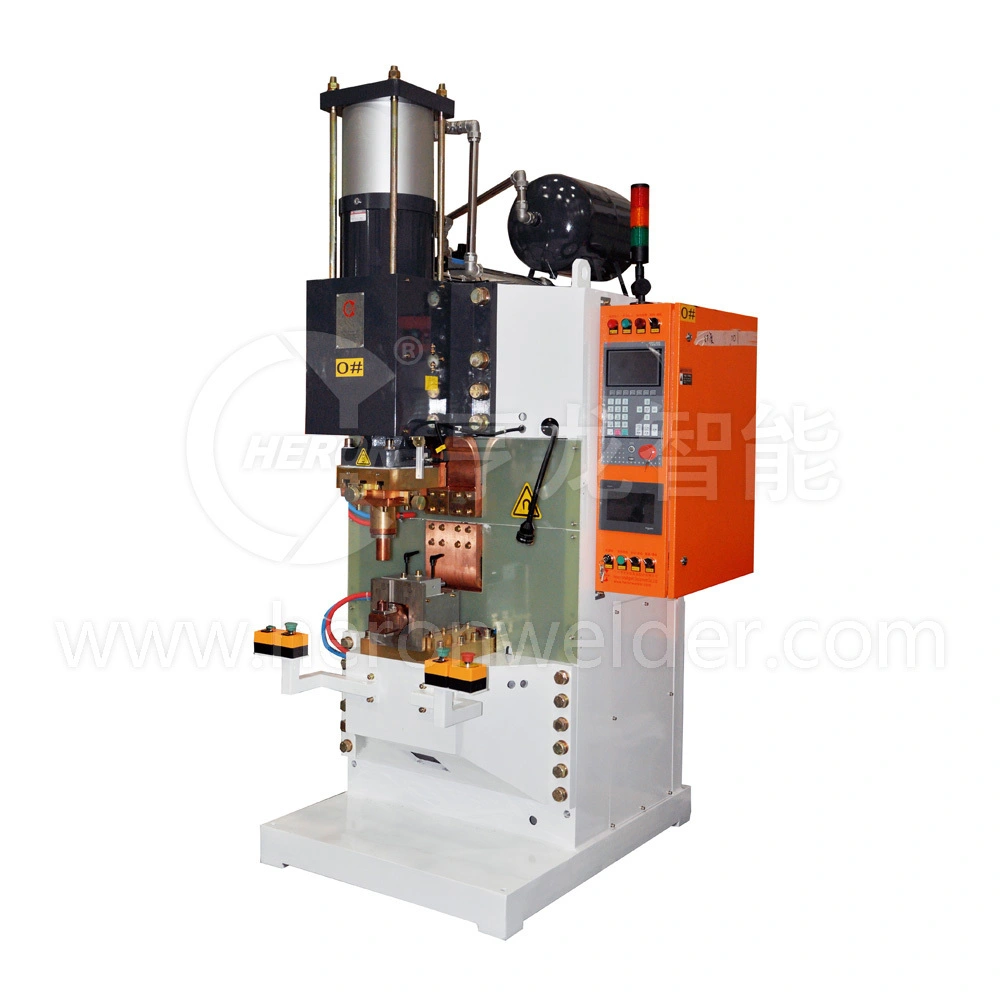
Why Spot Welder for Aluminum
Spot welder for aluminum applications are fundamentally different from conventional steel resistance welding. Aluminum’s high electrical conductivity, high thermal conductivity, and surface oxide layer require a purpose-built welding system rather than a standard spot welding machine. Aluminum are widely used in automotive lightweight structures, EV battery systems, aerospace components, and advanced industrial manufacturing, selecting the right spot welder for aluminum directly impacts:
– Weld nugget consistency
– Production efficiency
– Electrode lifespan
– Energy consumption
– Total cost of ownership
This technical guide provides a structured, engineering-driven framework to support manufacturing managers, welding engineers, and procurement teams evaluate and select the right spot welder for aluminum applications.
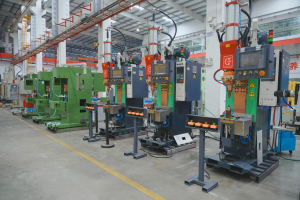
What Is a Spot Welder for Aluminum
A spot welder for aluminum is a resistance welding equipment designed for aluminum’s unique properties.
Compared to steel spot welders, spot welders for aluminum are characterized by:
-Higher welding current
-Faster current rise time
-Precise control of electrode force and welding time
These features overcome aluminum’s rapid heat dissipation and surface oxide layer, ensuring stable weld nugget formation and consistent joint strength.
Aluminum Spot Welding Process Overview
Aluminum spot welding process consists of three controlled phases:
1. Squeeze Phase
Electrodes force is applied to ensure consistent contact between aluminum sheets, stabilizing electrical resistance at the faying surface.
2. Welding Phase
High current (tens of kiloamperes) is applied for a very short duration (milliseconds). Joule heating raises the contact surface temperature to approximately 500–800 °C, forming a 2-4 mm weld nugget. Due to aluminum’s thermal conductivity, this stage lasts milliseconds.
3. Hold and Cooling Phase
Electrode force is maintained after power cutoff to allow controlled solidification of the weld nugget. Improper force can result in spatter, expulsion, or weak nuggets.
Key Technical Challenges in Aluminum Spot Welding
Aluminum spot welding faces several challenges:
-Rapid heat loss from high thermal conductivity
-Surface oxide layer causing electrical resistance variability
-Short electrode lifespan (around 50,000 welds)
-Dissimilar metal welding risks (e.g., aluminum-copper intermetallic formation)
High-performance spot welders for aluminum typically use CuCrZr electrodes combined with advanced current and force control algorithms to maintain process stability.

Types of Spot Welders for Aluminum Applications
1. Classified by working principle type
AC spot welders for aluminum
AC spot welders for aluminum feature simple structure and low initial cost but are limited by current zero-crossing effects. Thermal efficiency is typically 60-70%, with higher operating costs, and inconsistent weld quality. These welders are suitable only for low-demand aluminum welding applications.
MFDC spot welders for aluminum
MFDC spot welders for aluminum represent the industry standard for aluminum welding. By eliminating zero-crossing effects, thermal efficiency achieve up to 95%, and reduce energy consumption by 20–30% compared to AC welders. Fast current response and precise parameter control reduce heat-affected zones and extend electrode lifespan. MFDC spot welders for aluminum are widely used in automotive body structures, EV battery enclosures, and aerospace components.
Capacitor discharge spot welders for aluminum
Capacitor discharge spot welders for aluminum store energy and release it as a short, high-intensity pulse. This minimizes heat-affected zones and is well suited for thin aluminum parts and precision components.
2. Classification by mechanical configuration
Bench-type spot welder for aluminum
Compact vertical machines offering high precision in current, force, and weld time control. Commonly used in EV battery assembly, electronics enclosures, and thin-gauge aluminum assemblies.
Stationary floor-mounted spot welder for aluminum
High-power machines with rigid frames capable of delivering higher electrode forces and welding current. Suitable for structural aluminum welding and high-duty-cycle production environments.
Robotic spot welder for aluminum
Lightweight welding guns designed for robotic integration. These systems enable high-speed, repeatable aluminum spot welding and are standard in automotive and EV production lines.
Customized spot welder for aluminum
Application-specific systems optimized for particular aluminum alloys, thickness ranges, and component geometries. These systems deliver high process stability, production efficiency, and reduced energy consumption and are widely used for EV battery enclosures and lightweight structural components.
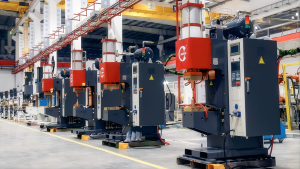
How to Choose the Right Spot Welder for Aluminum
1. Core welding parameters
Before selecting a spot welder for aluminum, evaluate the specific performance of each machine, including welding current range, welding time accuracy, electrode force control, and welding stability. For most industrial applications, MFDC spot welders for aluminum or robotic spot welder for aluminum provide the best balance of performance and efficiency.
2. Material compatibility
Before selecting a spot welder for aluminum, evaluate its welding capabilities for the same type of metal, including compatibility for aluminum alloys series (e.g., 5052, 6061, 7075), welding performance for dissimilar metals (e.g., aluminum-copper, aluminum-titanium), and compatibility to different surface conditions (e.g., pickling, sandblasting) to ensure reliable welds on complex surfaces.
3. Automation and line integration
When selecting a spot welder for aluminum, ensure it meets the factory’s production and welding requirements, maintaining high consistency between welding application and production efficiency. Manual machines are ideal for low-volume production, while automated and robotic spot welders for aluminum are essential for large-scale manufacturing, especially in automotive and EV production lines.
4. Total cost of ownership
When selecting a spot welder for aluminum, beyond initial purchase price, consider energy consumption, maintenance costs, electrode lifespan, and system upgrade potential. MFDC and capacitor discharge welders typically reduce energy use by 30–40% compared to AC welders.
5. Supplier Engineering Capability
When selecting a spot welder for aluminum, prioritize suppliers with proven aluminum welding expertise, proprietary control systems, real-time weld monitoring, and strong industry references. Suppliers with long-term experience in automotive and new energy applications provide greater process reliability and lifecycle support. With over 35 years of metal joining experience, Heron Intelligent Equipment provides full-cycle technical support for aluminum welding through advanced controllers and quality monitoring systems, making it a preferred long-term partner for companies worldwide.

Future-Ready Aluminum Spot Welding
Aluminum spot welding technology continues to advance toward higher automation, precision control, and energy efficiency. Manufacturers should align equipment selection with current production requirements while accounting for future line upgrades.
Weld trials and process validation are strongly recommended before final equipment selection. Selecting the right spot welder for aluminum is not only a response to current production challenges but a strategic investment in long-term manufacturing competitiveness.