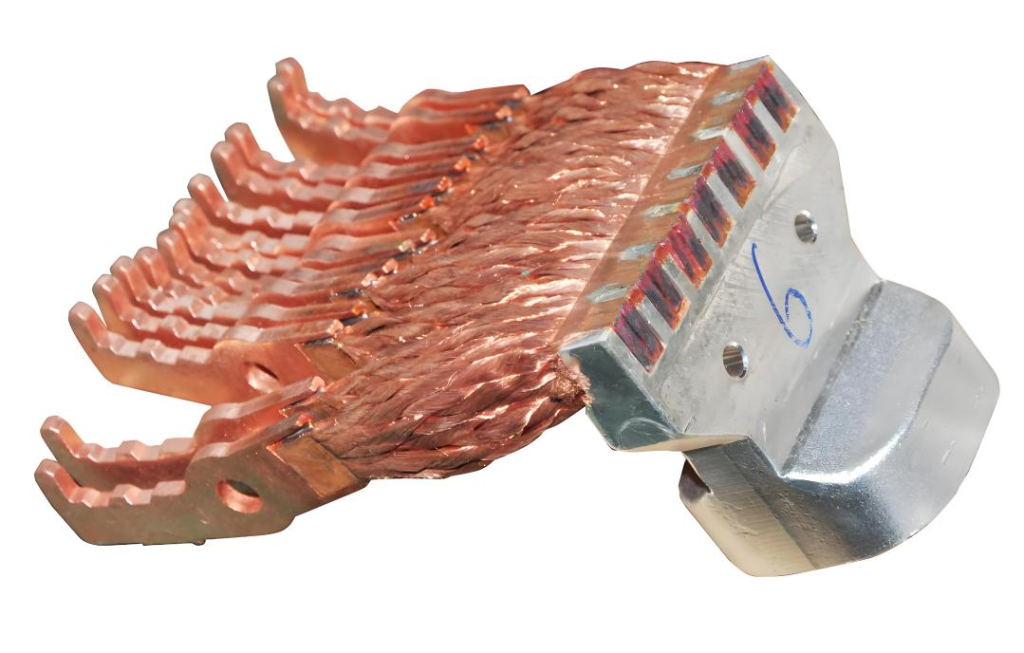
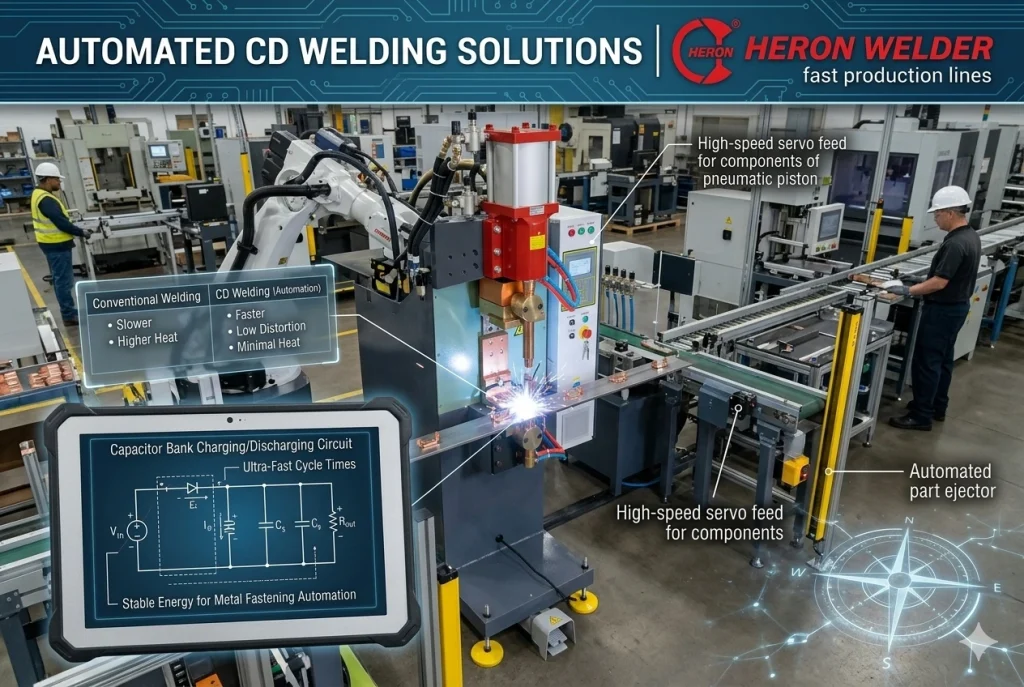
Resistance welding of copper and copper alloys has long been challenging materials due to copper’s extremely high electrical and thermal conductivity, which makes consistent heat generation and weld nugget formation difficult. However, recent advances in resistance welding machine, power control, and process optimization have made resistance welding of copper a reliable and widely adopted joining solution. These advancements are now enabling stable production in low-voltage electrical components such as copper busbars, stationary contacts, and electrical terminals. This article examines how copper’s intrinsic material properties affect resistance welding performance and provides a detailed overview of resistance welding for copper processes, offering engineers and manufacturing decision-makers clear guidance for industrial applications.
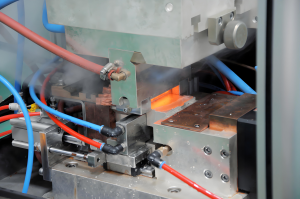
1. Material Properties of Copper and Their Impact on Resistance Welding
1.1 Key Metallurgical Characteristics of Copper
Copper exhibits high electrical and thermal conductivity, directly affecting resistance welding of copper.
Electrical Resistivity and Thermal Conductivity
Pure copper (e.g., oxygen-free copper C10200) has an electrical resistivity of ~1.68 × 10⁻⁸ Ω·m and thermal conductivity of 385 W/(m·K). In contrast, brass containing ~30% zinc shows resistivity of 5.99 × 10⁻⁸ Ω·m, while cupronickel with ~30% nickel reaches 34 × 10⁻⁸ Ω·m, significantly improving weldability in resistance welding applications. .
High-Temperature Characteristics
Copper oxidizes above 200°C, forming brittle cuprous oxide (Cu₂O), which can lead to grain boundary embrittlement. Its high thermal expansion coefficient also makes it prone to distortion during rapid heating and cooling cycles common in resistance welding.
Effect of Alloying Elements
Alloying elements such as zinc, tin, and nickel increase copper’s resistivity (~1 μΩ·cm per 1% atomic concentration). Alloying also modifies high-temperature strength and plastic deformation range, directly influencing joint quality in resistance welding of copper alloys.
1.2 Challenges of Resistance Welding of Copper Materials
Resistance welding of copper still presents several inherent challenges:
– Insufficient Heat Generation
Copper’s low resistivity limits heat generation at the contact area, hindering nugget formation.
– Rapid Heat Dissipation
High thermal conductivity causes heat to dissipate quickly, preventing stable molten nugget formation.
– Electrode Sticking
At high temperatures, copper can diffuse into electrodes, causing sticking and accelerated wear.
– Oxidation and Porosity Risks
Molten copper oxidizes easily to form brittle Cu₂O. Copper’s high hydrogen solubility can also lead to hydrogen porosity during solidification.
– Evaporation of Alloying Elements
In copper alloys, elements such as zinc and tin may volatilize at high temperatures, causing compositional segregation and porosity in the weld zone.
2. Resistance Welding of Copper: Applicable Processes and Industrial Applications
2.1 Resistance Spot Welding ofCopper
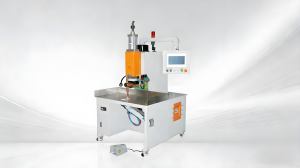
Resistance spot welding is the most widely used method in resistance welding of copper and copper alloys, particularly for thin-gauge materials ranging from 1–3 mm.:
Typical Applications:
Electrical switch components, electronic connectors, battery tabs and terminals.
Process Principle:
Electrodes apply pressure to ensure contact between copper surfaces. Welding current generates heat at the contact resistance, forming a molten weld nugget that solidifies into a strong joint.
Application Materials:
– Pure copper: Suitable for welding thin plates (0.5-1mm) and wire harnesses.
– Copper alloys: Brass and cupronickel weld more easily due to higher resistivity.
– Multi-layer joints: Copper foil to busbar, copper sheet to copper tube, and mixed cross-section joints.
Process Characteristics :
– Short welding time with high-current pulses to minimize heat loss.
– Specialized electrode geometries to increase current density.
– Preheating (200-300℃) or interlayers are often required.
2.2 Resistance Brazing of Copper Components
Resistance brazing is a complementary process within resistance welding of copper, particularly suited for applications requiring metallurgical bonding without full base-metal melting.
Typical Applications :
Low-voltage electrical components, switch contacts, automotive radiators, air conditioning evaporators.
Process Principle :
A brazing filler metal is placed between the contact surfaces of copper parts. Electrode current generates heats, melting the filler metal and wetting the copper parts. After cooling, a metallurgical bond is forms.
Application Scenarios:
– Low conductivity copper alloys (e.g., phosphor bronze, aluminum bronze)
– Dissimilar metal connections (e.g., copper to stainless steel, copper to aluminum)
Process Characteristics:
– Requires solder filler metal (copper-based or silver-based); electrodes do not directly contact the workpiece.
– Strict temperature control: ~600℃ for copper-based filler metals, ~700℃ for silver-based filler metals.
– Special electrode materials (tungsten-molybdenum alloys or graphite) improve high-temperature resistance.
3. Resistance Diffusion Weldingof Copper
Resistance diffusion welding represents an advanced solid-state variant of resistance welding of copper, enabling atomic-level bonding without filler materials.
Typical Applications:
Flexible battery connectors for EVs, power equipment busbar joints, precision electronic component connections.
Process Principle:
Copper surfaces are heated (600–800°C) and pressurized (0.5–15 MPa), enabling atomic diffusion across grain boundaries for a solid-state bond.
Application Scenarios:
– Multi-layer copper foil consolidation
– Power and EV flexible connectors
– High-purity, high-precision copper components
Process Characteristics :
– No filler material; clean, seamless joint
– Graphite electrodes typically used for heating
– Precise temperature (±5℃) and pressure control to prevent deformation or cracking.
– Extended hold times (3–8 minutes) ensure sufficient atomic diffusion
4. Advantages of Resistance Welding of Copper
Resistance welding of copper offers advantages in industrial manufacturing:
– High Efficiency and Clean Operation
No spatter, fumes, or hazardous gases—meets modern green manufacturing standards.
– Stable Weld Quality
Precise parameter control ensures consistent and reliable joints.
– Cost-Effective Production
High automation suits high-volume manufacturing with low operating costs.
– Process Flexibility
Adapts to varying material thicknesses and alloy compositions.
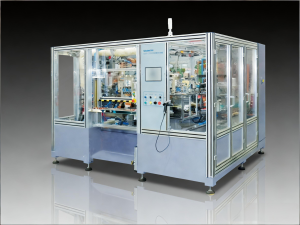
As a mature and industrially proven joining technology, resistance welding of copper offers high efficiency, excellent consistency, and seamless integration into automated production lines. For low-voltage electrical manufacturers and other copper-intensive applications, it remains one of today’s most reliable and scalable joining solutions.
If you’re exploring resistance welding solutions for copper applications or need process optimization for specific use cases, Heron Intelligent Equipment’s engineering team provides technical consultation and customized solutions to help manufacturers confidently overcome complex copper welding challenges.