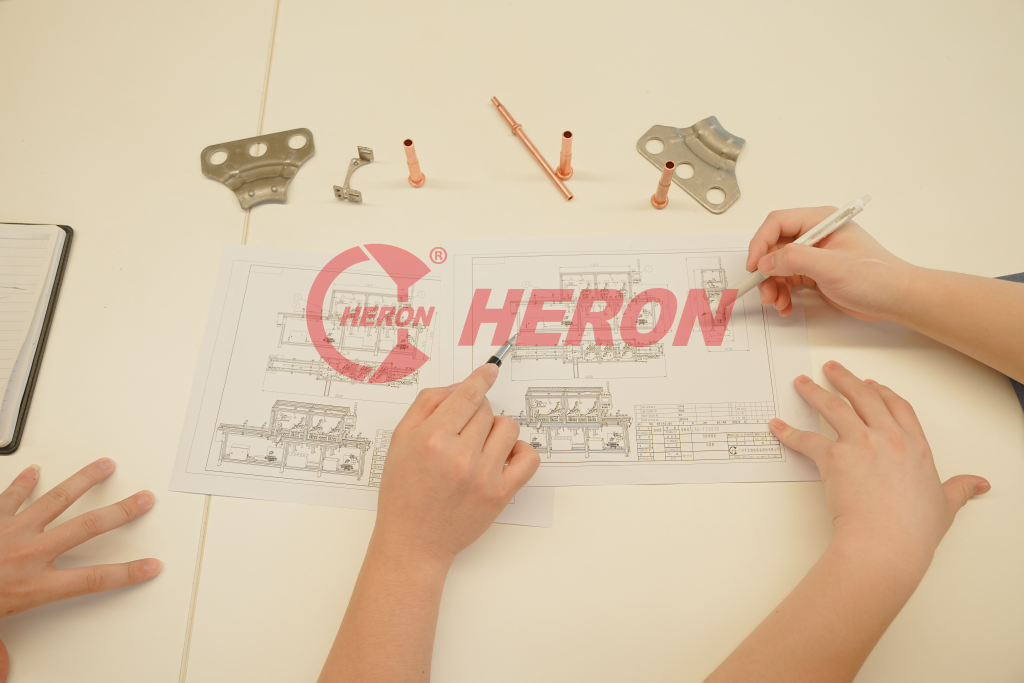
Projection Welding Nuts are a fundamental component in industrial metal joining, designed specifically for use in resistance welding processes. Unlike conventional nuts, projection welding nuts feature pre-formed projections on their surface, which concentrate the welding current at precise points.
This ensures strong, repeatable welds while minimizing heat input and distortion on the surrounding sheet metal. They are widely used in high-volume manufacturing environments where efficiency, precision, and mechanical reliability are critical.
Industries such as automotive, HVAC, electrical equipment, and general metal fabrication rely heavily on projection welding nuts for assembling sheet metal components, panels, and enclosures.
Their ability to provide both mechanical strength and electrical conductivity makes them ideal for applications where consistent performance is required. Additionally, projection welding nuts are compatible with automated and robotic welding systems, which further increases productivity and reduces labor costs on production lines.
Understanding the types, materials, applications, and best practices of projection welding nuts is essential for engineers, production managers, and procurement professionals who aim to optimize industrial assembly processes.
Projection Welding Nuts: Complete Guide for Industrial Metal Joining
Projection welding nuts are a critical component in modern industrial metal joining, providing reliable, high-strength connections for automotive, HVAC, electrical, and general manufacturing applications. In this guide, we will explore types, materials, applications, benefits, and best practices, equipping engineers, production managers, and procurement professionals with the knowledge to select and use projection welding nuts effectively.
1. Introduction to Projection Welding Nuts
Projection welding nuts are specialized fasteners designed to be used in resistance welding processes, where heat generated by electrical current melts the metal surfaces, forming a strong mechanical and electrical connection. Unlike traditional nuts, projection welding nuts feature pre-formed projections that concentrate the welding current at specific points, ensuring consistent welds with minimal energy and time.
Importance in Industrial Metal Joining
Industrial metal joining often requires rapid, reliable, and repeatable connections. Projection welding nuts are widely used in industries such as:
-
Automotive manufacturing for assembling car bodies and chassis.
-
HVAC systems for fastening compressors and metal panels.
-
Electrical enclosures where sheet metal and components must be firmly joined.
-
Appliance manufacturing and general metal fabrication.
Using projection welding nuts reduces the need for secondary operations such as drilling or inserting traditional fasteners, saving labor costs and production time.
Overview of Resistance Welding Applications
Resistance welding processes, including spot welding and projection welding, are designed for sheet metal assembly. Projection welding nuts are particularly effective for:
-
Connecting thin to medium-gauge sheet metals.
-
Ensuring repeatable weld quality in automated production lines.
-
Supporting high-volume assembly processes without compromising strength.
2. Types of Projection Welding Nuts
Projection welding nuts come in different shapes and designs to suit various industrial applications. Choosing the correct type is critical for ensuring weld quality and assembly efficiency.
Hex Projection Welding Nuts
Hex nuts are the most common type, designed for mechanical strength and ease of assembly in automated systems. They are widely used in automotive and appliance manufacturing due to their compatibility with standard tooling.
Round Projection Welding Nuts
Round nuts provide a simpler design and are suitable for applications requiring low-profile fasteners. They are often used in electrical enclosures and HVAC panels.
Flange Projection Welding Nuts
Flanged projection nuts distribute welding forces over a larger area, reducing material deformation. These are preferred in thinner sheet metals or when high mechanical stability is required.
Specialized Industrial Welding Fasteners
Certain applications demand custom-shaped projection welding nuts designed for specific sheet thickness, material types, or automated line requirements. Heron Welder offers tailored solutions to meet these industrial needs.

3. Materials and Specifications
The performance of projection welding nuts depends heavily on the material and its specifications.
Steel Projection Nuts for High-Strength Connections
Standard carbon steel is commonly used for high-strength applications such as automotive chassis and structural assemblies. Steel provides excellent weldability and mechanical durability.
Stainless Steel Welding Nuts for Corrosion Resistance
Stainless steel projection nuts are ideal for HVAC systems, appliances, and outdoor applications where corrosion resistance is required. Welding stainless steel requires adjusted current and electrode settings to avoid discoloration or weak welds.
Aluminum and Specialty Materials
Aluminum projection nuts are used in lightweight automotive assemblies or electronics enclosures. Careful control of welding parameters is required due to aluminum’s higher thermal conductivity.
Sheet Thickness and Welding Parameters
-
Welding nuts are matched to sheet metal thickness for proper energy distribution.
-
Typical projection heights range from 0.5mm to 1.5mm depending on application.
-
Welding parameters, including current, time, and electrode pressure, are adjusted to achieve repeatable and reliable welds.
4. Industrial Applications of Projection Welding Nuts
Projection welding nuts are used across various industries where high-volume, reliable metal joining is essential.
Automotive Assembly Lines
-
Fastening body panels and chassis components.
-
Supporting robotic welding for consistency and high throughput.
-
Reducing manual assembly labor.
HVAC and Compressor Manufacturing
-
Securing housing panels and internal components.
-
Ensuring tight electrical and mechanical connections.
-
Improving efficiency in automated compressor assembly.
Electrical Enclosures and Electronics Fabrication
-
Joining sheet metal for cabinets and control panels.
-
Maintaining electrical conductivity in grounded connections.
-
Reducing need for additional mechanical fasteners.
General Metal Fabrication and Production Lines
-
Appliance manufacturing: ovens, washers, and dryers.
-
Sheet metal structures: HVAC ducts, panels, and frames.
-
Any high-volume manufacturing requiring fast, consistent, and strong connections.
5. Benefits of Using Projection Welding Nuts
Using projection welding nuts provides measurable advantages in industrial production.
Reliable Welded Connections
-
Pre-formed projections focus welding current, producing strong, repeatable welds.
-
Suitable for thin sheet metals where traditional nuts may fail.
Faster Assembly
-
Eliminates secondary operations like drilling or inserting bolts.
-
Reduces cycle time on production lines, especially in automated welding systems.
Cost-Effective Mass Production Solutions
-
Reduces labor costs by simplifying assembly processes.
-
Minimizes scrap due to consistent weld quality.
-
Supports high-volume manufacturing without compromising quality.
Enhanced Durability in Automated Welding Systems
-
Designed for robotic and semi-automated welding applications.
-
Compatible with advanced welding equipment from companies like Heron Welder.
6. Welding Best Practices for Projection Nuts
Choosing the Right Welding Equipment and Electrodes
-
Use resistance welding machines optimized for the nut type.
-
Ensure electrodes match nut material and sheet thickness.
Recommended Welding Current, Time, and Pressure
-
Current must be sufficient to melt the projection without overheating the base metal.
-
Welding time and pressure are adjusted for material thickness and projection height.
-
Robotic systems allow precise control, ensuring repeatability.
Automation Tips for Robotic Welding
-
Use vision-guided or programmed robotic systems for consistent placement.
-
Integrate quality sensors to monitor weld integrity.
-
Consider line speed, nut orientation, and electrode maintenance.
Common Mistakes to Avoid
-
Using incorrect nut type for sheet thickness.
-
Inadequate electrode maintenance leading to weak welds.
-
Improper current or pressure settings causing cracks or insufficient weld penetration.

7. How to Select the Right Projection Welding Nut for Your Production Line
Matching Nut Type to Metal Sheet Thickness
-
Hex and flange nuts for thicker sheets and structural assemblies.
-
Round or low-profile nuts for thin sheets and panels.
Considerations for High-Volume Manufacturing
-
Choose nuts compatible with automated feeding systems.
-
Ensure materials and design support continuous high-speed welding cycles.
Evaluating Quality and Performance Standards
-
Check mechanical strength and corrosion resistance.
-
Verify compliance with industry standards such as ISO 13918 for resistance welding fasteners.
-
Conduct sample testing under real production conditions.
FAQS
1. What are projection welding nuts?
Projection welding nuts are specialized fasteners with pre-formed projections designed to focus welding current at specific points. They are used in resistance welding processes to create strong and repeatable mechanical and electrical connections in sheet metal assemblies.
2. How do projection welding nuts work?
During welding, electrical current flows through the projections, generating heat at the contact points. This melts the nut and sheet metal locally, forming a solid weld without additional fasteners or drilling.
3. What industries use projection welding nuts?
Projection welding nuts are commonly used in automotive assembly, HVAC and compressor manufacturing, electrical enclosures, appliance fabrication, and general metalworking industries.
4. What materials are projection welding nuts made from?
They are typically made from carbon steel, stainless steel, or aluminum depending on strength, corrosion resistance, and application requirements.
5. What types of projection welding nuts are available?
Common types include hex projection nuts, round projection nuts, flange projection nuts, and custom-shaped nuts designed for specific industrial applications.
6. Can projection welding nuts be used in automated welding systems?
Yes. They are compatible with robotic and semi-automated welding lines, providing consistent placement and weld quality for high-volume production.
7. What are the main benefits of using projection welding nuts?
Benefits include reliable welds, faster assembly, reduced labor costs, cost-effective mass production, and enhanced durability in industrial settings.
8. How do I choose the right projection welding nut for my production line?
Factors include sheet metal thickness, nut type, material, welding equipment compatibility, and production volume requirements.
9. What are the common mistakes to avoid when using projection welding nuts?
Avoid using the wrong nut type for the sheet thickness, improper welding parameters, poor electrode maintenance, and incorrect placement in automated lines.
10. Are there standards for projection welding nuts?
Yes. Many industries follow standards such as ISO 13918 for resistance welding fasteners, ensuring consistent quality, strength, and performance.
Summary
Projection welding nuts are essential in modern industrial metal joining, offering strong, repeatable, and cost-effective connections. By understanding the types, materials, applications, and best practices, manufacturers can maximize efficiency, reduce labor costs, and improve product quality.
For companies looking to implement or upgrade resistance welding systems, partnering with a reliable industrial welding solutions provider like Heron Welder ensures access to high-quality welding nuts and equipment tailored to production needs.
Whether you are in automotive manufacturing, HVAC assembly, or general metal fabrication, projection welding nuts provide practical solutions for high-volume and automated metal joining operations.