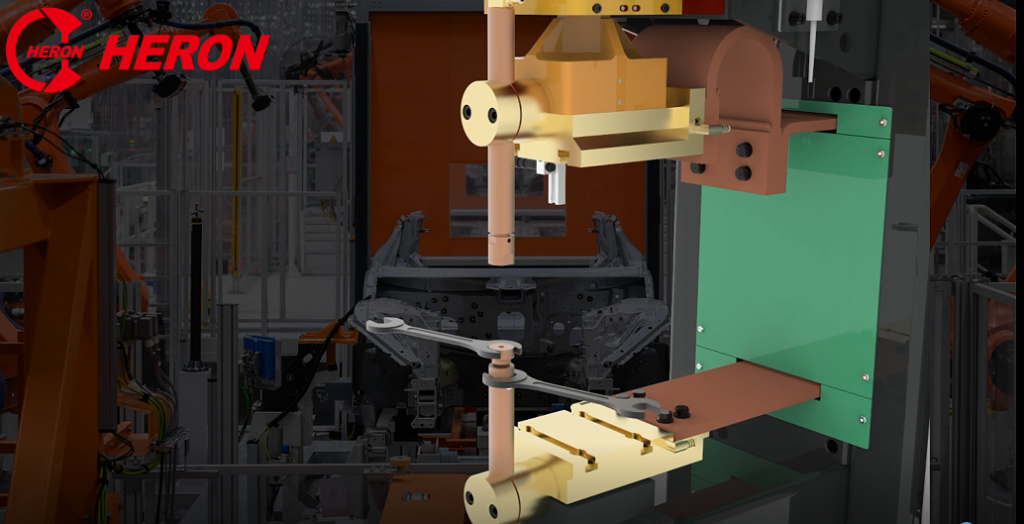
With the development of smart manufacturing, a resistance welder is no longer just a basic welding machine. It has evolved into a critical production solution integrating precise process control, weld data traceability, and energy efficiency. With a wide range of brands, models, and configurations available on the market, how can manufacturers avoid choosing equipment with a low initial cost but high operating expenses? Based on industry insights and customer feedback, we have summarized 20 key questions covering equipment selection, operation, quality control, cost management, and after-sales support. Whether you are an engineer planning a new production line or a decision-maker evaluating return on investment, this guide will help you make a more informed equipment selection decision.

I. Technology Selection and Process Matching
Q1: How do I choose the right resistance welder for my application?
The right resistance welder should be selected based on the part design, material characteristics, and welding requirements.
Spot welders are widely used for sheet metal lap joints and remain the most common solution for general resistance welding applications.
Projection welders are designed for components with pre-formed projections, such as nuts, bolts, and fasteners, providing consistent weld strength and repeatable results.
Seam welders are suitable for continuous welding applications where airtight or liquid-tight joints are required, such as automotive fuel tanks and containers.
Butt welders are mainly used for end-to-end joining of wires, tubes, and bars, creating strong and reliable connections between parts.
Q2: What are the advantages of MFDC power supply compared to traditional AC power supply?
MFDC (Medium Frequency Direct Current) technology has become widely adopted in modern resistance welding applications due to its higher efficiency and improved process control.
Higher energy efficiency: MFDC welders typically achieve power conversion efficiency above 85%, reducing energy consumption by approximately 30–50% compared with traditional AC welders.
Improved weld quality: The stable DC output provides lower current fluctuation and higher thermal efficiency, enabling better control of heat input. It is especially suitable for welding materials with high electrical and thermal conductivity, such as aluminum alloys, as well as coated materials like galvanized steel.
Balanced three-phase power load: MFDC technology reduces the impact on the factory power network, improves power factor, and provides more stable energy distribution.
Q3: How do I determine the required power for a resistance welder? Is higher power always better?
Higher power does not always mean better welding performance. Proper power selection is critical to achieving stable weld quality and avoiding unnecessary investment. The required welding power should be evaluated based on factors such as material type, thickness, electrical conductivity, and weld requirements. For example, precision welding applications involving small components may require only 500–800 W, while thicker sheet metal parts used in appliance manufacturing may require 800–1500 W. Selecting a resistance welder with excessive power can increase equipment costs and may also cause welding issues such as excessive heat input and spatter.
Q4: How should I choose between chromium copper zirconium (Cr-Cu-Zr) and silver tungsten alloy electrodes?
Different electrode materials offer different performance characteristics depending on the welding application.
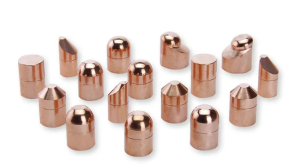
Chromium Copper Zirconium (Cr-Cu-Zr): Excellent balance between cost, electrical conductivity, thermal conductivity, and hardness. Widely used as a general-purpose electrode material for various resistance welding applications. However, electrode wear needs to be monitored. Dressing or replacement is required when electrode face wear exceeds the acceptable limit, such as a wear depth greater than 0.5 mm.
Silver tungsten alloy: Provides excellent high-temperature resistance and strong anti-sticking performance. Suitable for demanding welding conditions where electrode durability is critical. However, the material cost is significantly higher, and electrode sticking may still occur in some applications, such as welding galvanized steel.
Q5: What is a quick-change welding head, and what benefits does it provide for production?
A quick-change welding head is a modular design that allows operators to replace components or switch between different welding head configurations quickly, without the need for specialized tools. It is especially valuable for flexible production with high product variety and frequent changeovers. The design can reduce setup time from hours to just 3–5 minutes, improving equipment utilization and overall
Q6: Can a resistance welder integrate with my robot and MES system?
Integration capability is essential for automated and connected manufacturing. When selecting a resistance welder, manufacturers should confirm whether the equipment supports standard communication interfaces, such as Ethernet/IP, Profinet, and DeviceNet, as well as open communication protocols. The welder should be able to receive control signals from the robot and transfer key welding data, including current, voltage, electrode force, and displacement, to the MES system for complete weld quality traceability.
II. Quality Control and Defect Prevention
Q7: How can a resistance welder reduce welding spatter?
Welding spatter is typically caused by excessive heat input, unstable nugget formation, or insufficient electrode force during the welding process. A properly configured resistance welder can reduce spatter through several process control methods: Multi-pulse welding: Using a controlled current sequence, such as preheating, welding, and tempering stages, helps control heat input and achieve a more stable welding process. Constant current control: Real-time monitoring and compensation for power fluctuations help maintain consistent welding energy and improve weld repeatability. Servo-controlled electrode force: Precise control of the electrode force curve enables optimized pressure during different welding stages, including higher forging force during the weld cooling and solidification phase.
Q8: What is a closed-loop weld quality monitoring system? How does it work?
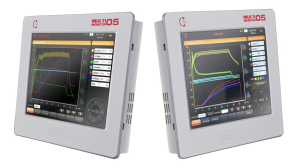
Closed-loop monitoring is a key feature of high-performance resistance welders. During each weld cycle, sensors collect real-time data, including welding current, voltage, electrode displacement, and electrode force. The measured values are compared against predefined quality limits or tolerance windows. If any parameter falls outside the specified range, the welder can trigger alarms, identify defective parts, or stop production when necessary. By recording key process data from each weld, the welder provides complete weld traceability and helps manufacturers prevent large-scale quality issues.
Q9: How does the equipment handle difficult-to-weld materials such as high-strength steel and aluminum alloys?
Welding these materials requires advanced joining technology and precise process control. For high-strength steel, medium-voltage capacitor discharge (CDW) projection welding technology is recommended. Its high peak current and ultra-short welding time help minimize heat input, preventing material softening and maintaining the mechanical properties of the steel. For aluminum alloys, due to their high thermal and electrical conductivity, FSPR (Flush Self-Piercing Riveting) technology is often preferred. It provides a strong mechanical connection while reducing the risk of cracking or material damage.
Q10: How does electrode life affect welding quality? How should it be managed?
Electrode wear directly affects the contact area between the electrode and parts, reducing current density and potentially causing inconsistent or weak welds. A high-quality chromium-zirconium copper electrode typically provides a service life of 3,000–5,000 welds, depending on welding conditions and material characteristics. To maintain stable welding performance, an effective electrode management system should be implemented, including regular tip dressing, wear monitoring, and replacement criteria based on factors such as electrode tip diameter and indentation depth. Some intelligent welding systems can also automatically track weld counts and provide reminders for electrode maintenance.
Q11: How important is the cooling system to welding quality?
The cooling system plays a critical role in maintaining consistent welding performance. During operation, it removes the heat generated by the electrodes, transformer, and other key components. Insufficient cooling — such as excessive water temperature, inadequate flow rate, or blocked cooling lines — can cause electrode overheating, deformation, and even electrode sticking. These issues can lead to unstable weld quality and significantly reduce the service life of electrodes and internal machine components. In most resistance welding applications, the cooling water temperature should be maintained below 30°C to ensure reliable operation and long-term equipment performance.
III. Cost-effectiveness and Return on Investment
Q12: What is Total Cost of Ownership (TCO), and why is it more important than the purchase price?
Total Cost of Ownership (TCO) refers to the total cost of owning and operating equipment throughout its entire service life, including the initial investment, energy consumption, maintenance costs, spare parts, and potential production losses caused by downtime. A machine with a lower purchase price may result in higher overall costs if it consumes more energy, requires frequent maintenance, or causes unexpected production interruptions. In contrast, equipment with higher efficiency, reliability, and longer service life can deliver a lower TCO despite a higher initial investment. Evaluating equipment based on TCO provides a more comprehensive and practical approach to investment decisions.
Q13: What are the core differences between Chinese welding equipment manufacturers and international brands (such as Ohara and Centerline )?
In recent years, leading Chinese welding equipment manufacturers, including Heron Welder, have significantly improved their capabilities in core technologies and product reliability. In some applications, Heron’s solutions can achieve performance comparable to leading international brands, while offering advantages in customization, cost efficiency, and service responsiveness. Historically, international brands had advantages in areas such as the stability of key components (e.g., inverter modules and control systems), process know-how, and global brand recognition. Today, Heron Welder has developed strong capabilities in welding power technology, control systems, and intelligent manufacturing solutions, enabling its equipment to meet the requirements of high-end manufacturing applications. Compared with imported brands, Heron provides competitive total value through reliable performance, flexible customization, and faster technical support.
Q14: How can the energy efficiency of welding equipment be evaluated?
First, consider whether the equipment uses advanced energy-efficient technologies such as medium-voltage capacitor discharge (CDW) or medium-frequency DC inverter (MFDC) welding technology.
Second, verify whether the equipment complies with applicable energy efficiency standards and requirements.
Finally, ask the supplier to provide actual energy consumption data under typical production conditions. This allows you to calculate the energy cost per weld and make a more accurate comparison between different solutions.
Q15: Are consumable parts (such as electrodes) interchangeable? How does this affect operating costs?
Consumable part compatibility is an often-overlooked factor that can significantly impact long-term operating costs.
Some manufacturers use customized electrode holders, connectors, or other components, which may require customers to purchase specific OEM replacement parts at a higher cost.
Before purchasing, confirm whether key consumables — such as electrodes, electrode caps, and cylinder seals — follow common industry specifications and can be sourced from multiple suppliers. Using standardized and interchangeable parts can help reduce maintenance costs and improve equipment availability over the machine’s service life.
IV. Service Support and Supplier Evaluation
Q16: What kind of after-sales support should the supplier provide?
A clear service response process is essential for maintaining production continuity. Before purchasing, evaluate whether the supplier has local service capabilities, such as regional service teams or authorized partners, and confirm their response time commitments. For critical production lines, it is also recommended to discuss contingency solutions, such as emergency technical support, spare parts availability, or backup equipment options.
Q17: What should be considered in the equipment warranty policy?
Before purchase, clarify the warranty period, coverage scope, and support terms for key components, such as welding controllers, inverter transformers, and servo motors. It is also important to understand the availability and supply channels of replacement components to ensure long-term equipment reliability and maintainability.
Q18: Does the supplier provide on-site process commissioning and operator training?
A reliable supplier should provide more than just equipment delivery — they should offer complete welding solutions and technical support. This typically includes equipment installation and commissioning at the customer’s site, optimization of welding parameters for specific products, and systematic training for operators, programmers, and maintenance personnel. These services help ensure that customers can operate, troubleshoot, and maintain the equipment effectively after production launch.
Q19: How can I verify a supplier’s experience in a specific industry?
Ask the supplier to provide proven application cases in your industry, such as automotive components, home appliances, or new energy battery manufacturing. Whenever possible, visit existing customer sites or communicate with current users to evaluate the equipment’s production stability, welding performance, and supplier support capability in real-world applications. For example, Heron Welder has accumulated extensive experience serving global manufacturers, including Fortune 500 companies. This industry experience enables Heron to provide proven welding processes and application solutions more efficiently.
Q20: Does the equipment have predictive maintenance capabilities?
Predictive maintenance is an advanced capability of intelligent welding equipment. By using built-in sensors to monitor key operating data, such as transformer temperature, cooling water flow, and cylinder cycle frequency, the system can evaluate equipment conditions and identify potential issues before failures occur. For example, the system can provide alerts such as “Cooling water flow is below the recommended level. Please check the filter.” This helps manufacturers move from reactive repairs to preventive maintenance, reducing unexpected downtime and improving overall production efficiency.