
A leaking fuel tank, a water heater that weeps at the seam or a shock absorber that loses pressure rarely fails because of its design. It fails because a joint that looked acceptable at the end of the line was not truly continuous. A resistance seam welding machine exists to remove that risk. It joins sheet metal with an unbroken line of overlapping weld nuggets, so no gap is left for gas or liquid to find. This guide is for engineers and procurement teams who need to specify a resistance seam welding machine for OEM production. It covers how the process works, which questions to answer before you request a quote, how to choose between circular and longitudinal and between MFDC and AC, and what to demand from your supplier.
Where a Resistance Seam Welding Machine Earns Its Place
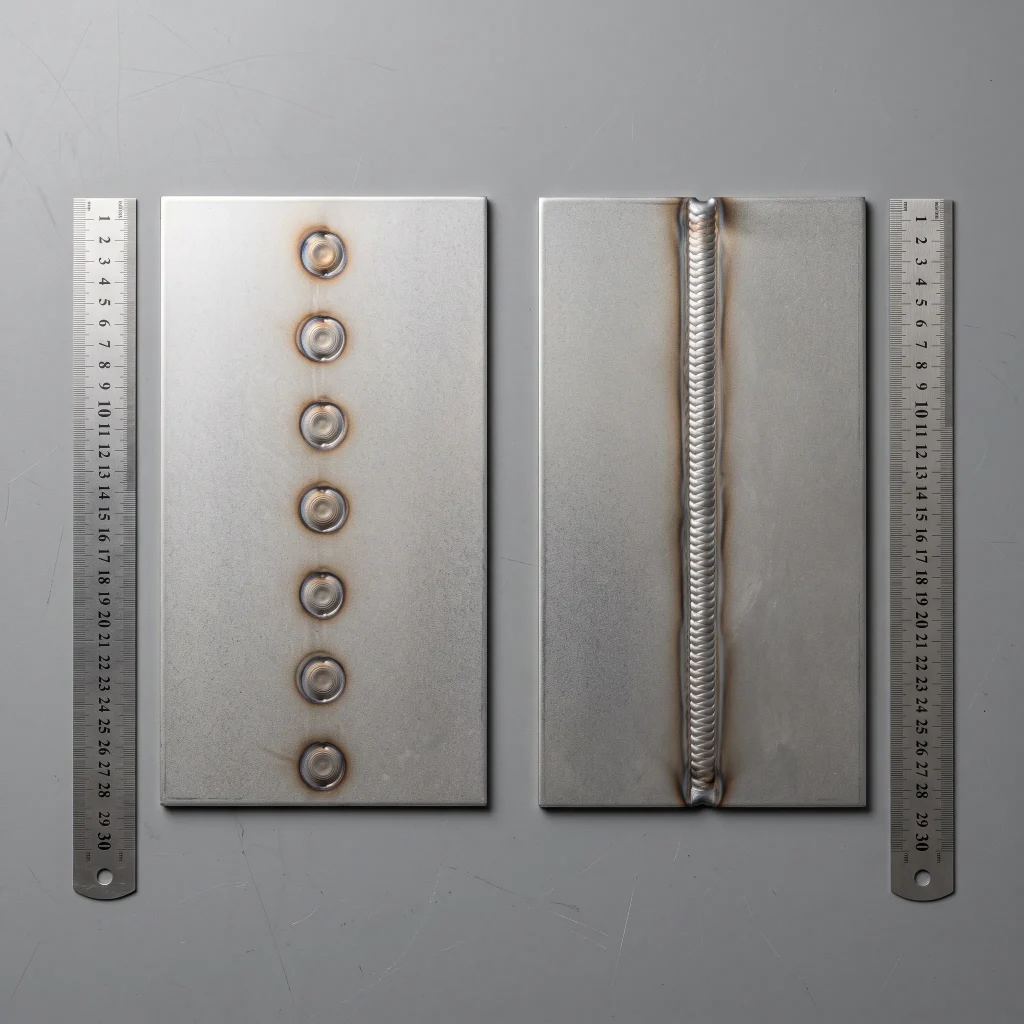
Spot welding makes discrete nuggets at set intervals. That is fine for structural joints, but the gaps between nuggets leave paths for leaks. Seam welding closes those gaps by overlapping the nuggets into one continuous joint.
A resistance seam welding machine is the right choice when the joint must do more than hold two parts together. Typical requirements include:
- Containment: the part holds liquid, such as a water heater tank or an oil heater.
- Pressure retention: the part sits under gas or hydraulic pressure, such as a shock absorber body.
- Gas-tight sealing: fuel and refrigerant components cannot tolerate seepage.
- Continuous strength: the seam carries load along its whole length, as in a metal drum.
If your part has none of these needs, a spot welder is usually the cheaper tool. If it has even one, a resistance seam welding machine usually pays for itself in lower scrap and fewer field failures.
Inside the Weld: Wheels, Force and Current Pulses
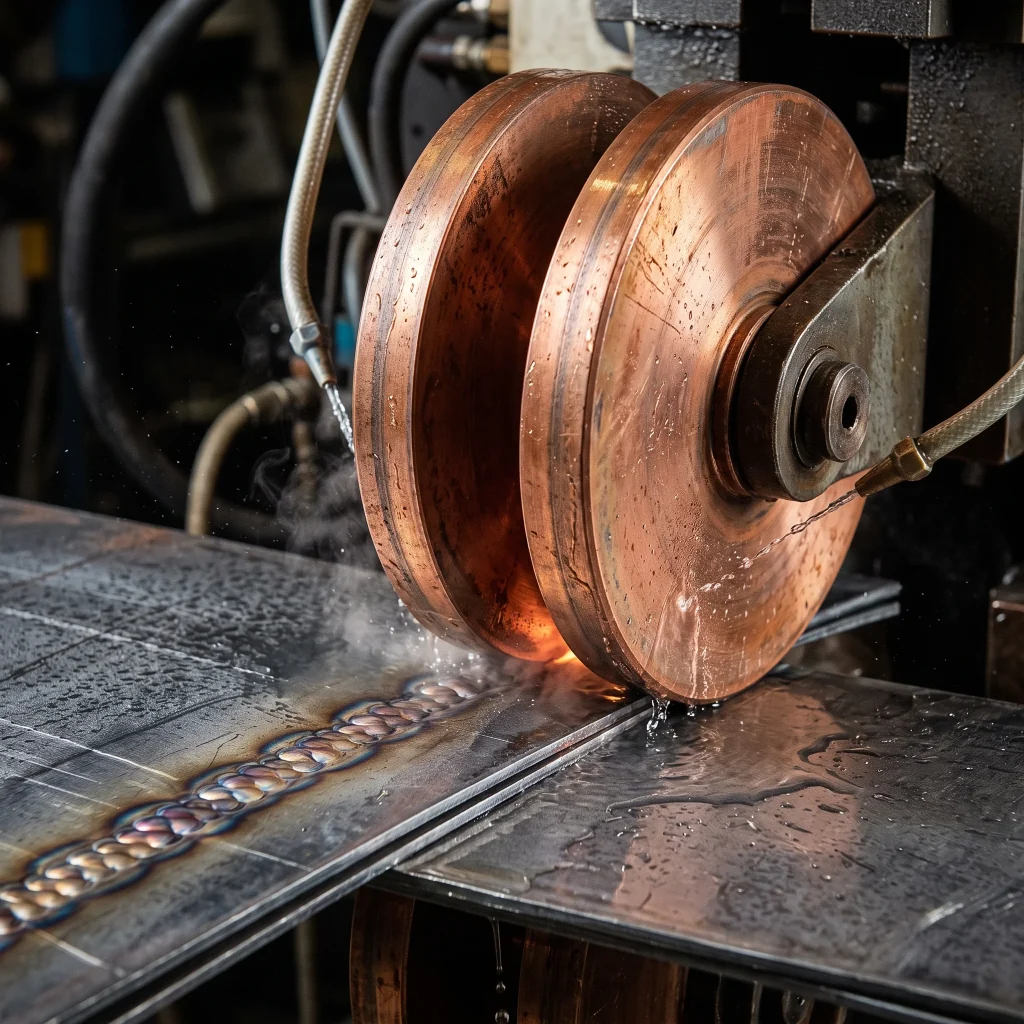
A resistance seam welding machine passes overlapping sheet through two rotating wheel electrodes. The wheels do three jobs at once: they clamp the sheet, carry the current and feed the part forward. The heat comes from electrical resistance welding, where current meets resistance at the interface and melts a small zone of metal. Because the wheels keep moving, each new pulse lands slightly ahead of the last one, and the nuggets overlap into a continuous line.
Three variables decide the quality of the seam:
- Current pulse timing. Each pulse forms a nugget. Pulse frequency and travel speed decide how far the nuggets overlap.
- Electrode force. Too little force raises contact resistance and invites spatter. Too much force can thin the joint.
- Travel speed. Faster travel raises throughput but gives each nugget less time to form.
Machines can run in several modes. Continuous overlapping gives a fully sealed seam. Intermittent, or stitch, welding spaces the nuggets for joints that need strength without sealing. Setting the right mode and overlap for your specification is part of commissioning the machine, and it is worth agreeing on the target values with your supplier before the order is placed.
Materials: What Changes the Machine Choice
The metal you weld shapes the machine you need, so confirm it early.
- Carbon steel is the most forgiving material and welds well on both AC and MFDC machines.
- Stainless steel has higher electrical resistance and lower thermal conductivity, so it needs less current but careful control to avoid overheating and discoloration.
- Coated and galvanized steel can transfer coating material to the wheels, which raises the need for wheel dressing and stable heat control.
- Aluminum conducts heat and electricity very well, so it needs fast, high-capacity current and tight control.
If your line handles more than one material, tell your supplier the full mix. A machine sized for the hardest material in your plan is cheaper than one replaced after the first product change.
Six Questions to Answer Before You Request a Quote
A supplier can only recommend the right resistance seam welding machine if you give it complete information. Collect these six answers first.
- What are the materials and thicknesses? Carbon steel, stainless steel, coated steel and aluminum each need different heat input.
- What is the joint geometry? A cylinder, a flat tank wall and a rectangular duct call for different machine layouts.
- How tight must the seam be? A cosmetic seam, a liquid-tight seam and a gas-tight seam call for different overlap and different checks.
- What is the required cycle time? Work back from your line rate to the speed the machine must hold all shift.
- What power supply do you have? Confirm voltage, phase and available capacity, because they limit the KVA you can run.
- What records must you keep? Safety-critical parts often need data on current, force and speed for every seam.
With these answers, a supplier can narrow the choice in one conversation instead of several.
Circular, Longitudinal or Both?
Geometry decides the machine layout.
Circular seams run around a cylinder. The machine rotates the part under the wheels, which suits kettle bodies, oil heaters, water tanks, shock absorber tubes and fuel tank end caps.
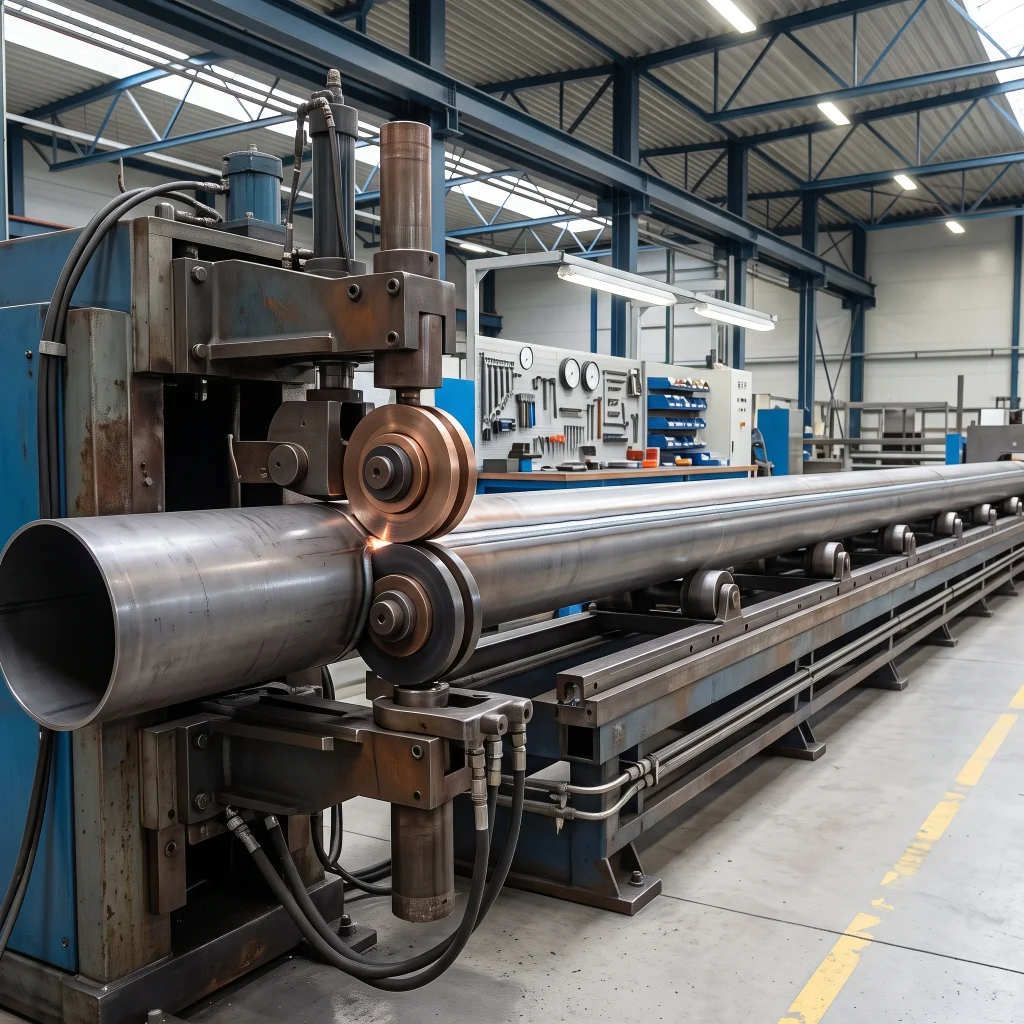
Longitudinal seams run along a straight edge. The part travels linearly through the wheels, which suits tube bodies, metal drums, rectangular tank sections and duct assemblies.
Some products need both. A tank with a longitudinal body seam and circular end seams may use two machines in sequence or one custom machine that handles both. Raise this early, because it affects fixtures, handling and line layout.
MFDC or AC: A Decision Table
Both types are proven. The choice depends on your material, your quality targets and your cost model.
| If your situation is… | Lean toward |
|---|---|
| Thin-gauge sheet or tight heat control | MFDC |
| Coated steel where nugget consistency matters | MFDC |
| Aluminum alloys | MFDC |
| Continuous production where energy cost is significant | MFDC |
| High-mix lines with changing materials | MFDC |
| Standard carbon or stainless steel on a stable grade | AC |
| A tight capital budget and an established process | AC |
MFDC delivers stable direct current with fast, precise control, which is why it suits demanding materials. AC is the economical option when the process is already stable. Our overview of MFDC technology explains why the control advantage matters in production.
Seam Defects and the Machine Features That Prevent Them
Most seam problems have a cause you can design out. Use this list when you compare machines.
- Leaks: usually caused by too little overlap or an unstable pulse. Look for precise pulse control and speed regulation.
- Burn-through or spatter: a mismatch between current and force, or poor cooling. Look for stable force control and proper cooling capacity.
- Wandering seams: poor part guidance or fixturing. Look for rigid fixtures and an accurately driven wheel.
- Wheel contamination: coated materials can transfer to the electrode surface. Plan for wheel dressing and a way to monitor wheel condition.
- Distortion: too much heat input on thin parts. Look for fine control of heat per pulse.
Cooling, Wheels and Maintenance
OEM seam welding is a high-duty-cycle process. Forced water cooling keeps the wheels and the transformer at stable temperature, so the machine can run through a full shift without cooling breaks. Wheels wear, so ask how they are dressed, how they are replaced and how long the changeover takes. Keep a small stock of spare wheels and cooling consumables on site, so a worn wheel never stops the line.
Total Cost of Ownership, Not Only Purchase Price
A low quote can hide a high running cost. When you compare each resistance seam welding machine, add up the costs that appear after installation:
- Energy use: MFDC machines often use less energy than AC machines at the same output, which matters on lines that run all day.
- Wheel life and replacement: wheel material, dressing frequency and changeover time all affect uptime.
- Scrap and rework: a machine with stable control produces fewer leaking parts, and every rejected tank costs material and labor.
A machine that costs more on day one often costs less per good part over several years.
Heron’s Resistance Seam Welding Machine Range
Heron Intelligent Equipment builds a full resistance seam welding machine range for automotive, home appliance, electrical and hardware manufacturers. The range covers four configurations from the seam welders line:
- MFDC longitudinal seam welder, 200KVA: stable DC output for tube bodies, rectangular tank sections and straight seams on demanding materials.
- MFDC circular seam welder, 165–200KVA: circumferential welding with fast current rise for shock absorber bodies, oil heaters and water tanks.
- AC circular seam welder, 50–200KVA: a broad output range for circular seams on standard steel, stainless steel and aluminum.
- AC longitudinal seam welder, 50–200KVA: proven performance on tubes, tank bodies and drum assemblies.
Every machine uses forced water-cooled circulation for continuous operation. Heron brings more than 30 years of resistance welding experience to every project, so your engineers speak with specialists who have solved similar seams before.
What to Ask Your Supplier Before You Sign
The machine is only part of the purchase. Support decides how fast it reaches full production. Ask every supplier these questions in writing:
- Can you run trial welds on samples of our parts, and will you share the results?
- What training is included for our operators and maintenance team?
- How are spare wheels and wear parts supplied, and how fast do they arrive?
- What does installation and commissioning involve, and who is responsible for each step?
Compare the answers side by side. A supplier that answers clearly before the sale usually supports you clearly after it.
From Single Machine to Complete Line
Many OEMs start with one machine and grow into automated cells. Heron supports both paths. Our engineers design custom seam welding production lines that combine loading, fixturing, welding, unloading and inspection, built around your component geometry and your target rate.
For parts where a failed seam is a safety issue, add real-time quality monitoring. It records current, force and speed for each weld, so you can trace every part and catch drift before it becomes scrap.
Questions Buyers Ask
Q1. How is a resistance seam welding machine different from a spot welder?
A spot welder makes separate nuggets. A resistance seam welding machine uses rotating wheels to overlap nuggets into a continuous joint, which gives a sealed seam.
Q2. What does KVA tell me?
KVA describes the electrical capacity of the machine. Thicker or higher-conductivity materials need more capacity, and your power supply must support it.
Q3. Can I run different materials on one machine?
Often yes, within limits. Tell your supplier the full material mix, because heat input and force settings change between materials.
Q4. Do I need an automated line?
Not at first. Many buyers begin with a standalone machine and add automation as volume grows.
Q5. How should I request a quotation?
Send your material, thickness, joint geometry, leak-tightness requirement, target cycle time and power supply. The more complete your brief, the faster the answer.
Specify Your Resistance Seam Welding Machine With Heron
The right resistance seam welding machine protects your quality, your throughput and your warranty costs. Send Heron your materials, geometry and target rate, and our engineers will recommend the right configuration. Contact the Heron engineering team today to start your resistance seam welding machine project.

