Copper brazing machine technology plays a critical role in the production of low-voltage electrical components, especially for the brazing of moving contacts and terminals. Since these conductive parts are typically made of copper, manufacturers rely on advanced copper brazing machines to achieve reliable copper-to-copper joints, stable weld quality, and high production efficiency.
More than a simple heating process, copper brazing requires precise control of temperature, materials, pressure, and automation. This article explores the complete copper brazing process, common production challenges, and how automated copper brazing machine solutions improve consistency, efficiency, and product reliability.
I. Copper Brazing: Managing High Thermal Conductivity
(1) Material Characteristics of Copper
Copper is widely used in electrical components for its excellent electrical conductivity, but its high thermal conductivity also creates unique challenges during brazing. In copper brazing machine applications for moving contacts and terminals, several key factors must be carefully controlled.
Surface Preparation
Copper oxidizes easily at high temperatures. Oil, contamination, and surface oxidation can prevent proper filler metal flow and wetting, leading to porosity or incomplete bonding. Thorough surface cleaning and the proper use of flux are essential for stable, high-quality brazed joints.
Precise Heat and Temperature Control
Copper transfers heat rapidly, making stable temperature control critical during brazing. Insufficient or uneven heating can result in incomplete melting in one area while overheating another. For thin or miniature spring contacts, excessive heat may cause softening or deformation of the base material. Customized copper brazing machines use accurate power and pressure control to improve process stability.
Mechanical Reinforcement and Safety Compliance
According to current low-voltage electrical and appliance safety standards, brazed joints alone should not be relied upon to withstand long-term mechanical stress. Repeated vibration and thermal cycling can lead to joint fatigue over time. For this reason, mechanical fastening structures such as spring terminals are often used together with brazing to improve connection reliability and operational safety.
(2) Common Challenges in Traditional Brazing Processes
In copper-to-copper brazing production, many manufacturers still face several common process challenges when using conventional or semi-automatic copper brazing machines.
Incomplete Brazing and Missed Joints
Copper dissipates heat quickly, making stable heat input difficult to maintain. Insufficient heating or rapid heat loss can prevent the filler metal from fully flowing into the joint gap. Small variations in manual material feeding can further increase the risk of weak or incomplete joints.
Inconsistent Weld Quality
Traditional brazing processes often rely heavily on operator experience for flame and temperature adjustment, making it difficult to maintain consistent heat distribution across every joint. This can result in uneven brazed seams, excess residue, overheating, or part deformation, all of which affect electrical performance and product consistency.
Low Efficiency and Material Waste
Conventional brazing processes typically operate with slower cycle times and limited automation. Manual wire cutting and filler metal feeding can lead to excessive material waste, reduced production efficiency, and higher manufacturing costs. As production demands increase, manufacturers are turning to automated copper brazing machine solutions to improve throughput and reduce labor dependency.
II. Smarter Copper Brazing Machine Solutions for Low-Voltage Electrical Manufacturing
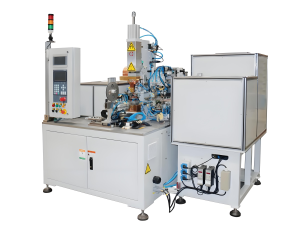
To address these production challenges, Heron has developed a dedicated automated copper brazing machine solution for the low-voltage electrical industry, delivering more reliable copper-to-copper joining with higher efficiency and process consistency.
Customized Automated Copper Brazing Machine for Stable Joint Quality
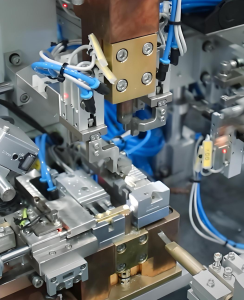
Heron’s customized copper brazing machine integrates automatic wire feeding and cutting functions for precise and consistent filler material delivery. Combined with vibratory bowl feeding and robotic handling, the machine minimizes positioning errors and reduces the risk of incomplete brazing caused by manual operation. Automated material control also helps reduce waste while improving production throughput, making the copper brazing machine suitable for high-volume electrical component manufacturing.
Precise Pressure and Process Control
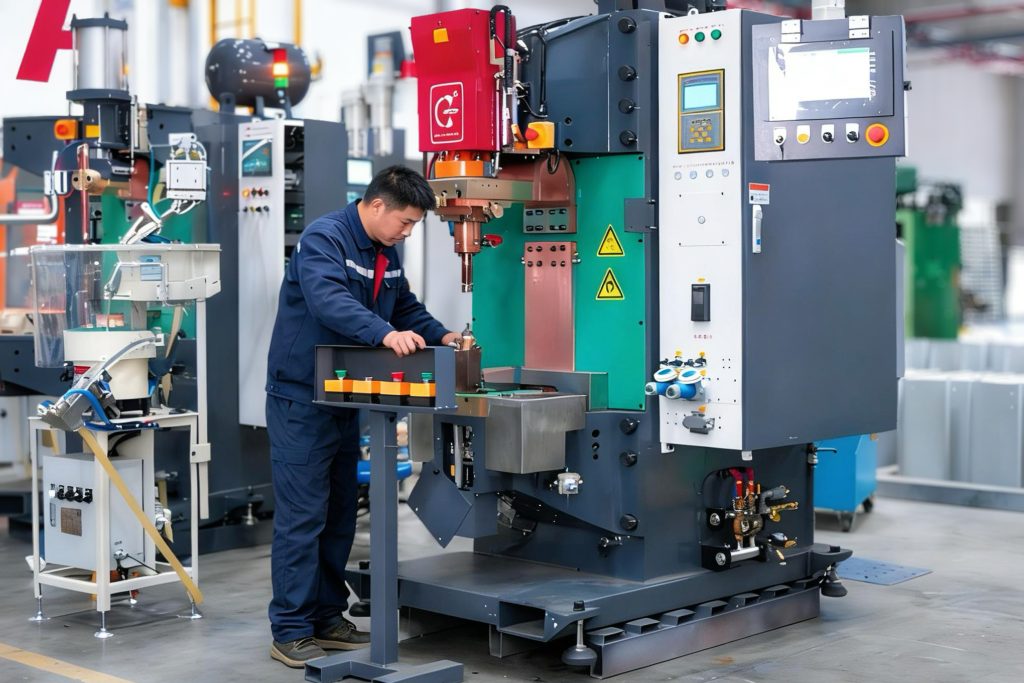
Heron resistance welders feature high-precision pressure control to maintain stable electrode force throughout the brazing process. Consistent pressure allows the filler metal to flow evenly into the joint area, improving joint appearance, dimensional consistency, and long-term connection reliability.
Integrated MFDC power technology further improves heating stability and process repeatability, allowing the copper brazing machine to maintain reliable production quality over extended operating periods.
III. Why Automated Copper Brazing Machine Systems Matter
From manual brazing machines to fully automated production systems, the evolution of copper brazing machines reflects the industry’s growing demand for higher efficiency, process stability, and product quality. By combining automated material feeding, precision pressure control, and MFDC power technology, Heron’s copper brazing machine helps manufacturers improve brazing consistency, reduce production defects, and support the reliable operation of modern electrical components.