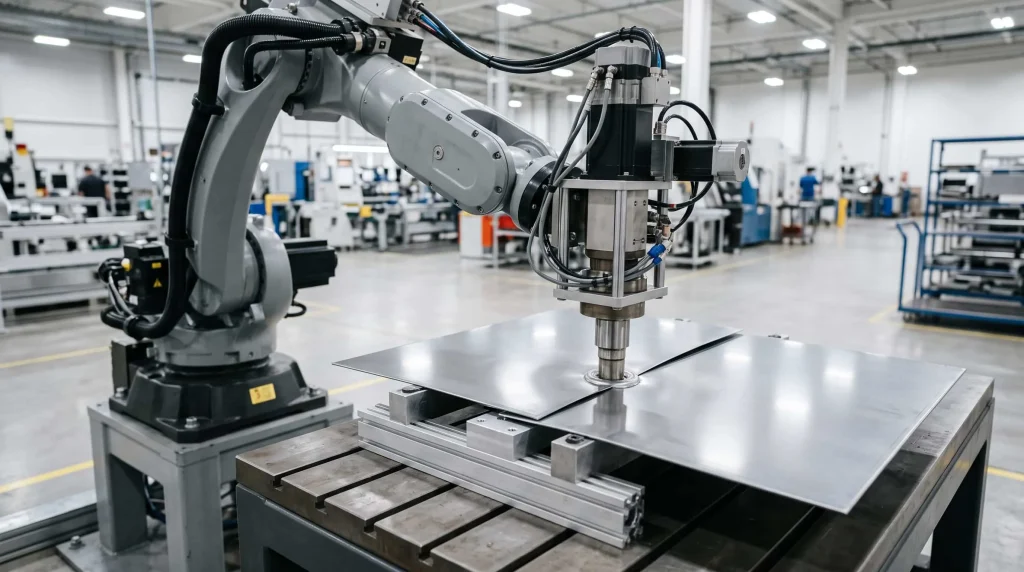
Two pieces of steel do not become one piece just because they touch. They need heat, axial pressure, and a controlled arc that burns the oxide layer off the joint line before the metal is forged together. That, in plain terms, is flash butt welding, and it is why automotive, appliance, and sheet metal plants have relied on it for decades to splice rebar, tube, rings, chassis parts, and coil strip.
If you are looking for a flash butt welding machine for the first time, or replacing aging units, the spec sheets can blur together fast. KVA ratings, clamping styles, flashing time, upset force. This guide walks through how the process actually works, where it earns its place on a production line, and what matters when you compare machines from different suppliers, Heron’s own butt welder range included.
How Flash Butt Welding Actually Joins Metal
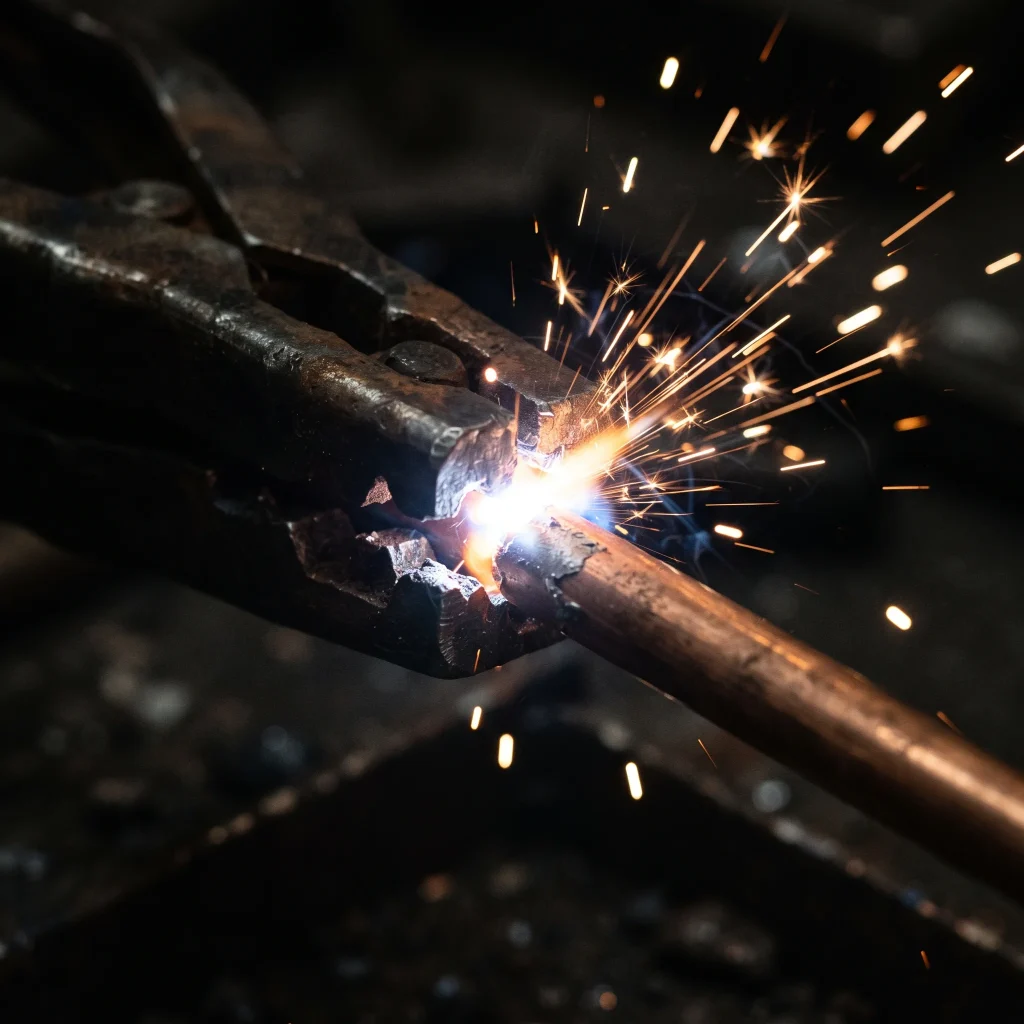
The two workpiece ends sit in copper electrode clamps, close but not touching. As they’re brought together under light pressure, current flows and small arcs jump across the microscopic gaps between the surfaces. That arcing stage is the “flash” in flash butt welding, and it does two jobs at once: it heats the metal to near forging temperature, and it burns off rust, mill scale, and surface contamination that would otherwise weaken the joint.
Once the flashing stage has softened both ends, the clamps drive the parts together fast, under much higher pressure. This upset stage forges the two ends into one piece, squeezing out molten metal and oxide as visible flash at the joint. No filler wire is added. The full cross section of the part participates in the bond, so mechanical properties on either side of the weld line usually stay close to the parent material. That matters later, when the part gets machined, bent, or heat treated downstream.
Where Flashbutt Welding Earns Its Keep
Flashbutt welding shows up wherever a part needs a full cross-section joint rather than an overlapping seam. Basically, if the design calls for two rods, tubes, or rings to become one continuous piece, this is usually the process behind it.
Automotive Chassis and Underbody Parts
Wheel rims, subframe rings, stabilizer bars, and seatbelt anchor loops are commonly closed with flash butt welding. The joint has to hold up under repeated flex and vibration, and a forged bond across the full section handles that better than a surface weld.
Appliance Frames and Structural Rings
Washing machine drum bands, oven door frames, and compressor mounting rings are appliance-industry parts that rely on the same principle: a strong, consistent joint with minimal distortion, produced fast enough to keep up with high-volume lines.
Rebar, Tube, and Strip Splicing
Construction rebar cages, tube and pipe mills, and coil processing lines that need to splice the end of one strip coil to the start of the next all lean on flash butt welding. Otherwise, the line has to stop every time a coil runs out, which is expensive at production speed.
Flash Butt Welding vs Upset Butt Welding and Other Joining Methods
Upset butt welding is the closest relative. It skips the flashing stage and applies pressure and current together from the start. That works for smaller cross sections, but it doesn’t clean the joint surface the way flashing does, so it’s less forgiving of scale or minor misalignment. Flash butt welding, by contrast, handles a wider range of cross sections and surface conditions, which is why most industrial applications default to it.
Compare that to resistance spot or projection welding, which join sheet metal in overlapping layers rather than end to end, and seam welding, which produces a continuous rolling weld for tanks and ducting. Each process fits a different joint geometry. Therefore, the first question in choosing equipment isn’t which brand to buy, it’s which process actually matches the part.
What to Check Before You Buy a Flash Butt Welding Machine
A few specs decide whether a flash butt welding machine will keep up with your production targets or become a bottleneck:
- Capacity (KVA) matched to cross-sectional area. Heron’s butt welder series, for example, spans 25 to 63 KVA across its lever-pressurize and vertical-pressurize configurations, sized to different part diameters and material thicknesses.
- Clamping style. Lever pressurize suits smaller, manually loaded parts. Vertical pressurize handles heavier sections and integrates more easily into an automated cell.
- Material range. Confirm the machine is rated for your actual material, whether that’s carbon steel, stainless steel, aluminum, copper, or an alloy with tighter thermal tolerances.
- Automation level. A standalone bench unit works for low-volume or job-shop work. A line integrated into a robotic cell needs synchronized controls and consistent cycle timing.
- Quality monitoring. Real-time weld data logging catches a bad joint before it leaves the cell, rather than after it’s already assembled into a finished product.
Common Flash Butt Welding Defects and How Machine Design Prevents Them
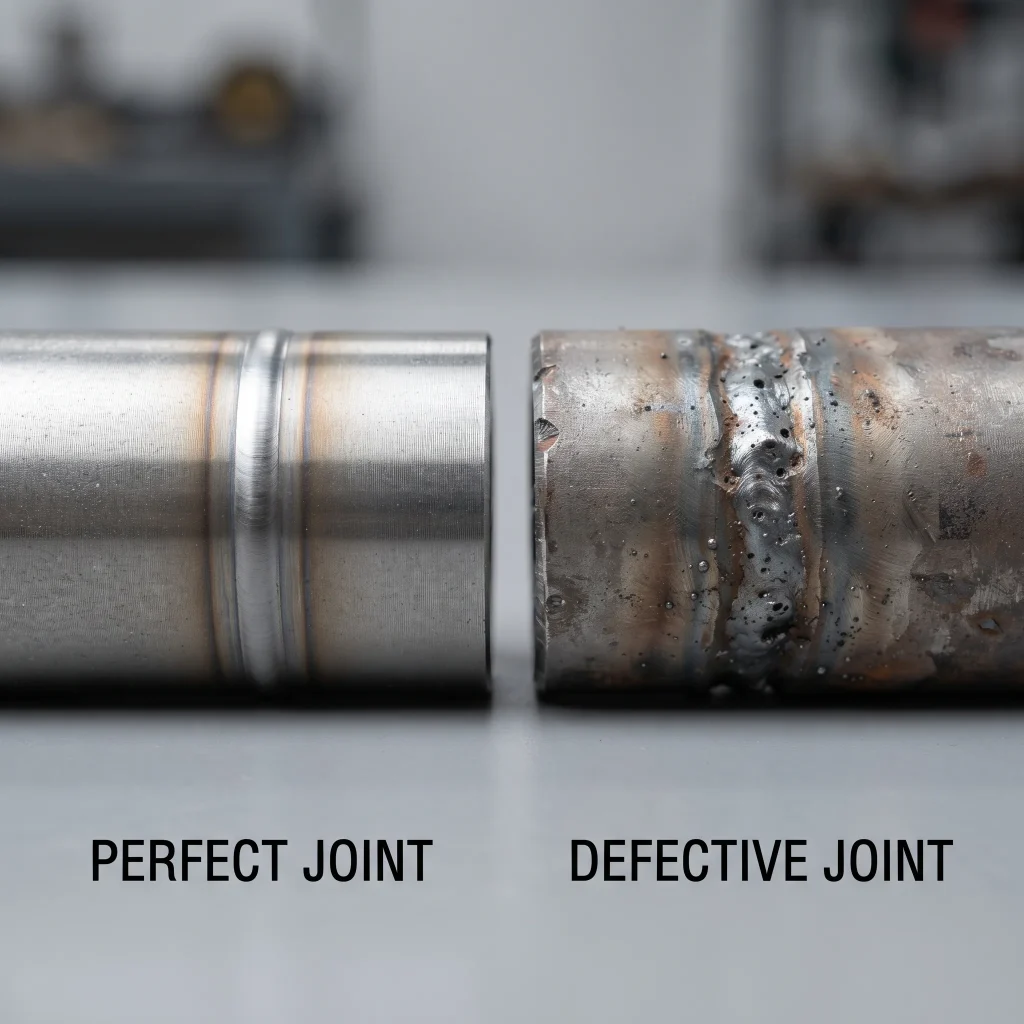
Cold welds happen when flashing time or upset force falls short, leaving the joint under-forged. Voids and porosity show up when oxide gets trapped during the upset stroke instead of being expelled cleanly. Misalignment between the two clamped ends produces an offset joint that’s visibly and structurally weak.
Fortunately, most of these trace back to machine design rather than operator error. Rigid clamping dies keep the parts aligned through the full cycle. Programmable flashing and upset profiles let an operator dial in the right heat and force for a given material and diameter, instead of relying on a single fixed setting for every job. That consistency is really what separates a flash butt welding machine that holds tolerance shift after shift from one that needs constant babysitting.
Heron’s Approach to Butt Welding Equipment
Heron has been building metal-joining equipment out of Guangzhou since 1991, so the butt welder line sits inside more than 30 years of resistance welding manufacturing experience. The company currently supplies equipment to more than 35 Global Fortune 500 manufacturers across automotive, motor, HVAC, circuit breaker, home appliance, hardware, and compressor production.
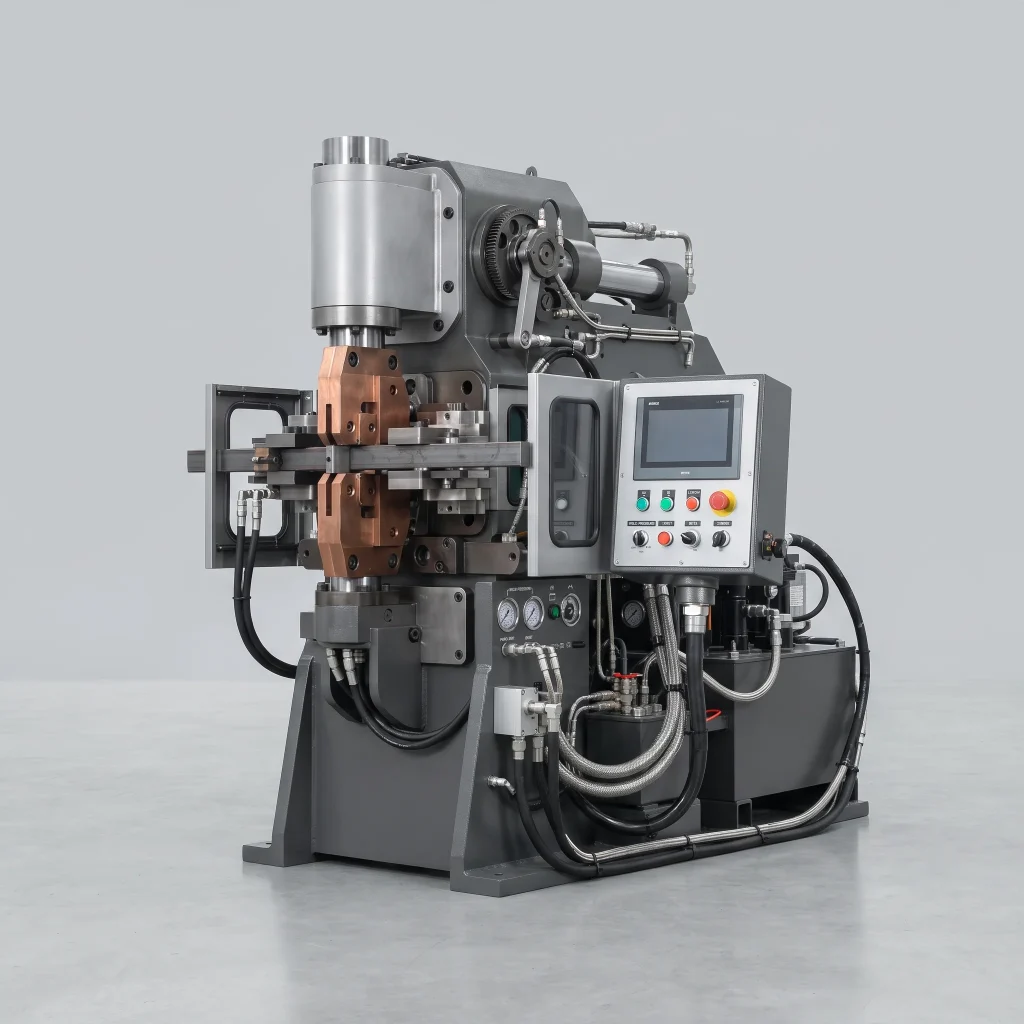
The butt welder range itself covers both configurations mentioned earlier: 25/35/50 KVA models with lever pressurize for smaller, manually fed parts, and 50/63 KVA models with vertical pressurize for heavier sections and line integration. Heron’s engineering team works directly with manufacturers to confirm the right KVA and clamping setup for a specific part before anything ships, which is the kind of partnership approach that matters more once a machine is running three shifts a day rather than sitting in a spec sheet.
Getting Your Flash Butt Welding Machine Set Up
The process usually starts with part drawings, material specification, and target cycle time. Heron’s engineers use that to recommend a KVA rating and clamping configuration, then run sample welds so you can verify joint strength before committing to an order. From there, delivery, commissioning, and operator training follow, backed by Heron’s ongoing sales and service support.
If your current setup is struggling to keep pace, or you’re specifying equipment for a new line, it’s worth getting Heron’s team involved early rather than locking in a spec on your own. Request a flash butt welding quote and walk through your part requirements with an engineer who builds this equipment for a living.
Frequently Asked Questions
Q1. What is flash butt welding used for?
It joins metal parts end to end across their full cross section, without filler metal. Common uses include automotive chassis rings, appliance structural frames, rebar splicing, and tube or strip joining in continuous production lines.
Q2. How is flash butt welding different from upset butt welding?
Flash butt welding adds a flashing stage before the upset stroke, which burns off surface contamination and handles a wider range of part conditions. Upset butt welding skips that stage and works best on smaller, cleaner cross sections.
Q3. What metals can be joined with flash butt welding?
Carbon steel, stainless steel, aluminum, copper, and various alloys are all commonly joined this way, provided the machine’s KVA rating and clamping setup match the part’s material and cross section.
Q4. What KVA rating do I need for a flash butt welding machine?
It depends on the cross-sectional area and material of the part. Heron’s butt welder range spans 25 to 63 KVA, and the company’s engineers typically confirm the right rating using your part drawings before recommending a model.
Q5. Does flash butt welding require finishing after the weld?
Most applications trim the upset flash mechanically after welding for a clean profile, particularly on visible or precision-fit parts. Some rougher applications, like rebar splicing, leave the flash as is.
Q6. Can Heron customize a flash butt welding machine for my production line?
Yes. Heron’s engineering team reviews part specifications and cycle time targets to configure KVA, clamping style, and automation level, then runs sample welds before the machine ships.
Choosing the right flash butt welding machine comes down to matching capacity and clamping style to your actual parts, not picking the biggest KVA number on the sheet. Heron’s team has spent more than 30 years doing exactly that kind of matching for automotive, appliance, and hardware manufacturers worldwide. Get in touch and request a quote to start speccing the right machine for your line.