A robotic spot welder isn’t just a spot welding gun bolted onto a robot arm. The gun, the transformer, the control logic, and the robot’s motion path all have to work as one system, and when they don’t, you end up with a cell that welds fine in testing and then falls apart on inconsistent parts three months into production.
This guide walks through what actually separates a good robotic spot welding machine from a mediocre one, where the payback shows up fastest, and what a full cell costs once you count everything beyond the robot itself. If you’re speccing a new line or replacing manual stations with automation, the goal here is to give you a framework, not a sales pitch.
What Makes a Welding Setup “Robotic” Rather Than Just Automated
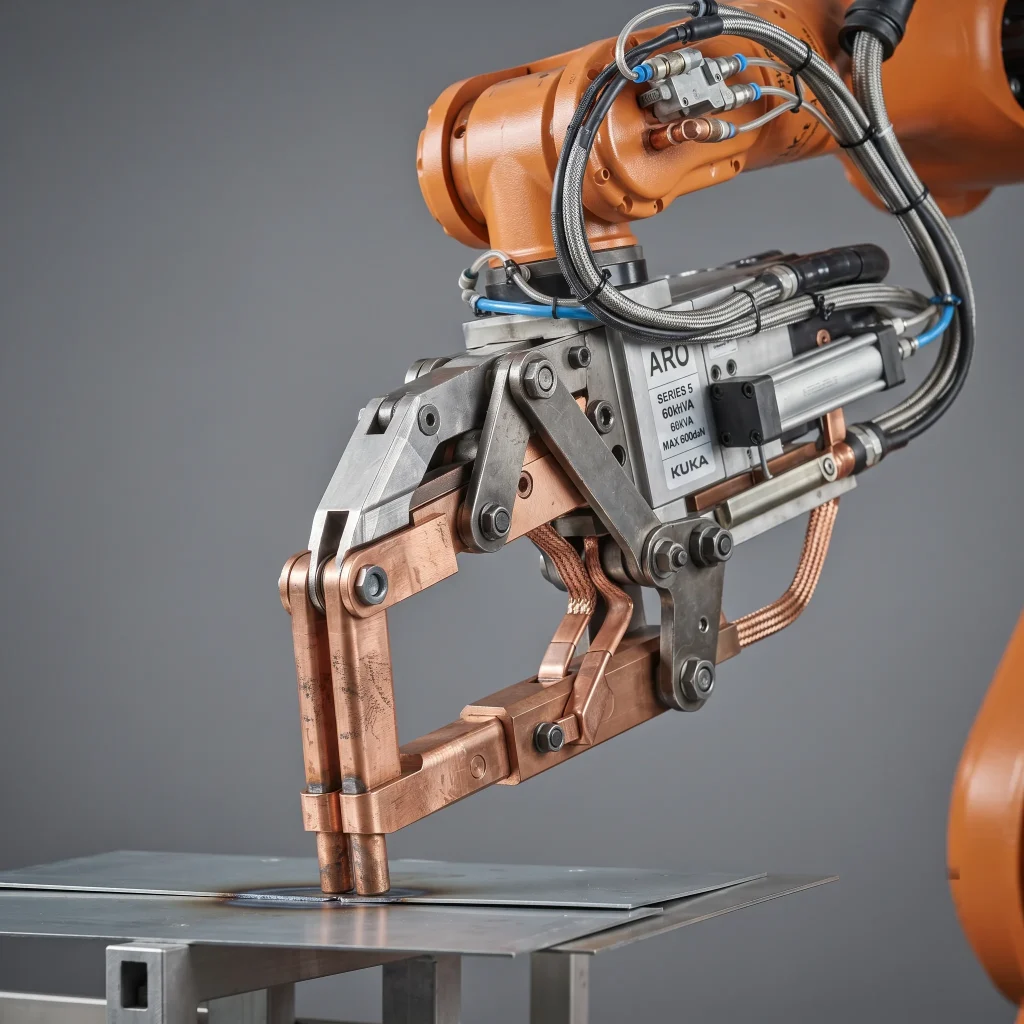
A fixed automated welder runs the same motion every cycle, on a part that’s presented to it in a jig. A robotic spot welder adds a multi-axis arm that can reach different weld points on a part without repositioning it, which matters enormously on body-in-white panels, appliance frames, or any part with weld points on multiple faces.
The practical difference shows up in changeover time. A fixed welder retooled for a new part often needs a new jig and sometimes a new gun. A robotic cell running a well-programmed path can switch to a new weld pattern through software, provided the fixture and part family were designed with that flexibility in mind from the start. That’s the real argument for going robotic rather than staying with fixed stations, not just “it’s more advanced.”
Core Features That Separate a Capable Robotic Spot Welding Machine From a Basic One
Gun Type and Electrode Arm Design
Most robotic spot welding machine setups use either a pneumatic gun or a servo gun. Servo guns give you programmable electrode force and stroke, which matters when a single cell has to weld multiple material thicknesses without a manual force adjustment between parts. Pneumatic guns are simpler and cheaper, but they typically run at fixed or limited force settings.
Electrode arm geometry matters more than buyers expect. A C-type arm handles straightforward, flat access points. An X-type arm reaches into tighter, angled joints common on automotive structural parts. Getting this wrong means the robot can technically reach the weld point but can’t apply force cleanly, which shows up as weak or inconsistent nuggets.
Control Integration With the Robot Arm
The weld controller and the robot controller need to talk to each other in real time, not just fire on a timer. When the robot signals it’s in position, the weld controller should confirm force and current before firing, and report back if a weld falls outside tolerance. Cells where these two systems are loosely coupled tend to produce weld defects that don’t show up until a part fails downstream inspection, sometimes well after the batch has already moved to the next station.
Weld Monitoring and Data Logging
This is where a genuinely good robotic spot welder earns its cost. Real-time monitoring of current, voltage, and electrode force per weld, logged and tied to a part serial number, means you can trace a bad weld back to a specific cycle instead of guessing which shift or which machine caused a defect. For automotive and appliance manufacturers running toward IATF or ISO quality systems, that traceability isn’t optional, it’s expected.
Where Robotic Spot Welders Pay for Themselves Fastest
High-mix, high-volume lines see the fastest payback, because the robot’s ability to switch weld patterns without physical retooling directly offsets changeover downtime. Automotive body-in-white lines, appliance frame assembly, and sheet-metal cabinet production are the classic cases, and it’s not a coincidence these are the same industries that have run robotic spot welders longest.
Lower-mix, lower-volume work is a tougher case for justifying a full robotic cell. Fortunately, a lot of manufacturers land on a middle path: keeping manual or semi-automated stations for low-volume specialty parts and reserving robotic cells for the high-repetition parts that actually generate the labor savings and consistency gains that justify the investment.
What a Robotic Welding Cell Actually Costs, Beyond the Robot Itself
The robot arm and the spot welding gun are only part of the bill. A full robotic welding cell typically includes the safety fencing and light curtains required for the work envelope, part fixturing (often custom per part family), the weld controller and transformer, and integration labor to get the robot’s motion path, the fixture, and the weld schedule all working together without collisions or missed points.
Fixturing is usually the line item that surprises first-time buyers most. A cell built around a single part family with a simple fixture costs meaningfully less than one designed to handle three or four part variants on the same tooling, since variant handling adds sensors, quick-change elements, or additional programming to the fixture design. Ask for fixturing and integration costs broken out separately from the robot and gun price when you’re comparing quotes, otherwise you’re not actually comparing the same scope of work.
Integration Questions Worth Asking Before You Commit to a Cell Layout
Ask what happens when a weld falls outside tolerance mid-cycle. Does the cell stop and flag it, or keep running and log it for later review? Ask how electrode dressing or tip changes are handled, since manual tip changes on a robotic gun interrupt the cycle differently than on a manual gun, and that downtime adds up across a shift.
Ask about spare parts lead time for the specific gun and controller model, not just the robot brand, since gun and transformer components tend to be the parts that wear and need replacement first. And ask whether the integrator or manufacturer will run sample welds on your actual part material before the cell ships, so you’re not discovering a fit issue after installation.
Working With Heron on a Robotic Spot Welder Project
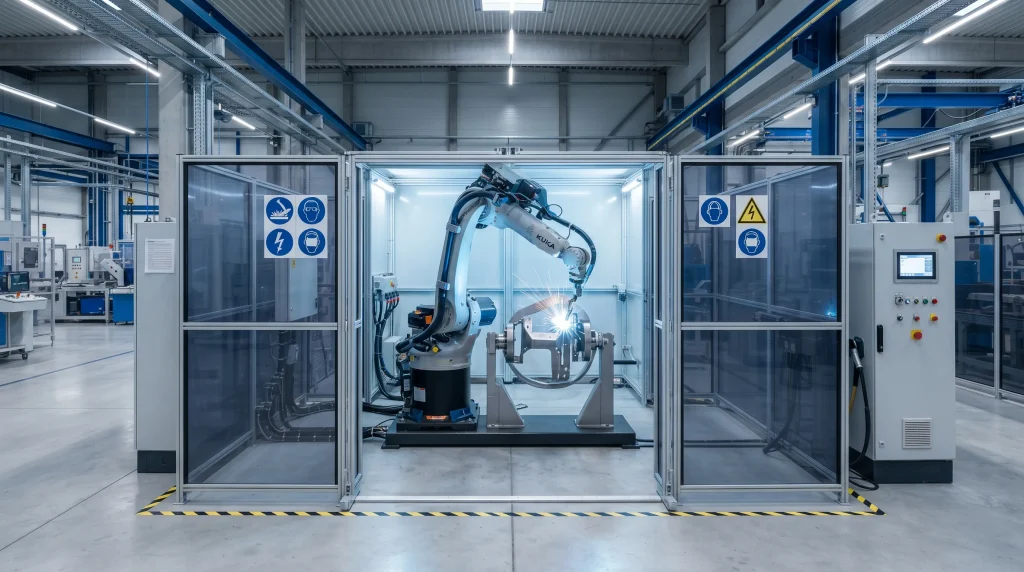
Heron has built resistance welding equipment since 1997 and supplies robotic spot welding guns and full welding cells to manufacturers across automotive, appliance, and industrial equipment production. The company’s robotic welding gun lineup is built around compact servo drives and high-strength aluminum alloy arms, designed specifically to integrate into robotic cells rather than adapted from manual gun designs after the fact.
Heron’s engineering team works through part drawings and weld point maps with a customer before recommending a gun type, arm geometry, and control setup, then runs sample welds on the customer’s actual material before the cell ships. That sequence, drawings first, sample welds second, delivery third, is the same partnership approach Heron applies across its resistance welding product lines, and it’s meant to catch fit and process issues before they become downtime after installation.
If you’re evaluating a robotic spot welder for a new line, or replacing aging manual stations with automation, it’s worth bringing Heron’s team into the conversation while you’re still speccing the cell rather than after a layout is locked. Request a quote and walk through your part requirements and production targets with an engineer who builds this equipment directly.
FAQs
Q1. What’s the difference between a robotic spot welder and a robotic spot welding gun?
The gun is the welding tool itself, mounted on the robot’s arm. A robotic spot welder or robotic welding cell refers to the complete system: the robot, the gun, the controller, fixturing, and safety equipment working together.
Q2. How much floor space does a robotic welding cell need?
It depends on part size and robot reach, but expect to plan for the robot’s full working envelope plus safety fencing clearance, typically several times the footprint of the robot base itself. Get a layout drawing from your integrator before finalizing floor plans.
Q3. Can one robotic spot welding machine handle multiple part variants?
Yes, with the right fixture design and weld program library. Quick-change fixturing and stored weld schedules per part number let a single cell switch between variants without a full retooling, though this adds cost and complexity to the initial fixture design.
Q4. Do robotic spot welders require special operator training?
Yes. Operators need training on the robot’s safety systems, basic weld program selection, and troubleshooting common fault codes. Full programming changes usually stay with a trained integrator or in-house automation engineer rather than line operators.
Q5. How long does it take to get a robotic welding cell running from order to production?
Standard cells often run 8 to 12 weeks from order to installation, depending on fixture complexity and whether the gun and robot are stock configurations or custom-built for the part.
Choosing a robotic spot welder comes down to matching gun type, control integration, and fixturing to your actual part mix, not just picking a robot brand and gun off a catalog page. Heron’s engineering team has spent nearly three decades doing exactly that kind of matching for automotive, appliance, and industrial manufacturers. Get in touch and request a quote to start speccing the right cell for your line.