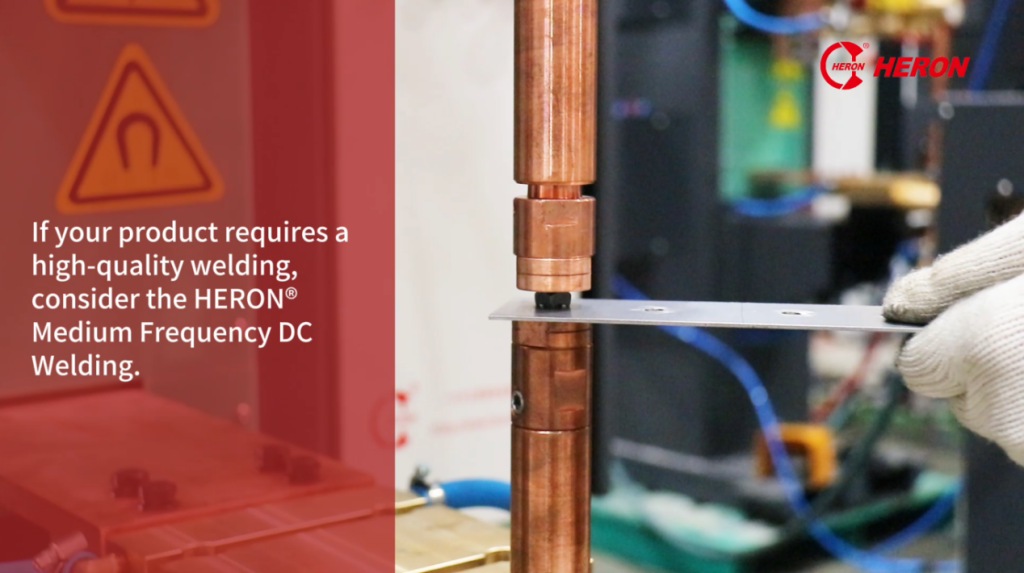
Automotive Spot Welder Machine plays a critical role in modern vehicle manufacturing, where precision, speed, and consistency are essential. In automotive production lines, thousands of welds are required to join sheet metal components such as chassis frames, body panels, doors, hoods, and even battery packs for electric vehicles.
These welds must meet stringent quality standards to ensure structural integrity, safety, and durability while supporting high-volume assembly operations.Unlike traditional welding methods, spot welding focuses on creating discrete weld points, minimizing heat-affected zones and preserving the properties of the metal.
Modern advancements, including MFDC (Medium Frequency Direct Current) technology, robotic welding arms, and automated monitoring systems, have transformed automotive spot welding into a highly efficient, energy-conscious, and precise process.
Manufacturers can now achieve consistent weld quality, reduce material waste, and improve overall production throughput.With the increasing complexity of vehicle designs and the rise of electric vehicles, investing in high-precision automotive spot welder machine has become more crucial than ever.
Automotive Spot Welder Machine: High-Precision Solutions for Modern Manufacturing
In the automotive industry, efficiency and precision are critical. Every car assembled on a production line requires countless welds, from chassis frames to body panels. This is where automotive spot welder machine play a vital role. Spot welding ensures strong, consistent joins on sheet metal, allowing manufacturers to maintain high production speed without compromising safety or quality.
Modern automotive manufacturing has evolved, embracing MFDC (Medium Frequency Direct Current) spot welders, robotic systems, and automated production lines. These technologies are designed to reduce production errors, increase throughput, and support increasingly complex automotive designs, including electric vehicles.
This blog provides a detailed overview of automotive spot welder machine, their applications, advantages, selection criteria, and future trends, helping engineers and production managers make informed decisions.
What is an Automotive Spot Welder Machine?
An automotive spot welder machine is a specialized piece of equipment used to join two or more metal sheets at discrete points. Unlike continuous welding, spot welding creates small, strong welds without melting the entire sheet, preserving the material’s structural integrity.
Key Components
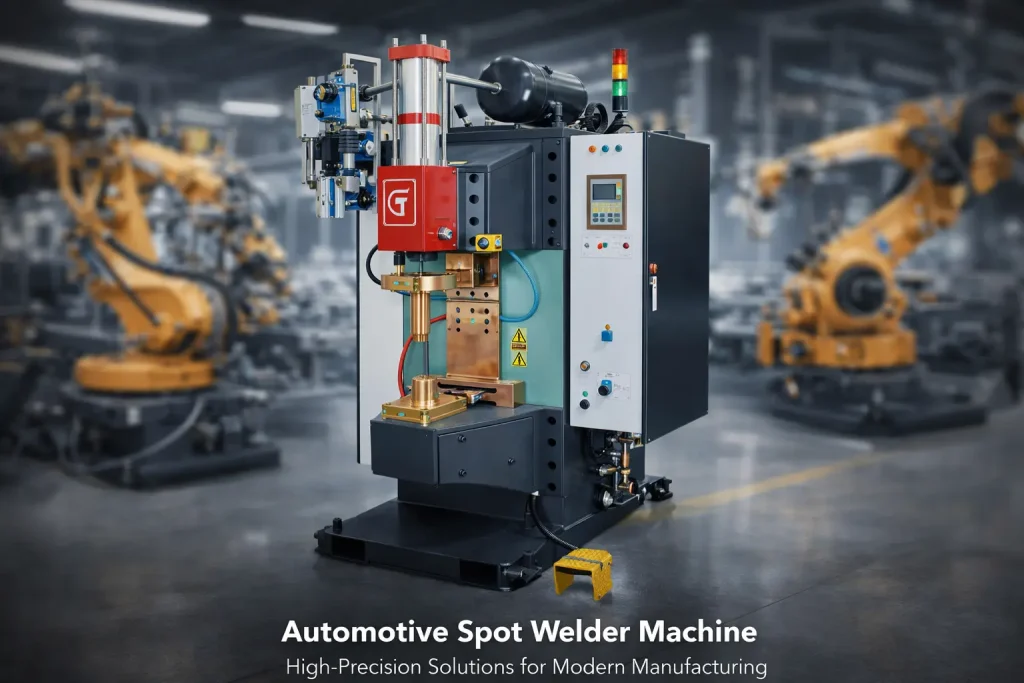
A typical automotive spot welder consists of:
-
Electrodes or Welding Guns – Conducts current to the metal sheets.
-
Transformer and Power Source – Provides high current over a short duration.
-
Control System – Ensures consistent weld parameters like current, pressure, and timing.
-
Cooling System – Maintains optimal temperature for high-speed operations.

Types of Spot Welding Machines
-
MFDC Spot Welders – Popular in automotive production for energy-efficient, precise welds.
-
Capacitor Discharge (CD) Welders – Used for thinner metals and delicate components.
-
Robotic Spot Welders – Automated systems integrated into production lines for high-volume assembly.
Heron’s range of spot welding solutions includes machines optimized for sheet metal thickness and automotive production line requirements.
How Spot Welding Works in Automotive Production
Spot welding operates by passing a high electric current through the metals to be joined while applying pressure using electrodes. The heat generated by the electrical resistance melts the metal locally, forming a fusion weld at a precise point.
Step-by-Step Process
-
Clamping – The metal sheets are positioned between electrodes.
-
Current Application – A controlled electrical current passes through the electrodes.
-
Heat Generation – The resistance of the metal produces heat, forming the weld nugget.
-
Cooling and Release – The weld solidifies under pressure, and the electrodes release the sheet.
Welding Parameters
Key parameters affecting weld quality include:
-
Welding current (Amps)
-
Weld time (milliseconds)
-
Electrode force (Newtons)
-
Sheet thickness and material composition
Advanced spot welders, like those used in automotive lines, often monitor these parameters in real-time to ensure uniform welds across every component.
Applications of Spot Welding in Automotive Manufacturing
Spot welding is integral to automotive assembly, providing strong, reliable joins for various components.
Car Body Panels and Chassis
Spot welding is used extensively to join body panels, roof frames, and chassis components. The precise welds maintain structural rigidity while allowing flexibility for crash safety design.
Door Assemblies, Hoods, and Trunks
Automated spot welders ensure consistent weld points in high-volume assemblies, such as doors and hoods. Precision is critical to avoid gaps, misalignment, or weak joints.
Battery Pack Assembly for Electric Vehicles
The rise of EVs has increased demand for high-precision spot welds on battery cells and frames. MFDC spot welders can handle thin sheets without damaging sensitive materials.
Other Critical Auto Components
From suspension parts to motor housings, spot welding provides a fast, reliable method for joining metal components under high-volume manufacturing conditions.
Key Features of High-Precision Automotive Spot Welders
High-performance spot welders offer features that meet the demanding requirements of modern automotive production.
Automated Welding Arms & Robotic Integration
Robotic spot welding arms can operate with millimeter-level accuracy, increasing production speed and reducing operator fatigue.
Real-Time Quality Monitoring Systems
Advanced welders monitor parameters such as current, voltage, and weld nugget formation, allowing for early detection of defects. This ensures uniformity across thousands of welds.
Energy-Efficient MFDC Technology
MFDC spot welders provide consistent welds with lower energy consumption, an essential factor for sustainable manufacturing.
Safety and Ergonomics
Spot welders include operator safety shields, ergonomic gun designs, and automated handling systems, reducing risk and improving productivity.
Advantages of Using Spot Welding Machines in Automotive Manufacturing
Spot welding offers multiple advantages for car production:
-
Enhanced Production Speed – Short weld cycles allow thousands of welds per hour.
-
Consistent Weld Quality – Uniform parameters reduce errors and rework.
-
Cost Efficiency and Reduced Material Waste – Only small areas are welded, preserving sheet material.
-
Scalability – Machines can integrate with manual, semi-automatic, or fully automated lines.
Case Study: A European automotive plant using MFDC spot welders achieved 30% faster assembly times and reduced weld defects by 25%, demonstrating the value of precision spot welding in high-volume production.
Choosing the Right Spot Welder for Your Automotive Production Line
Selecting the right automotive spot welder machine requires consideration of multiple factors:
-
Material Type & Thickness – MFDC welders are ideal for thin and mixed metals; CD welders suit delicate materials.
-
Production Volume – Robotic welders are cost-effective for high-volume assembly, while manual units suit smaller operations.
-
Automation & Integration – Modern lines often require robotic arms, real-time monitoring, and PLC integration.
-
Customization Options – Electrode types, force control, and welding cycles should match your component specifications.
Heron-Welder offers tailored solutions for both OEM and high-volume manufacturing lines.
Maintenance and Safety Tips for Spot Welding Machines
Proper maintenance ensures consistent performance and long equipment life:
-
Routine Checks – Inspect electrodes, cooling systems, and electrical connections regularly.
-
Preventive Maintenance – Replace worn parts and calibrate welding parameters periodically.
-
Operator Training – Ensure staff are trained in safe operation, emergency protocols, and troubleshooting.
-
Troubleshooting – Monitor weld consistency and adjust current, pressure, or weld time as needed.
Following these practices reduces downtime and ensures reliable, high-quality welds.
Future Trends in Automotive Spot Welding
The automotive industry is evolving rapidly, and spot welding technology is adapting:
-
Robotic and AI-Integrated Welding – AI systems predict weld defects and optimize parameters in real-time.
-
Sustainable and Energy-Efficient Technologies – MFDC and inverter-based systems reduce energy consumption.
-
EV Manufacturing Requirements – Advanced welding machines handle battery packs and lightweight aluminum components.
-
Smart Factory Integration – Spot welders integrate with IoT-enabled production lines for real-time monitoring and predictive maintenance.
These trends highlight the increasing role of automation and precision in automotive manufacturing, reinforcing the importance of investing in high-quality spot welding equipment.
FAQs: Automotive Spot Welder Machine
1. What is an automotive spot welder machine used for?
An automotive spot welder machine is used to join two or more metal sheets at precise points, creating strong, consistent welds for car body panels, chassis components, doors, hoods, and other vehicle parts.
2. How does spot welding work in automotive manufacturing?
Spot welding works by passing a high electric current through the metal sheets while applying pressure with electrodes. The heat generated by electrical resistance melts the metal locally, forming a fusion weld at the contact points.
3. What types of spot welding machines are used in the automotive industry?
Common types include MFDC (Medium Frequency Direct Current) spot welders, Capacitor Discharge (CD) welders for thin metals, and robotic spot welding systems for automated high-volume production lines.
4. What materials can automotive spot welders handle?
They can weld steel, stainless steel, and aluminum sheets commonly used in car manufacturing. Advanced MFDC machines can also join mixed metals without compromising weld quality.
5. What are the key parameters for a successful weld?
Important parameters include welding current (Amps), electrode pressure, weld time, and sheet thickness. Modern machines monitor these in real-time to ensure consistent quality.
6. Can spot welding machines be used for electric vehicle (EV) components?
Yes, high-precision MFDC and CD spot welders are suitable for EV battery packs, thin aluminum sheets, and other delicate components, providing reliable and consistent welds.
7. How do robotic spot welders improve automotive production?
Robotic systems increase speed, reduce human error, maintain precise weld positions, and allow for continuous high-volume production without fatigue or inconsistency.
8. What maintenance is required for spot welding machines?
Regular inspection of electrodes, electrical connections, and cooling systems is essential. Preventive maintenance, including calibration and component replacement, ensures consistent performance.
9. How does spot welding benefit automotive manufacturers?
Spot welding improves production efficiency, ensures uniform weld quality, reduces material waste, and supports scalable manufacturing operations for both conventional and electric vehicles.
10. What factors should be considered when selecting a spot welder machine?
Consider material type and thickness, production volume, automation requirements, customization options, energy efficiency, and integration with existing assembly lines to choose the right machine.
Conclusion
Automotive spot welder machines are critical for modern manufacturing, enabling faster production, higher quality, and energy-efficient operations. By using precision welders, manufacturers can join metal components reliably, support EV production, and reduce defects and material waste.
For automotive production lines, selecting the right machine considering factors like material, automation, and production volume ensures long-term efficiency and consistency. Companies leveraging MFDC and robotic spot welders are setting the standard for precision and speed in modern vehicle manufacturing.
Heron-Welder provides high-precision automotive spot welder machine solutions for manufacturers looking to improve efficiency, quality, and production consistency. Explore their product range and consult with experts to select the right machine for your assembly line.