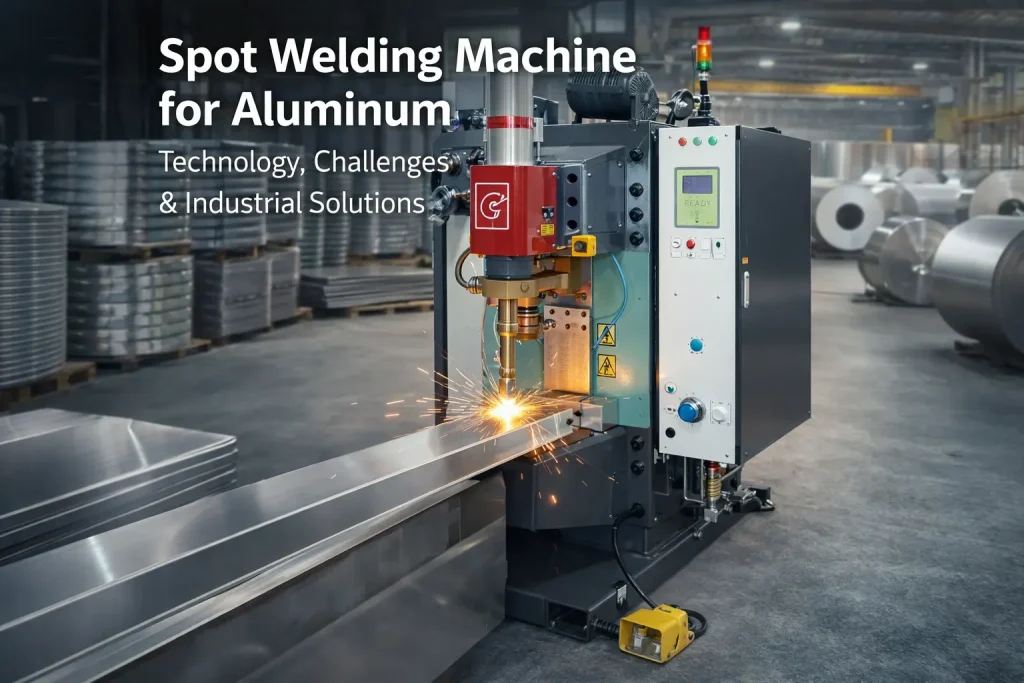
Spot welding machine for aluminum is a critical production tool for manufacturers working with lightweight structures, battery enclosures, automotive body parts, and electrical housings. Unlike steel welding, aluminum resistance spot welding requires much higher current, faster response control, and stable electrode force to achieve consistent weld nuggets.
The presence of an aluminum oxide layer, high thermal conductivity, and rapid electrode wear make process control and equipment selection especially important for modern factories. Today, most industrial users rely on MFDC or inverter resistance welding technology, combined with intelligent welding controllers and real-time welding quality monitoring, to ensure stable production and traceable results.
From automated aluminum welding lines to robotic spot welding cells, manufacturers now treat aluminum spot welding as a complete system that integrates power electronics, motion control, data collection, and process optimization.
Selecting the right aluminum spot welding equipment directly affects product reliability, production efficiency, and long-term operating cost in high-volume manufacturing environments.
Spot Welding Machine for Aluminum: Technology, Challenges and Industrial Solutions
Aluminum is now a core structural material in automotive, battery systems, appliances, and electrical products. Lightweight design targets, energy efficiency requirements, and corrosion resistance all push manufacturers to replace steel with aluminum alloys.
However, aluminum is one of the most demanding materials for resistance spot welding. Selecting the right spot welding machine for aluminum is no longer a simple equipment choice. It is a production-level decision that affects weld quality, electrode life, line stability, and long-term operating cost.
This guide explains in practical and engineering terms how aluminum spot welding works, what technical challenges exist, and how modern industrial solutions are implemented in real manufacturing environments.
1. What Is a Spot Welding Machine for Aluminum and How It Works in Industrial Production
A spot welding machine for aluminum is a resistance welding system designed to join aluminum sheets or aluminum alloy components by passing a high electric current through the contact point while applying controlled electrode force.
In aluminum resistance spot welding, heat is generated at the interface by electrical resistance. The material locally melts and forms a solid weld nugget after cooling.
In industrial production, an aluminum spot welding system normally includes:
-
a power source (inverter or MFDC type)
-
a welding controller
-
servo or pneumatic force system
-
water-cooled electrodes
-
quality monitoring modules
-
mechanical frames, welding guns, or robotic arms
Compared with steel welding, aluminum requires:
-
much higher peak current
-
faster current rise
-
tighter control of force and time
-
more frequent electrode maintenance
This is why conventional low-frequency AC equipment is rarely suitable for stable aluminum welding in modern production lines.
2. Can a Standard Spot Welding Machine Weld Aluminum Sheets and Aluminum Alloys?
In theory, any resistance spot welder capable of delivering sufficient current can create a weld on aluminum.
In practice, standard spot welding machines designed for steel production are not suitable for aluminum sheets and aluminum alloys.
The main limitations are:
-
insufficient current output capability
-
slow current response
-
limited dynamic force control
-
no real-time welding quality monitoring
Industrial aluminum production typically requires:
-
aluminum resistance spot welding machines with MFDC or inverter power supplies
-
fast closed-loop welding controllers
-
stable force systems
For manufacturers producing automotive structures, battery housings, or electrical enclosures, upgrading to dedicated aluminum welding equipment is a technical necessity rather than a performance improvement.
3. Why Aluminum Resistance Spot Welding Is More Challenging Than Steel Welding
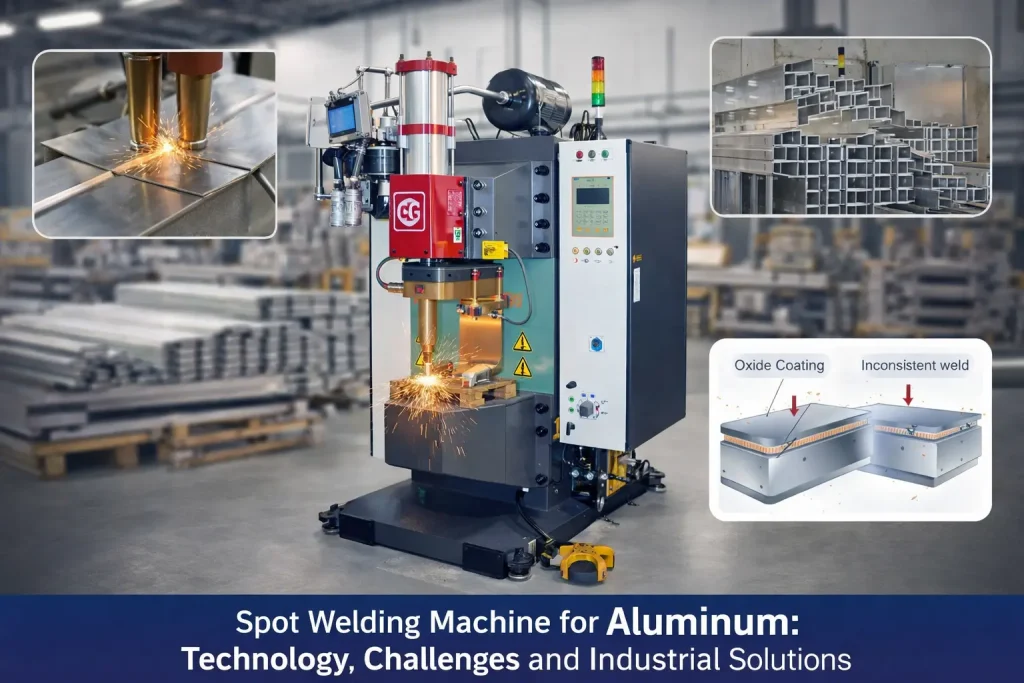
3.1 Aluminum Oxide Layer and Its Effect on Spot Welding Quality
Aluminum surfaces are naturally covered by a dense oxide layer. This oxide:
-
has a much higher melting temperature than the base aluminum
-
introduces unstable contact resistance
During spot welding, the oxide layer can:
-
block current flow at the beginning of the weld
-
create unstable heating
-
lead to inconsistent nugget formation
Without proper surface preparation and controlled force profiles, weld results vary significantly.
3.2 High Electrical Conductivity and Heat Input Control in Aluminum Welding
Aluminum has roughly three times higher electrical conductivity than low-carbon steel.
This means:
-
current spreads rapidly
-
heat generation is less concentrated at the interface
-
much higher current levels are required to reach fusion temperature
As a result, aluminum welding systems must control:
-
current amplitude
-
rise time
-
pulse shaping
Very precisely. Even small variations can change nugget diameter and penetration.
3.3 Electrode Wear and Nugget Consistency in Aluminum Spot Welding
Aluminum alloys soften easily at elevated temperature and tend to adhere to copper electrodes.
Typical problems include:
-
rapid electrode tip growth
-
aluminum pickup on electrode faces
-
unstable current paths
Without controlled electrode force and frequent tip dressing, nugget size becomes unstable and production consistency decreases.
4. Best Technology for a Spot Welding Machine for Aluminum
4.1 MFDC Spot Welding Machine for Aluminum vs Conventional AC Spot Welding
Medium Frequency DC (MFDC) systems operate at around 1,000 Hz and provide:
-
faster current control
-
smaller transformers
-
higher electrical efficiency
-
smoother output waveform
For aluminum applications, MFDC spot welding machines offer:
-
faster response to contact changes
-
better control during short welding times
-
improved repeatability across high-volume production
Conventional AC systems, operating at 50/60 Hz, struggle to deliver the rapid control required for aluminum resistance spot welding.
4.2 Inverter Resistance Welding Technology for Aluminum Applications
Inverter resistance welding systems use high-frequency switching to regulate output current.
Advantages for aluminum spot welding include:
-
precise digital current regulation
-
programmable multi-pulse welding sequences
-
integration with production data systems
In practice, inverter-based aluminum welding equipment is often selected for:
-
mixed material production lines
-
complex component geometries
-
flexible manufacturing cells
4.3 Welding Process Control and Intelligent Welding Controller for Aluminum
An intelligent welding controller is essential for aluminum.
It manages:
-
current feedback loops
-
force timing
-
squeeze and hold profiles
-
multi-pulse sequences
Advanced controllers support:
-
constant current mode
-
constant energy mode
-
adaptive compensation for surface variation
These functions are critical for maintaining aluminum welding nugget consistency when sheet surface conditions change.
5. Key Process Parameters for Aluminum Resistance Spot Welding Machines
5.1 Welding Current, Force and Time Control for Aluminum Spot Welding
Typical aluminum spot welding parameters show:
-
higher peak current
-
shorter welding time
-
higher initial electrode force
For example, in an automotive aluminum sheet stack (1.2 mm + 1.2 mm):
-
welding current may exceed 35–45 kA
-
welding time can be below 120 ms
-
electrode force must be precisely synchronized with current application
Dynamic force control improves surface contact and reduces spatter risk.
5.2 Surface Preparation Requirements for Aluminum Sheet Metal Welding
Stable aluminum welding often requires:
-
degreasing to remove oils
-
brushing or light abrasion to reduce oxide thickness
-
consistent storage conditions to avoid rapid re-oxidation
In high-volume lines, automated cleaning stations are sometimes integrated upstream of the welding cell.
5.3 Aluminum Welding Heat Input and Nugget Quality Control
Because aluminum conducts heat quickly, heat input must be:
-
sufficient to form the nugget
-
but limited to avoid excessive indentation and surface damage
Welding quality monitoring systems measure:
-
dynamic resistance
-
current curves
-
voltage signals
These signals allow early detection of abnormal welds and unstable electrode conditions.
6. How to Choose the Right Spot Welding Machine for Aluminum Production
6.1 Selecting Aluminum Spot Welding Equipment Based on Material Thickness and Part Design
Key selection factors include:
-
aluminum alloy type (5xxx, 6xxx, etc.)
-
total sheet stack thickness
-
presence of coatings or adhesives
-
accessibility of welding points
Thicker stacks and structural parts usually require:
-
higher power MFDC systems
-
rigid frames
-
water-cooled welding guns
6.2 Manual vs Automatic Aluminum Spot Welding Machine Selection
Manual aluminum spot welding machines are suitable for:
-
low-volume assembly
-
maintenance and repair
-
prototype workshops
Automatic aluminum spot welding machines are preferred for:
-
continuous production
-
stable takt time
-
traceable quality control
For most industrial users, the long-term production cost favors automated systems.
6.3 Robotic Spot Welding for Aluminum in High-Volume Manufacturing
Robotic spot welding for aluminum is widely used in:
-
automotive body structures
-
battery enclosure assembly
-
lightweight frame manufacturing
Robotic welding provides:
-
repeatable positioning accuracy
-
programmable force and approach paths
-
integration with in-line inspection stations
7. Automated Aluminum Welding Line and Integration Solutions
7.1 Aluminum Welding Automation System and Production Line Layout
An aluminum welding automation system normally includes:
-
multiple robotic welding stations
-
automatic part loading and unloading
-
centralized power and cooling units
-
integrated safety and monitoring networks
Line layout is driven by:
-
part flow
-
welding point distribution
-
takt time targets
7.2 Aluminum Welding Workstation and Robotic Welding Cell Configuration
Each aluminum welding workstation is designed around:
-
part fixturing accuracy
-
electrode access angles
-
robot reach envelopes
-
serviceability for electrode maintenance
Good cell design reduces:
-
robot idle time
-
collision risk
-
electrode replacement downtime
7.3 Customized Aluminum Welding Integration Line for Smart Manufacturing
Modern aluminum welding integration lines connect:
-
welding controllers
-
PLC systems
-
manufacturing execution systems
Production data such as:
-
weld current curves
-
force profiles
-
quality flags
are uploaded for process analysis and continuous improvement.
8. Welding Quality Monitoring and Process Stability for Aluminum Spot Welding
8.1 Welding Quality Monitoring System for Aluminum Resistance Spot Welding
A welding quality monitoring system evaluates:
-
dynamic resistance patterns
-
current stability
-
electrode contact behavior
This allows detection of:
-
surface contamination
-
misalignment
-
electrode degradation
before defective assemblies leave the line.
8.2 Real-Time Aluminum Welding Process Control and Data Collection
Real-time data acquisition supports:
-
closed-loop correction
-
adaptive parameter adjustment
-
predictive maintenance planning
In automated aluminum welding lines, data collection is now standard practice.
8.3 Improving Aluminum Welding Consistency and Electrode Life
By combining:
-
stable force control
-
controlled multi-pulse welding
-
electrode tip dressing strategies
manufacturers can extend electrode life and reduce production stoppages caused by unstable weld quality.
9. Typical Industrial Applications of Spot Welding Machines for Aluminum
9.1 Aluminum Spot Welding for Automotive Parts and Body Structures
Aluminum spot welding is widely used for:
-
doors and closures
-
cross members
-
reinforcement brackets
-
lightweight frame assemblies
The main objective is:
-
weight reduction without compromising structural integrity
9.2 Aluminum Welding for Battery Housing and Energy Storage Enclosures
Battery housing assemblies require:
-
low distortion
-
high joint consistency
-
traceable quality records
Aluminum spot welding equipment is commonly used to join:
-
thin aluminum panels
-
internal support brackets
-
shielding structures
9.3 Aluminum Spot Welding for Home Appliance and Electrical Enclosure Manufacturing
In appliance and enclosure production, aluminum welding is used for:
-
compressor housings
-
control cabinets
-
structural supports
Manufacturers focus on:
-
stable appearance
-
minimal surface indentation
-
repeatable cycle time
10. Industrial Aluminum Spot Welding Solutions for Manufacturers
10.1 Customized Spot Welding Machine for Aluminum Alloys
Because aluminum alloys vary significantly in:
-
hardness
-
surface condition
-
thermal behavior
standard machine configurations often require customization.
Customization typically includes:
-
transformer sizing
-
controller configuration
-
electrode geometry optimization
10.2 Aluminum Welding Automation Solutions for Production Lines
Complete aluminum welding automation solutions usually combine:
-
welding machines
-
robots
-
fixtures
-
quality monitoring systems
The goal is to deliver:
-
stable throughput
-
consistent weld quality
-
integrated traceability
10.3 Technical Support and System Upgrading for Aluminum Welding Equipment
Aluminum welding equipment must be maintained through:
-
regular electrode inspection
-
cooling system management
-
controller firmware updates
System upgrading allows older lines to adopt:
-
advanced monitoring functions
-
data connectivity
-
adaptive control features
11. How HERON Intelligent Equipment Provides Industrial Spot Welding Machine Solutions for Aluminum Production
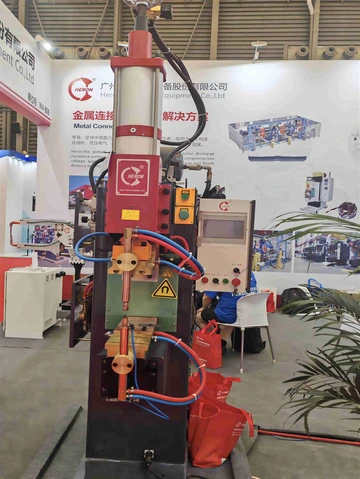
HERON focuses on industrial joining equipment and automated production systems designed for demanding aluminum resistance spot welding environments.
In an existing aluminum battery housing production project, a manufacturer replaced conventional AC welding stations with MFDC aluminum spot welding machines and integrated welding quality monitoring modules. After system commissioning:
-
welding current stability improved significantly
-
electrode maintenance intervals increased
-
rework caused by inconsistent nugget formation was reduced
The project also implemented real-time welding data collection for every weld point, enabling production engineers to correlate electrode wear trends with dynamic resistance curves.
HERON’s aluminum spot welding solutions are typically delivered as:
-
customized spot welding machines for aluminum alloys
-
robotic welding guns for aluminum applications
-
complete aluminum welding automation lines
-
integrated quality monitoring and process control systems
For manufacturers planning new aluminum production programs, the ability to combine welding equipment, automation, and process engineering into a unified solution shortens commissioning time and reduces long-term operational risk.
Final Thoughts
A spot welding machine for aluminum is no longer a simple power source selection. It is a complete process system that combines advanced power electronics, intelligent control, mechanical design, and data-driven quality management.
By selecting MFDC or inverter resistance welding technology, integrating welding quality monitoring, and designing automation systems around real production constraints, manufacturers can achieve stable aluminum resistance spot welding at industrial scale.
For companies facing growing aluminum usage in automotive, battery, and lightweight manufacturing, investing in the right aluminum spot welding equipment and integration strategy directly supports production reliability, quality consistency, and long-term competitiveness.