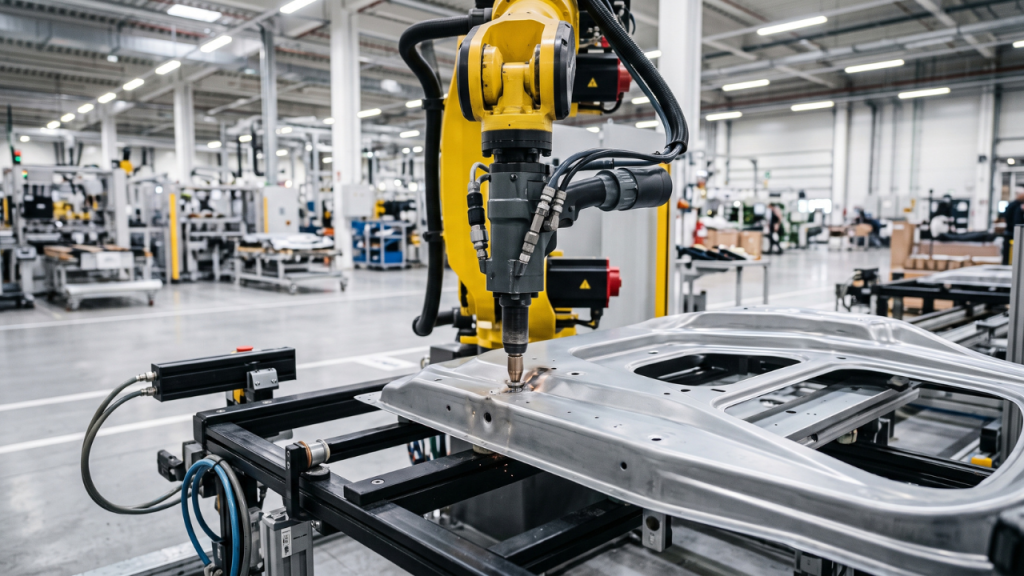
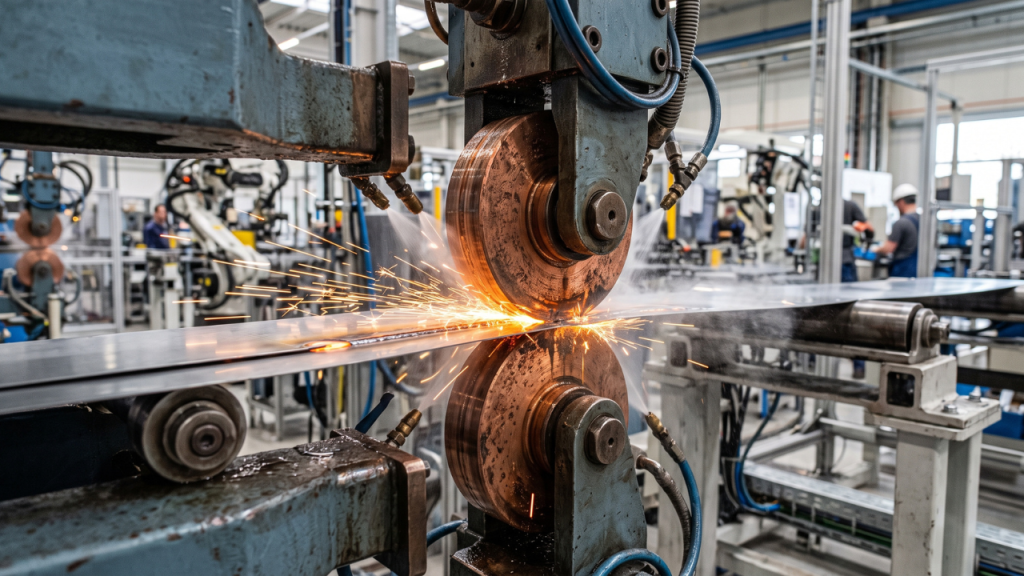
Automotive body-in-white and metal fabrication lines run on repeatability. A weld cell that drifts even slightly out of spec doesn’t just produce one bad part, it produces a shift’s worth of rework and, eventually, a line stoppage while engineering figures out why. That’s the real reason the choice of welding robot supplier matters more than the robot brand printed on the arm. The controller, the gun, the transformer, and the integration all have to work as one system, day after day, without babysitting.
This article is written for plant managers, process engineers, and procurement teams who are past the “should we automate” question and are now comparing actual vendors. We’ll walk through what a serious welding robot supplier should be able to show you, what Heron’s robotic welding cells are actually built from, and what to check before signing off on a robotic welding supplier in China specifically, since sourcing overseas raises its own set of legitimate questions.
Why an Inconsistent Weld Cell Costs More Than the Robot Itself
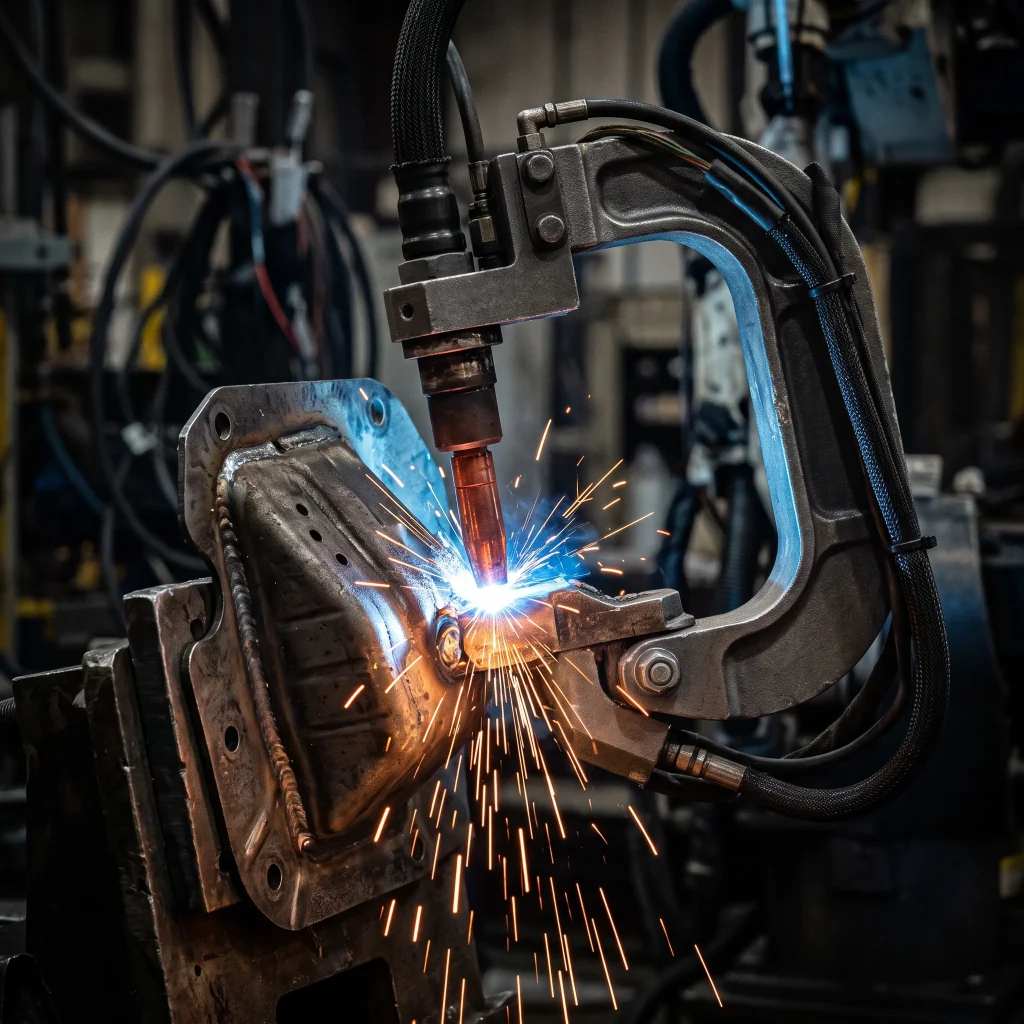
Most automotive and appliance manufacturers don’t lose money on the robot. They lose it on the weld quality drifting between shifts, on electrode wear nobody tracked, or on a controller that can’t talk to the plant’s MES system without a custom integration. A welding robot supplier that only sells the robot arm and leaves the transformer, gun, and controller matching up to the buyer is passing that risk straight to your line.
The fix isn’t a bigger robot. It’s a cell where the transformer capacity, the gun geometry, and the control logic were engineered together for the joint you’re actually making, whether that’s spot welding on a car body, projection welding on a bracket, or seam welding on a fuel tank. That’s the standard procurement teams should be holding every welding robot supplier to, not just the ones with the biggest catalog.
What Separates a Capable Welding Robot Supplier From a Catalog Reseller
There’s a real difference between a company that assembles third-party robot arms with generic guns and one that manufactures the core welding technology in-house. Heron falls in the second category. The company builds its own MFDC and AC resistance welding transformers, its own C-type and X-type robotic welding guns, and its own servo controllers, then integrates all three into a single robotic welding cell rather than bolting together parts from different vendors.
That matters for two practical reasons. First, when something needs adjusting mid-project, one engineering team owns the whole weld process instead of three suppliers pointing at each other. Second, the components are already proven to work together, since Heron tests them as a system before they ship, not after installation on your floor. Heron holds ISO9001, CCC, and CE certifications and runs quality control through IQC, PQC, and OQC inspection stages, with in-house testing equipment capable of 0.009mm detection accuracy. Any robotic welding supplier China can claim quality control. Fewer can show the inspection process behind it.
Inside Heron’s Robotic Welding Cells: S, M, and L Series
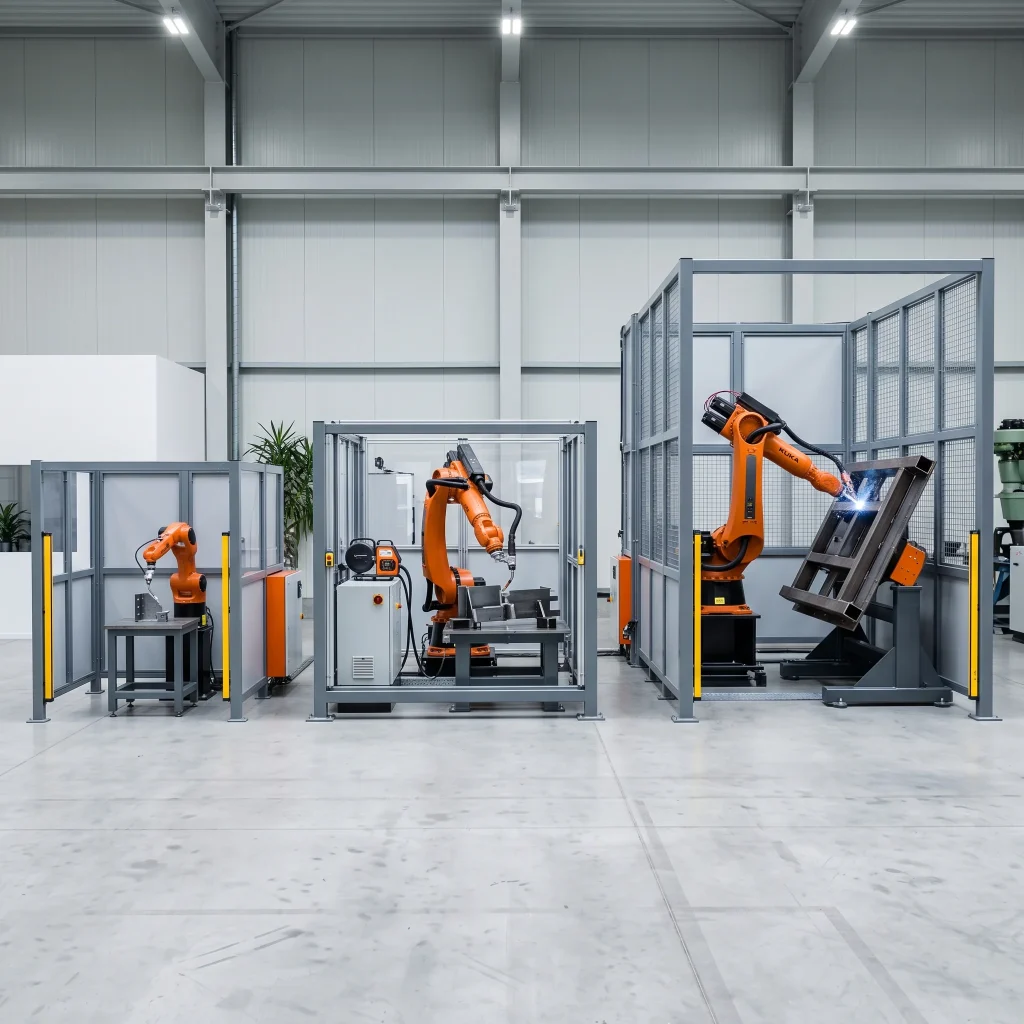
Heron’s robotic welding cell lineup is organized by scale rather than a one-size-fits-all robot, which matters once you’re sizing a cell against actual takt time and part geometry:
- S Series — sized for smaller components and lower-volume runs, where floor space and setup speed matter more than raw throughput.
- M Series — the middle ground most general fabrication and appliance lines land on, balancing cycle time against footprint.
- L Series — built for heavier parts and higher-force applications, the tier most automotive body and structural welding projects fall into.
Every cell integrates Heron’s own robotic welding guns and MFDC or AC transformers, with servo controllers supporting up to 960 groups of stored welding parameters, adaptive power mode control, automatic re-welding on a missed weld, and communication over Profinet, EtherNet/IP, DeviceNet, and Modbus TCP/IP so the cell can report into your existing MES without a workaround. Assembly happens across three dedicated workshops that turn out 40 robotic welding guns and 40 controllers a day, which is the kind of throughput that lets a welding robot supplier actually hold a delivery date instead of quoting one optimistically.
Vetting a Robotic Welding Supplier in China Before You Commit
Sourcing a robotic welding supplier in China is routine for automotive and appliance manufacturers now, but it still deserves a real checklist, not just a factory photo on a website. Ask for the certifications directly (ISO9001, CE, CCC, whichever applies to your import market), ask how quality is inspected at each stage of production rather than just at final packing, and ask for reference customers in your own industry rather than a generic client logo wall.
Heron has served over 6,000 customers across more than 20 countries, including 35-plus Fortune 500 companies, out of its Guangzhou facility. That track record is worth checking against your own criteria: does the supplier manufacture the core welding components themselves, or resell them? Can they show you the assembly and testing process, not just a finished product photo? A robotic welding supplier in China that answers those questions with specifics, not marketing language, is the one worth taking to a formal quote.
From RFQ to Commissioning: How Heron Supports Automotive Buyers
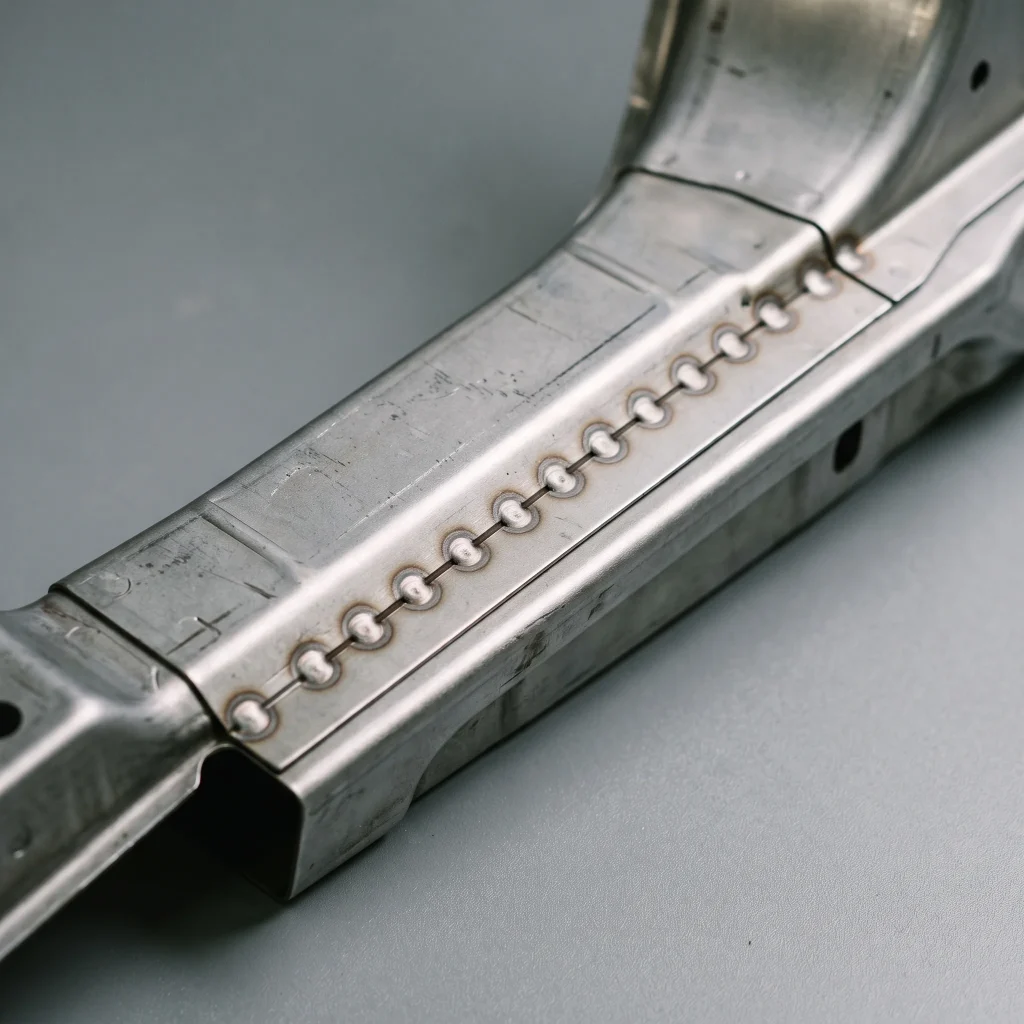
Heron’s process starts with understanding the actual joint, the part geometry, the cycle time target, and the production volume, since that’s what determines whether an S, M, or L Series cell fits. From there the team can support CAD simulation early in the project so engineering can validate the weld approach before any hardware is built. Every welding robot supplier should be willing to do this kind of pre-project validation; it’s a fair test of whether they understand your application or are just moving inventory.
If you’re evaluating vendors for an automotive line, an appliance line, or general metal fabrication, this is the point to bring in real part drawings and cycle time targets rather than a generic spec sheet. Heron’s team can walk through cell configuration, transformer sizing, and controller integration against those specifics directly.
FAQ
Q1. What’s the difference between a welding robot supplier and a robot manufacturer?
A robot manufacturer typically builds the arm itself, like the major industrial robot brands. A welding robot supplier packages the arm with the welding-specific components, transformer, gun, and controller, and integrates them into a working cell. Heron manufactures its own transformers, guns, and controllers rather than reselling third-party parts.
Q2. Can a robotic welding cell integrate with our existing MES system?
Heron’s servo controllers support Profinet, EtherNet/IP, DeviceNet, CC-Link, ProfiBus, and Modbus TCP/IP, with an Ethernet interface built for MES read/write, so integration is typically a configuration task rather than custom development.
Q3. Which industries is Heron’s robotic welding cell built for?
Automotive body and parts welding, home appliances, compressors, electrical and electronics, motors, and general hardware fabrication.
Q4. How does Heron control weld quality across production runs?
Through ISO9001, CCC, and CE-certified processes, IQC/PQC/OQC inspection at each production stage, and in-house testing equipment with detection accuracy down to 0.009mm.
Q5. Do you support custom robotic welding cell configurations for non-standard parts?
Yes. Heron offers CAD simulation during the early project stage to validate weld approach and cell configuration against your specific part geometry before manufacturing begins.