If you’re joining sheet metal and looking for a way to skip the heat, the rivets, and the extra consumable costs that come with them, clinching tools are worth a closer look. Rather than melting metal together or driving a separate fastener through it, clinching tool form a mechanical interlock directly from the sheet metal itself — no rivets, no welding spatter, no heat-affected zone to manage.
This guide walks through what clinching tools actually do, how sheet metal clinching compares to welding and riveting, and what matters most when you’re choosing equipment for your own production line.
What Are Clinching Tools, and Why Manufacturers Are Switching to Them
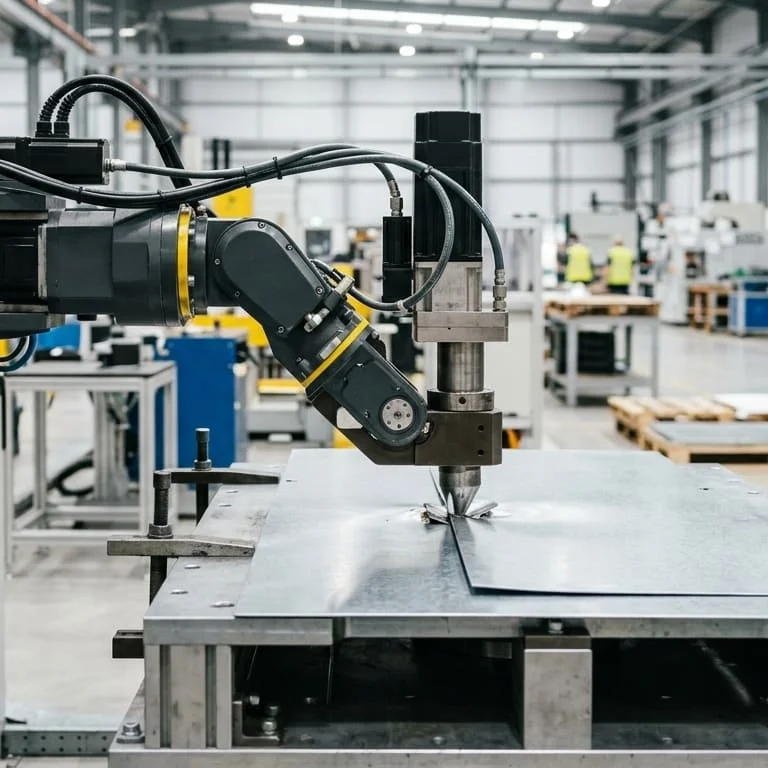
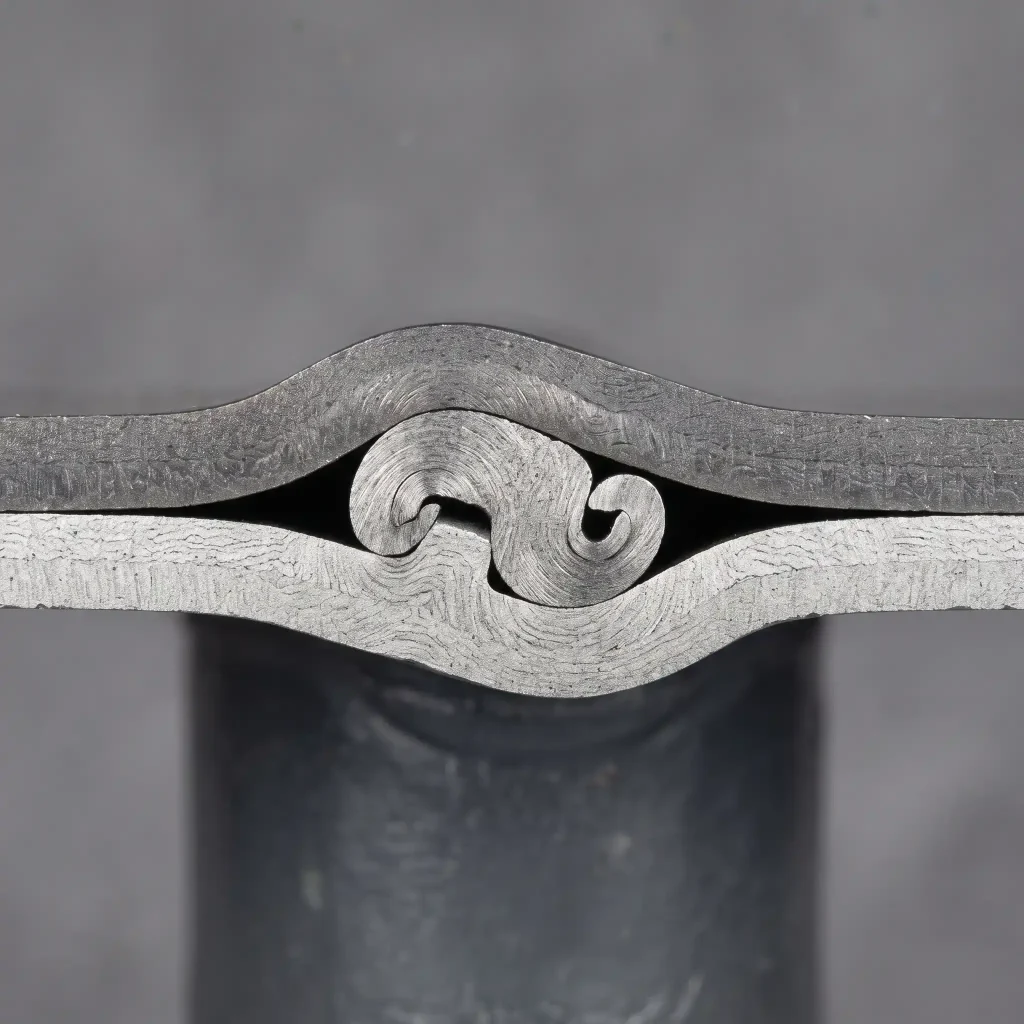
Clinching tool presses two or more layers of sheet metal together using a punch and die, deforming the material into an interlocking joint without completely breaking through the surface or adding a separate fastener. Because there’s no rivet, no weld, and no heat involved, clinching metal this way avoids several common headaches: no consumable rivet costs, no thermal distortion, and no coating damage on painted or galvanized panels.
That combination is a big part of why manufacturers across automotive, appliance, and general sheet-metal fabrication have been shifting toward clinching tool for applications where a strong mechanical joint matters more than a fused one.
How Sheet Metal Clinching Compares to Welding and Riveting
Each joining method has a place, and it’s worth being honest about where each one wins.
Welding creates a strong, continuous bond, but it introduces heat that can distort thin sheet metal, damage coatings, and struggle with dissimilar materials like aluminum and steel. Riveting avoids the heat problem but adds a separate fastener to every joint, along with the cost and inventory that comes with it.
Sheet metal clinching sits in a different spot entirely: it’s a cold-forming process, so there’s no thermal distortion or coating damage, and because the joint is formed from the material itself, there’s no rivet to source, store, or replace. The trade-off is that clinched joints generally aren’t rated for the same load as a full weld, which is why clinching devices tend to shine on non-structural or moderately loaded joints rather than primary structural connections.
What to Look for When Choosing Clinching Tools
Not every clinching setup is built the same way, and a few factors make a real difference in performance.
Tonnage and Force Range
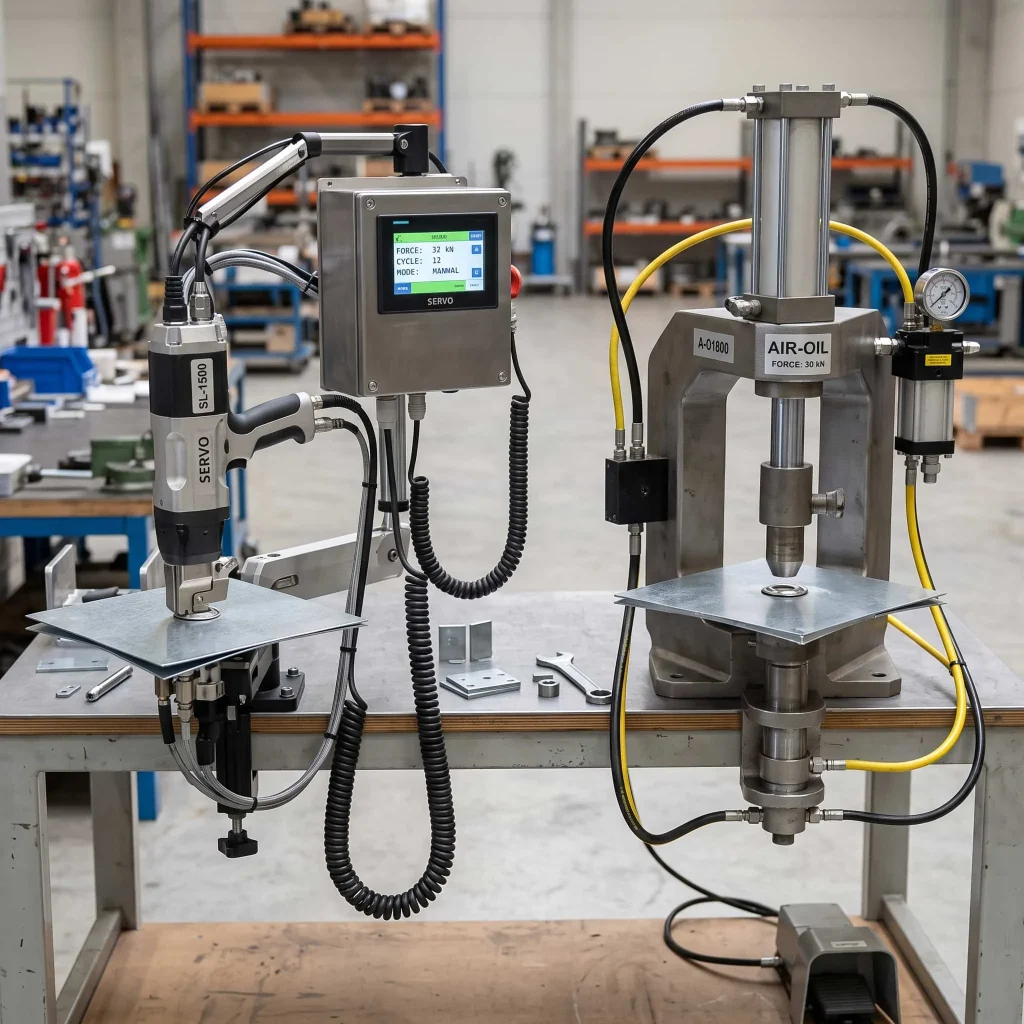
Clinching tools are typically specified by tonnage — the force applied to form the joint. Thicker or higher-strength sheet metal needs more tonnage to form a clean, consistent joint, so matching tonnage to your actual material range matters more than defaulting to a mid-range unit and hoping it works across every job.
Servo Gun vs. Air-Oil Units
Clinching tools generally come in two main drive types: servo-driven guns, which offer precise, programmable force control, and air-oil units, which are simpler and often more cost-effective for straightforward, repetitive applications. Servo guns tend to suit lines that need tighter process control or handle varying material combinations, while air-oil units remain a practical choice for consistent, high-volume single-material work.
Tooling Flexibility for Clinching Metal
The punch and die set determines the actual joint geometry, and different material thicknesses or combinations often call for different tooling. Look for a supplier that offers a genuine range of punch and die options rather than a single fixed tool set, especially if your production mix includes more than one material thickness or type.
Where Clinching Tools Fit Best
Clinching tool particularly well suited to applications involving coated or painted sheet metal, where welding would damage the finish, and to dissimilar or lightweight material combinations where a rivet’s added weight or cost isn’t ideal. Home appliance panels, automotive brackets and non-structural body components, and general sheet-metal fabrication are all common territory for clinching metal rather than welding or riveting it.
That said, clinching sheet metal assembly tools aren’t a universal replacement for welding or riveting. For primary structural joints carrying significant load, a fused or riveted connection is often still the more appropriate choice — which is exactly why many production lines end up using clinching tools alongside welding and riveting equipment, rather than instead of it.
How Heron-Welder Supports Your Clinching Metal Projects
This is exactly the kind of decision Heron-Welder partners with manufacturers on every day. Our clinching tools range includes both servo-driven clinching guns and air-oil units, backed by a genuine selection of tooling designed to match your specific sheet metal clinching application rather than forcing a one-size-fits-all setup onto your line.
We work directly with each customer to specify a clinching tools setup that fits your material mix, production volume, and budget — because the right equipment for high-volume appliance panel work looks different from the right equipment for lower-volume automotive bracket assembly, and treating them the same rarely gets the best result.
If you’re weighing clinching tools against welding or riveting for a specific application, or you’re not yet sure which drive type or tooling setup fits your material range, that’s exactly the conversation worth having before you commit to equipment. Talk to a Heron clinching specialist about your production line, and get a recommendation built around what you’re actually joining.
FAQ: Clinching Tools for Sheet Metal
Q1. Is a clinching tool strong enough for structural joints?
Generally, clinched joints are best suited to non-structural or moderately loaded connections rather than primary structural joints, where welding or riveting typically remains the stronger choice.
Q2. Can a clinching tool join dissimilar metals like aluminum and steel?
Yes, this is one of the areas where sheet metal clinching performs particularly well, since the cold-forming process avoids the thermal issues that make welding dissimilar metals difficult.
Q3. Do clinching tools damage coated or painted sheet metal?
No. Because clinching metal is a cold-forming process with no heat involved, it doesn’t damage paint, galvanizing, or other surface coatings the way welding can.
Q4. What’s the difference between a servo clinching gun and an air-oil unit?
Servo guns offer precise, programmable force control, which suits lines with varying materials or tighter process requirements. Air-oil units are simpler and often more cost-effective for consistent, high-volume single-material applications.
Q5. How do I know what tonnage I need for my clinching tool?
Tonnage requirements depend on your material thickness and strength — thicker or higher-strength sheet metal generally needs more force to form a clean, consistent joint, so it’s worth confirming your specific material range with a supplier rather than guessing.
Final Thoughts: Choose the Right Clinching Tools for Your Line
Clinching tools offer a genuinely different approach to sheet metal joining — no heat, no rivets, and no coating damage — but getting the benefit depends on matching the right tonnage, drive type, and tooling to your actual application. Choosing well from the start saves rework and inconsistent joints down the line.
Heron-Welder partners with manufacturers to specify clinching tools built around real production needs, not generic specs. Talk to a Heron clinching specialist today and find the right setup for your sheet metal clinching application.