Copper braided wire welding is widely used in electrical connections, transformers, flexible conductors, and high-frequency systems. Its exceptional flexibility, efficient heat dissipation, and excellent high-frequency conductivity make it has become a preferred solution for flexible conductive connections.
However, welding copper braided wire remains a well-known challenge in manufacturing. Defects such as cold joints, porosity, burn-through, and excessive indentations frequently occur, negatively impacting electrical conductivity, mechanical integrity, and long-term reliability.
This article provides a structured overview of copper braided wire welding, covering material characteristics, welding methods, and key process optimization strategies to help engineers and manufacturers achieve stable and repeatable results.
I. Copper Braided Wire Welding Challenges: Material Characteristics Explained
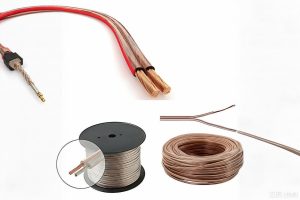
Unlike solid conductors, copper braided wire consists of interwoven ultra-fine copper strands (typically 0.05–0.20 mm) forming a flat, flexible structure. While this design provides unique advantages, it also introduces complexity in the copper braided wire welding process.
Mechanically, copper braided wire provides flexibility and heat dissipation, but has low tensile strength. During welding, thermal and mechanical loads can cause deformation or fracture.
Electrically, its resistivity is typically ≤0.022 Ω·mm²/m (≤0.0234 for tin-plated types), offering conductors of the same cross-section, making it particularly suitable for high-frequency applications.
These characteristics lead to several key welding challenges:
1. High Thermal and Electrical Conductivity
Copper’s high thermal conductivity (~401 W/m·K) causes rapid heat dissipation. Heat is quickly conducted away from the weld zone, making it difficult to establish and maintain a stable weld nugget, making it difficult to reach the welding temperature. This is one of the primary causes of weak or inconsistent welds.
2. Non-Uniform Heat Distribution
The internal gaps within the braid disrupt current flow and heat transfer, leading to localized overheating in some areas and insufficient fusion in others, increasing the risk of porosity and incomplete fusion.
3. Surface Oxidation
Copper readily forms an oxide layer even at room temperature. This oxide film increases contact resistance, hindering current flow and directly reducing weld quality and joint strength.
4. Dissimilar materials joining challenges
When welding braided wire to copper plates or busbars, differences in thickness, structure, and thermal mass make heat balance difficult to control, often leads to burn-through on one side and incomplete fusion on the other.
II. Copper Braided Wire Welding Methods: Choosing the Right Process
Selecting the appropriate copper braided wire welding method is critical for achieving consistent quality. Resistance welding technologies are generally the most effective.
Spot welding: Suitable for localized joints and single-point connections, such as terminals in compact electrical assemblies. It offers high efficiency and easy automation, but electrode force must be carefully controlled to avoid causing localized indentations on the braided structure.
Seam welding: Ideal for continuous joints, such as long connections between braided wire and busbars. Intermittent seam welding is typically preferred, where rotating electrodes apply current in pulses to form a continuous weld, improving strength and conductivity, while preventing overheating and burning of the braided wire.
Resistance brazing: Commonly used in precision electronics. By using silver-copper or copper-based filler metals, it enables bonding without melting the base material. The lower process temperature minimizes deformation, making it suitable for precision and fragile copper braided wire connections.
Capacitor discharge welding: A high-speed process completed within milliseconds. It produces uniform joints with an extremely small heat-affected zone, effectively addressing the challenges of copper braided wire’s rapid heat dissipation and easy overheating. It is particularly suitable for high-precision applications.
III. Copper Braided Wire Welding Parameters: Key Optimization Factors
There are no universal parameter set for copper braided wire welding. However, the following guidelines can significantly improve process stability:
Welding current and time: For small cross-section welding, the recommended current is 500-2000A, and for large cross-section welding, it is 5000-8000A. Welding time is typically controlled within 1-3 seconds. Use the hard specification of short time and high current to reduce the size of the weld nugget and avoid excessive indentation and wire burn-through.
Electrode pressure: To prevent deformation and ensure contact pressure range of 200-500N, it must be equipped with a pressure sensor for real-time monitoring. Excessive pressure may crush the braid, while insufficient pressure leads to poor electrical contact and surface defects. Chromium zirconium copper electrodes (HV120–150) are recommended for durability and conductivity balance.
Temperature control: To prevent overheating and reduce stress, welding temperature is typically controlled within 1100–1200°C, and water-cooled electrodes are essential to dissipate heat and reduce thermal stress cracking.
IV. Copper Braided Wire Welding Equipment: MFDC Systems & Electrode Design
For stable and repeatable results, selecting the right copper braided wire welding machine is essential. MFDC (Medium Frequency DC) inverter welding machines are recommended, offering current control accuracy of ±2%. Systems with integrated temperature control (±5°C), adjustable force (0.1–1.0 MPa), and flexible weld time (0.1–5 s) further enhance process stability. Electrodes should incorporate internal water-cooling system to extend service life and maintain consistent performance.
Conclusion: Improving Copper Braided Wire Welding Quality
In copper braided wire welding applications, achieving stable and repeatable results requires a combination of material understanding, process selection, and precise parameter control. Advanced solutions such as MFDC welding technology enable better control over heat input and current stability, significantly improving weld consistency and reducing defects.
Heron provides specialized copper braided wire welding solutions, including MFDC inverter spot welders, capacitor discharge projection welders, and customized welding equipment. These solutions are designed to address common challenges such as incomplete fusion, porosity, and deformation—ensuring reliable and efficient production. If you are facing process challenges or selecting equipment for copper braided wire welding, feel free to contact us. Our engineering team will evaluate your application and provide a tailored welding solution.